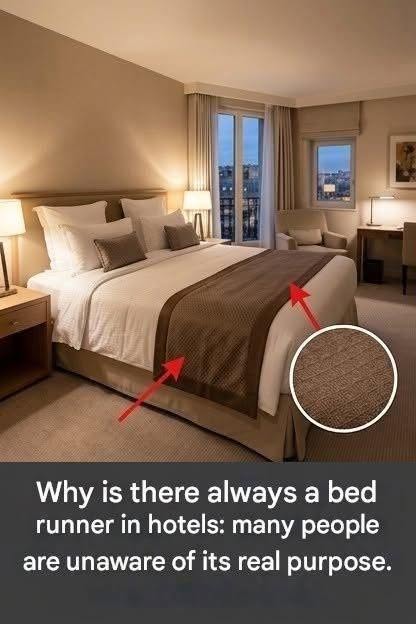
Ever wondered why hotels often place an extra sheet on the bed? Discover what that extra layer is used for, how it protects bedding, and why hotels use it.
Why Is There Always a Sheet on the Bed in Hotels? Many People Don’t Know What It’s For
Have you ever checked into a hotel, pulled back the covers, and noticed an extra sheet tucked neatly across the bed?
Many guests assume it’s simply part of the bedding or a decorative touch. But that seemingly ordinary sheet can have a practical purpose.
Depending on the hotel, bed design, and country, the extra layer may be used for comfort, cleanliness, temperature control, or protection of the main bedding.
Here’s what you may actually be looking at.
The Extra Sheet Is Often a Top Sheet
In many hotels, the thin sheet placed between the guest and the heavier blanket or duvet is called a top sheet or flat sheet.
Its main purpose is to create a washable layer between your body and the heavier bedding.
Instead of having direct contact with a duvet or blanket, you can sleep under the lightweight sheet.
This can make the bed feel more comfortable while also making laundry and housekeeping easier.
Why Don’t Hotels Simply Use a Duvet?
A duvet can be warm and comfortable, but washing a large duvet after every guest can be more demanding than washing a lightweight sheet.
The sheet provides a practical washable barrier.
Hotels can launder sheets frequently while using the heavier blanket or duvet as an additional layer that doesn’t necessarily require the same type of washing after every stay.
However, hotel cleaning practices vary, so guests shouldn’t assume every hotel handles bedding in exactly the same way.
It Can Help With Temperature Control
Another reason for using a separate sheet is flexibility.
Some guests sleep hot, while others prefer to stay warm.
With multiple bedding layers, you can adjust your comfort more easily:
Too warm? Remove the heavier blanket or duvet.
Too cool? Keep the extra layer.
This is particularly useful in hotels because guests have different preferences and may not be able to adjust the room temperature to their ideal level.
The Sheet May Also Protect the Heavier Bedding
A lightweight sheet can reduce direct contact between the guest and a duvet, blanket, or comforter.
That means fewer body oils, sweat, and other residues come into contact with the heavier layer.
The sheet itself can be removed and washed more easily than bulky bedding.
This doesn’t mean that the duvet or blanket never needs cleaning. Proper hotel housekeeping should include appropriate cleaning and maintenance of all bedding according to the property’s procedures.
What About the Decorative Runner at the Foot of the Bed?
This is where many people get confused.
Some hotel beds have a narrow strip of fabric placed across the bottom third of the bed. This is usually called a bed runner.
Unlike a full-size top sheet, the runner is primarily decorative and practical.
It can:
- Add color or visual contrast
- Make the bed look more polished
- Protect the bedding from shoes, luggage, or other items
- Provide a convenient place to put clothing or personal belongings
The bed runner is not generally intended to be used as a sleeping sheet.
Is the Extra Sheet Really About Hygiene?
Partly—but it’s important not to exaggerate its purpose.
A clean top sheet can provide a fresh washable layer between the guest and heavier bedding.
But the presence of a sheet doesn’t automatically guarantee that everything underneath is perfectly clean.
Hotels have different housekeeping standards and procedures, and bedding practices vary significantly between properties.
If cleanliness is a concern, guests can always contact housekeeping or hotel management with questions.
Why Are Hotel Beds Made So Tightly?
Another feature guests often notice is how tightly hotel sheets are tucked.
This is sometimes called a hospital corner or similar tucked-bed technique.
A neatly made bed helps create a polished appearance and keeps sheets from becoming excessively loose during the night.
It also contributes to the consistent presentation hotels aim for.
However, the exact bed-making method differs between hotels.
Should You Sleep Directly Under the Duvet?
There’s no universal rule.
Some people prefer sleeping between the sheets and using the duvet as an additional layer. Others prefer to sleep directly under the duvet.
If there is a top sheet, it is generally there to be used as part of the bedding system.
If you’re unsure how the layers are intended to work, you can simply arrange them according to your comfort.
A Simple Hotel-Bed Trick
When you enter a hotel room, take a moment to identify the bedding layers.
You may find:
- Mattress
- Fitted sheet
- Flat sheet
- Blanket or duvet
- Decorative bed runner
Not every hotel uses all five layers.
The setup can vary depending on the hotel’s design, climate, and bedding standards.
The Bottom Line
That extra sheet you see on many hotel beds isn’t necessarily pointless.
A top sheet can provide a washable layer between the guest and heavier bedding, offer temperature flexibility, and help protect blankets or duvets from direct contact.
Meanwhile, the narrow fabric placed across the foot of the bed is usually a decorative runner, which can also help protect the bedding from luggage or other items.
So next time you walk into a hotel room and see several perfectly arranged layers, you’ll know that the bed isn’t necessarily made that way just for appearance.
Some of those seemingly simple layers have a surprisingly practical purpose.
Note: Bedding arrangements and cleaning practices vary between hotels, so the purpose and handling of individual layers may differ from one property to another.