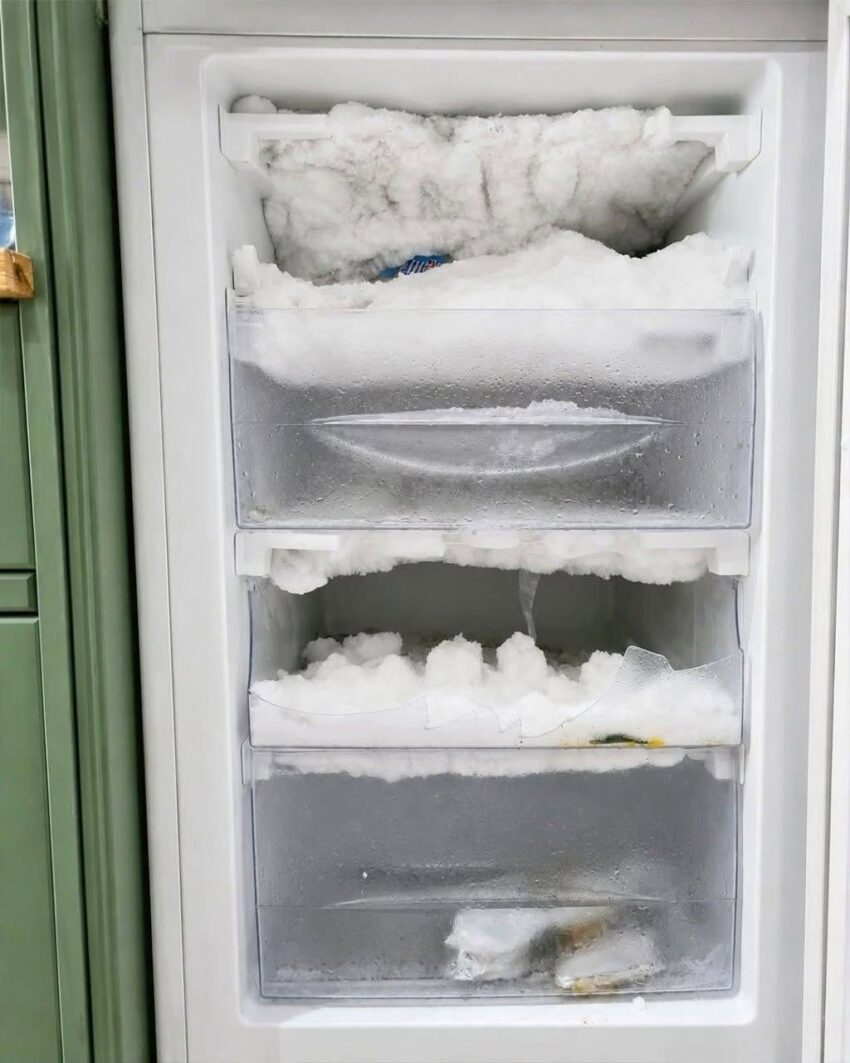
Discover a simple and safe way to remove ice buildup from your freezer without unplugging it. Learn practical defrosting tips, common mistakes to avoid, and how to keep your freezer frost-free for longer.
A thick layer of ice inside your freezer can be frustrating. It takes up valuable storage space, makes drawers difficult to open, and can prevent the freezer from working efficiently. The good news is that you may be able to remove the ice without unplugging the appliance, provided your freezer’s manufacturer allows it and you follow a few safety precautions.
Before trying any trick, remember that ice should never be removed using sharp objects or excessive heat. You could damage the freezer’s cooling system or create an electrical hazard.
1. Start by Removing Loose Ice
Take out the food and place it in an insulated cooler with ice packs. Remove any baskets or drawers that can be safely taken out.
If the ice is already beginning to loosen, use a plastic ice scraper designed for freezer use. Gently remove only the pieces that come away easily. Never force the scraper into thick ice.
2. Try the Warm-Cloth Method
One of the gentlest approaches is to use a cloth soaked in warm water.
- Soak a clean cloth in warm water.
- Wring it out thoroughly so water does not drip into vents or electrical components.
- Hold it against the accessible ice for a few minutes.
- Repeat with fresh warm water as needed.
- Wipe away the melted water and collect loose ice.
This method can help soften small patches of frost. However, it may take considerable time if the ice is thick.
Important: Check your appliance manual first. If your freezer requires the power to be disconnected before manual defrosting, follow those instructions rather than keeping it running.
3. Keep Meltwater Under Control
Place towels at the bottom of the freezer to absorb water. If your appliance has a designated defrost drain, use it according to the manufacturer’s instructions.
Avoid allowing water to collect around electrical parts, fans, vents, or the floor beneath the appliance.
4. Never Use These Dangerous Shortcuts
Some popular freezer-defrosting tricks can cause expensive damage.
- Knives and screwdrivers: These can puncture refrigerant lines or damage internal components.
- Boiling water: Sudden temperature changes can damage plastic liners and other parts.
- Hairdryers and electric heaters: Water and electricity create a serious shock risk.
- Forcefully pulling ice: This can damage the freezer’s walls, seals, or cooling components.
If your freezer has a heavy layer of solid ice, the safest option is usually to follow the manufacturer’s full defrosting procedure, which may require unplugging the appliance.
5. Prevent Ice From Building Up Again
A few simple habits can help keep your freezer cleaner and reduce frost formation.
- Check that the door closes tightly and the rubber seal is clean.
- Avoid leaving the door open for long periods.
- Let hot food cool before placing it in the freezer.
- Store food in sealed, moisture-resistant containers.
- Avoid overfilling the freezer or blocking its air vents.
- Check the door seal for cracks or gaps.
If thick ice returns quickly, inspect the door seal and consult the manual. A faulty seal, drainage issue, or defrost-system problem may be responsible.
Final Thoughts
The warm-cloth method can help loosen small areas of freezer ice without unplugging the appliance, but it is not a guaranteed solution for thick ice buildup. Always prioritize your freezer’s instructions and electrical safety over quick fixes.
With regular maintenance and a properly sealed door, you can reduce frost, preserve storage space, and help your freezer operate as intended.