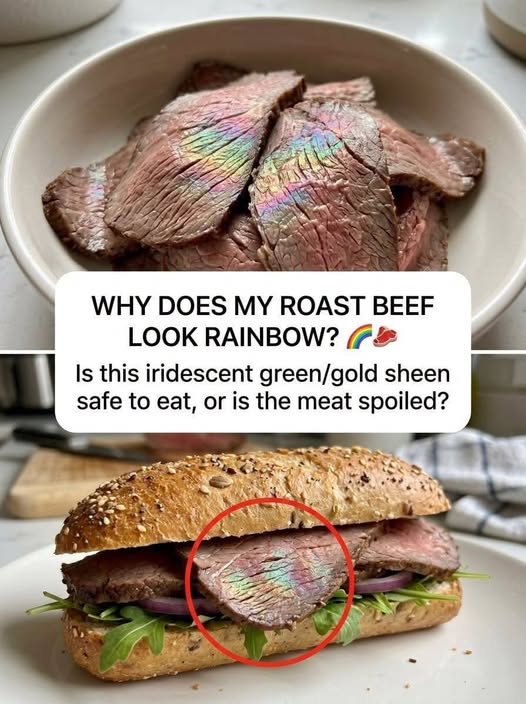
Ever noticed a rainbow-like shine on sliced deli meat? Learn why deli meat can look iridescent, when the effect is harmless, and which signs mean the meat should be discarded.
Why Does Deli Meat Sometimes Have a Rainbow Shine?
Have you ever opened a package of sliced ham, turkey, roast beef, or another deli meat and noticed a strange rainbow or metallic-looking shine across the surface?
At first glance, it can look like the meat is spoiled.
The good news is that a rainbow-like or iridescent appearance does not automatically mean deli meat has gone bad. In many cases, the effect is caused by the way light interacts with the meat’s surface and muscle fibers.
However, appearance isn’t the only thing you should use to determine whether deli meat is safe to eat.
What Causes the Rainbow Shine?
The colorful effect is often called iridescence.
When meat is sliced, its muscle fibers are cut into very thin, organized structures. Light can reflect and diffract from these surfaces in a way that separates light into different wavelengths.
The result can look like:
- Green
- Blue
- Purple
- Pink
- Gold
- Rainbow-colored reflections
This is similar to the colorful appearance you can sometimes see on a CD, soap bubble, or thin layer of oil.
In other words, the rainbow effect can be a physical effect of light, rather than evidence of harmful bacteria.
Why Is It More Noticeable on Sliced Meat?
The way deli meat is sliced can make the phenomenon particularly visible.
A smooth, freshly cut surface can create microscopic structures that reflect light at particular angles.
That’s why you may notice the colors change or even disappear when you move the meat, rotate the package, or view it under different lighting.
If the colors appear to shift as the angle changes, that is consistent with an optical effect.
Does a Rainbow Shine Mean the Meat Is Spoiled?
Not necessarily.
Iridescence by itself is not a reliable indicator that deli meat has spoiled.
Spoilage is more appropriately judged using factors such as odor, texture, storage conditions, package condition, and the date or storage guidance provided for the product.
A rainbow sheen can occur in perfectly normal meat.
What Signs Should Make You Throw It Away?
Don’t rely on the rainbow effect alone.
Discard deli meat if you notice signs such as:
A strong unpleasant odor
A sour, rotten, or otherwise abnormal smell can indicate spoilage.
A slimy or unusually sticky texture
If the meat has developed an abnormal slippery or slimy coating, it’s safer not to eat it.
Mold
Visible mold is a clear reason to discard the product. Don’t simply cut off the affected portion and eat the rest.
Damaged or swollen packaging
A package that is leaking, severely swollen, or otherwise compromised should be treated cautiously.
Improper storage
Perishable deli meat needs to remain refrigerated. If it has been left at unsafe temperatures for an extended period, it may not be safe even if it looks and smells normal.
What About a Green or Gray Color?
A rainbow reflection should not be confused with an actual change in the meat’s overall color.
Meat can naturally have variations in color, and some cured meats may look different because of their ingredients and processing.
But if the meat has developed an unusual persistent discoloration together with an unpleasant smell, slime, mold, or other signs of spoilage, don’t take chances.
When in doubt, throw it out.
Why Does the Rainbow Effect Sometimes Look Like Oil?
The surface of sliced meat can contain moisture, proteins, fats, and microscopic structures that interact with light.
Under certain lighting conditions, these can produce an appearance that resembles an oily film.
This can be especially noticeable under bright kitchen lighting or sunlight.
The important point is that something can look strange without actually being dangerous.
How Should Deli Meat Be Stored?
Proper refrigeration is essential because deli meats are perishable foods.
Keep them refrigerated according to the package instructions and use them within the recommended period after opening.
If you are unsure how long a particular product can safely be stored, check the manufacturer’s instructions or consult a reliable food-safety source.
Don’t assume that a normal smell or appearance guarantees safety if the meat has been stored improperly.
Can You Wash Deli Meat to Make It Safer?
Washing deli meat isn’t a reliable way to make spoiled meat safe.
In fact, rinsing meat can potentially spread microorganisms around your sink and surrounding surfaces.
If you suspect that deli meat is spoiled, discard it rather than trying to wash, cook, or otherwise rescue it.
The Bottom Line
That surprising rainbow shine on deli meat is often caused by iridescence—a light-reflection effect created by the structure of the sliced muscle fibers.
So, if your turkey or ham suddenly looks like it has a colorful metallic sheen, don’t automatically assume it has spoiled.
Instead, check the bigger picture:
Does it smell normal? Is the texture normal? Has it been properly refrigerated? Is the packaging intact? Are there any signs of mold or spoilage?
If everything else appears normal and the colors change as you move the meat under the light, the rainbow effect may simply be an optical phenomenon.
A rainbow shine can look alarming, but the color alone doesn’t tell you whether deli meat is safe or spoiled.
Food-safety note: When perishable food has been stored improperly or shows clear signs of spoilage, it is safest to discard it rather than taste-test it.