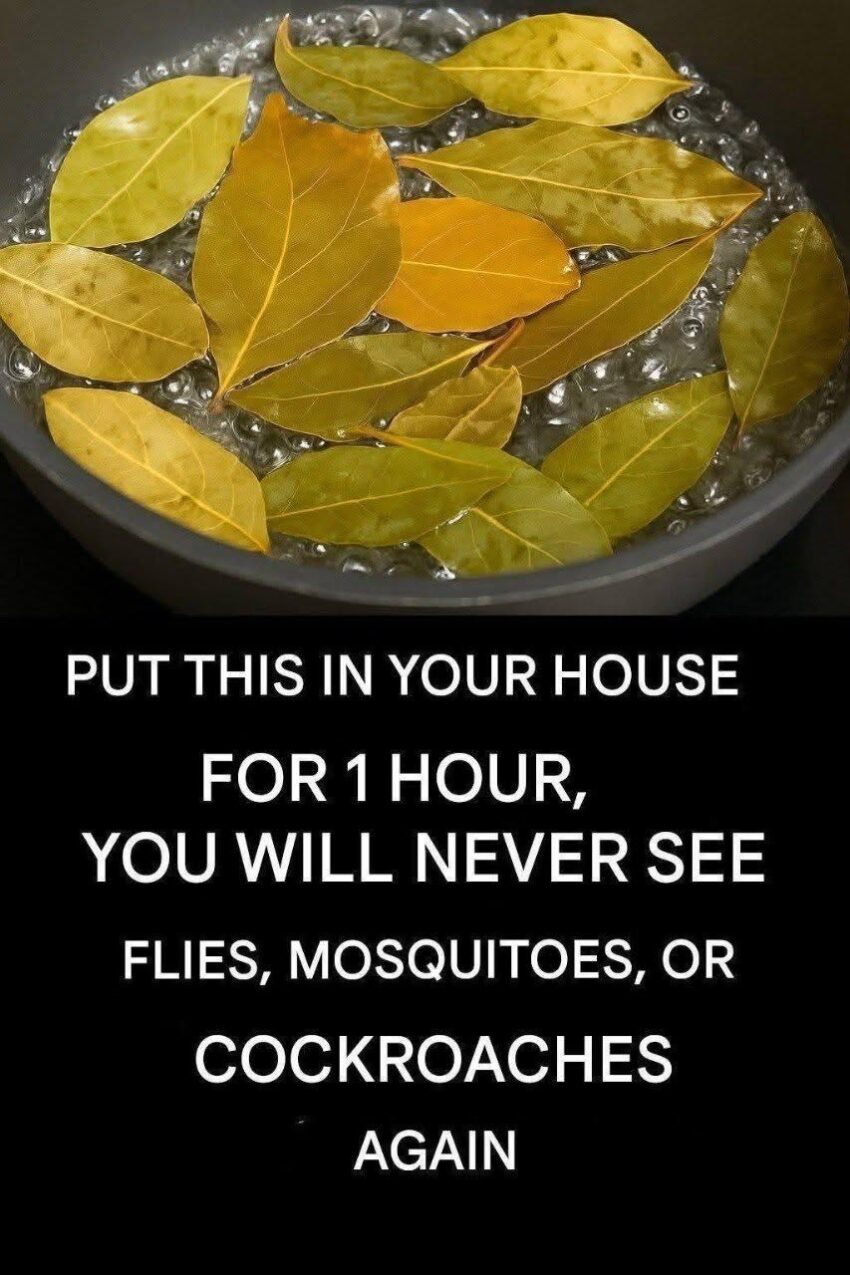
Can boiling bay leaves really keep flies, mosquitoes, and cockroaches away? Learn what bay leaves may do, what the evidence suggests, and safer ways to control household pests.
Do Bay Leaves Really Keep Flies, Mosquitoes, and Cockroaches Away?
You may have seen the viral trick claiming that boiling bay leaves in water and placing them around the house for one hour will make flies, mosquitoes, and cockroaches disappear.
The idea is certainly appealing. Bay leaves are inexpensive, easy to find, and commonly used in cooking. But does this simple kitchen trick really work?
The answer is more complicated than the viral claim suggests.
Bay leaves contain aromatic compounds that may have insect-repellent properties under certain conditions, but there is not good evidence that simply boiling a handful of bay leaves for an hour will make a home permanently free of flies, mosquitoes, or cockroaches.
Still, there are some useful things to know about this popular household remedy.
Why Do People Use Bay Leaves Against Insects?
Bay leaves come from plants in the Laurus genus and contain aromatic oils and compounds responsible for their characteristic smell.
Some research has investigated bay leaf and its components for insect-repellent or insecticidal activity. Strong aromas from certain plants can interfere with how some insects locate food or navigate their surroundings.
That’s likely where the traditional household idea comes from.
However, a laboratory effect is not the same as proving that a bowl of boiled bay leaves will eliminate pests from an entire house.
Can Bay Leaves Keep Cockroaches Away?
This is one of the most popular claims online.
You may see recommendations to place dried bay leaves in:
- Kitchen cabinets
- Cupboards
- Drawers
- Pantry areas
- Behind appliances
- Near sinks
Some people report that the smell seems to discourage cockroaches from particular areas.
But there is no reliable evidence that bay leaves alone can eliminate a cockroach infestation.
Cockroaches are remarkably adaptable. If they have access to food, water, warmth, and shelter, simply changing the smell of one area is unlikely to solve the underlying problem.
What About Flies?
Strong-smelling plants may sometimes discourage certain insects from lingering in a particular area.
However, flies are attracted by things such as food waste, spilled liquids, uncovered food, garbage, and other organic material.
If flies keep appearing, removing the attraction is generally much more important than relying on a particular scent.
Keep food covered, clean spills promptly, empty garbage regularly, and make sure windows and doors have suitable screens where appropriate.
Can Bay Leaves Repel Mosquitoes?
This claim should also be treated cautiously.
Mosquitoes respond to many environmental signals, including carbon dioxide, body odors, heat, and other chemical cues.
Although certain plant oils have demonstrated insect-repellent effects in studies, boiling bay leaves in water should not be considered a reliable substitute for proven mosquito-control methods or personal insect repellent.
If mosquitoes are a problem around your home, eliminating standing water is one of the most useful steps.
What Happens When You Boil Bay Leaves?
When bay leaves are heated in water, some aromatic compounds can be released into the surrounding environment.
This can make the house smell pleasant and herbal.
But there is an important distinction:
A strong smell does not automatically equal effective pest control.
The concentration, type of plant material, insect species, exposure time, and environmental conditions all influence whether a substance actually repels or kills insects.
A pot of fragrant water therefore shouldn’t be presented as a guaranteed pest-control treatment.
A Better Way to Use the Idea
If you enjoy the smell of bay leaves and want to try this traditional method, you can treat it as a household fragrance experiment, not as your primary pest-control strategy.
For example, you could simmer a few bay leaves in water for a short period while keeping the kitchen properly ventilated.
Never leave a pot unattended on the stove, and don’t allow the water to boil away.
Most importantly, don’t assume that because you don’t see insects immediately afterward, an infestation has been eliminated.
The Real Secret to Fewer Cockroaches
If cockroaches are repeatedly appearing, focus on the conditions that attract them.
Keep food sealed
Store food in closed containers and avoid leaving crumbs or uncovered food on counters.
Clean food residue
Wipe kitchen surfaces regularly, especially around cooking and eating areas.
Control moisture
Fix leaking faucets and pipes and avoid leaving standing water accessible to pests.
Empty garbage regularly
Food waste can provide an easy source of nourishment for insects.
Reduce hiding places
Clutter, cardboard, and unused materials can provide shelter for cockroaches.
Seal entry points
Check cracks around pipes, doors, windows, cabinets, and other potential entry points.
What If You Already Have an Infestation?
A few insects appearing occasionally is different from an established infestation.
If you are regularly seeing multiple cockroaches, insects during the daytime, droppings, egg cases, or repeated activity, a professional pest-control assessment may be more appropriate.
Home remedies may alter the smell of an area, but they generally won’t address an established infestation at its source.
Don’t Confuse Repelling With Killing
This is another important point.
Even when a plant or essential oil has some insect-repellent properties, that does not necessarily mean it kills insects or destroys their eggs.
A substance that temporarily discourages an insect from one location may simply cause it to move somewhere else.
That’s why effective pest management usually combines sanitation, exclusion, monitoring, and—when necessary—appropriate pest-control products.
The Bottom Line
The viral bay-leaf trick is based on a reasonable idea: bay leaves contain aromatic compounds that may have some insect-repellent activity.
But the claim that boiling bay leaves for one hour will ensure that you “never see flies, mosquitoes, or cockroaches again” is an exaggeration.
You can certainly enjoy the fresh herbal scent of bay leaves, but don’t rely on them as your only defense against household pests.
For lasting results, concentrate on removing food and water sources, keeping your home clean, sealing entry points, eliminating standing water, and using appropriate pest-control methods when necessary.
Bay leaves may smell unpleasant to some insects—but good pest control is about much more than simply making your home smell different.
Safety note: Never leave boiling water unattended. Keep pots, hot water, and concentrated plant preparations away from children and pets. If using any commercial pesticide, follow its label carefully.