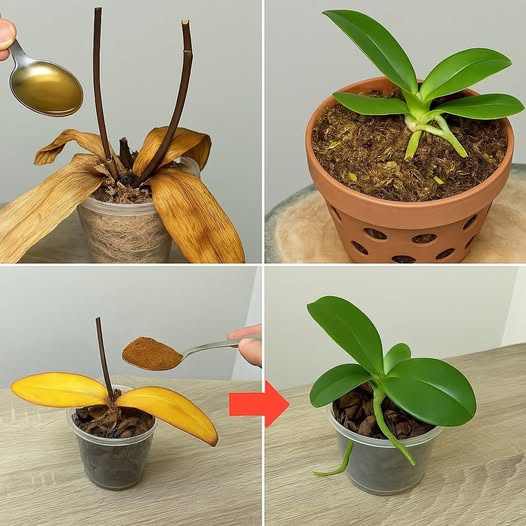
Discover a simple orchid-care trick using one common household ingredient to help struggling roots recover and encourage healthier growth and beautiful blooms.
When an orchid looks weak, has yellowing leaves, or appears to have dead roots, it can be tempting to throw it away. But in many cases, an orchid that looks nearly finished may still have healthy tissue capable of producing new roots.
One popular home-gardening trick involves adding a small amount of cinnamon to damaged orchid roots. Cinnamon is often used by gardeners because it has natural antifungal properties. However, it should be used carefully and should never be treated as a miracle fertilizer.
First, Check Whether the Roots Are Really Dead
Before adding anything, carefully remove the orchid from its pot and inspect the root system.
Healthy orchid roots are generally firm and plump. Depending on the orchid and whether the roots are wet, they can appear green, silvery, or white.
Dead or badly damaged roots are usually:
- Brown or black
- Soft and mushy
- Hollow or collapsing when gently squeezed
- Covered with decaying tissue
Use a sterilized pair of scissors to remove roots that are clearly dead. Don’t cut healthy, firm roots simply because they look different in color.
The One-Spoon Cinnamon Trick
If you want to use cinnamon, don’t sprinkle a large quantity directly over the entire root system.
Instead, use a tiny amount of plain cinnamon powder on freshly cut areas after removing rotten roots. A small pinch is usually sufficient; there is no need for a full spoonful on a single orchid.
Cinnamon may help dry the cut surface and discourage fungal growth, but it does not replace water, nutrients, light, or proper orchid care.
Avoid putting large amounts of cinnamon onto healthy roots because excessive powder can interfere with the delicate root surface.
Give the Orchid a Fresh Start
After removing rotten roots, the orchid may benefit from being repotted into a clean container with fresh, well-draining orchid medium.
A typical orchid mix may contain materials such as:
- Orchid bark
- Perlite
- Sphagnum moss in appropriate amounts
- Other coarse, airy materials designed for orchids
The most important thing is that water can drain freely and air can reach the roots.
Don’t Keep the Roots Constantly Wet
One of the biggest problems with struggling orchids is overwatering.
Orchid roots need moisture, but they also need oxygen. If the potting medium remains saturated for long periods, roots can begin to deteriorate.
Instead of following a strict watering schedule, check the plant and its growing medium regularly.
Depending on the orchid species, pot size, temperature, humidity, and growing medium, watering needs can vary considerably.
Light Makes a Big Difference
Even a perfectly repotted orchid may struggle if it doesn’t receive enough suitable light.
Place the orchid somewhere with bright, indirect light. Harsh direct midday sunlight through a window can scorch leaves, while a very dark location may prevent flowering.
Healthy leaves are usually a better sign than simply counting how many flowers are present.
Can an Orchid Really Bloom All Year?
This is where viral gardening claims often go too far.
No household ingredient can guarantee that an orchid will bloom continuously throughout the entire year.
Orchids naturally go through growth and flowering cycles. Some can flower repeatedly under favorable conditions, but flowering depends on factors including:
- Orchid species and variety
- Light exposure
- Temperature
- Watering
- Root health
- Nutrient availability
- Plant maturity
- Seasonal changes
So rather than expecting one ingredient to produce flowers all year, focus on creating conditions that allow the plant to recover and bloom naturally.
A Better Way to Think About the “Secret Ingredient”
The real secret isn’t cinnamon alone.
If your orchid is struggling, removing rotten roots, improving drainage, providing appropriate light, and adjusting watering habits are usually much more important than any kitchen ingredient.
Cinnamon can be a useful addition when used carefully after pruning damaged tissue, but it shouldn’t be presented as a guaranteed cure.
Final Tip
If your orchid looks almost dead, don’t give up immediately. Carefully inspect the roots, remove only tissue that is truly rotten, repot when necessary, and give the plant the right environment.
With patience and consistent care, an orchid with viable roots can sometimes produce new growth and eventually reward you with another beautiful display of flowers.
Have you ever managed to bring a struggling orchid back to life? Share your favorite orchid-care trick!