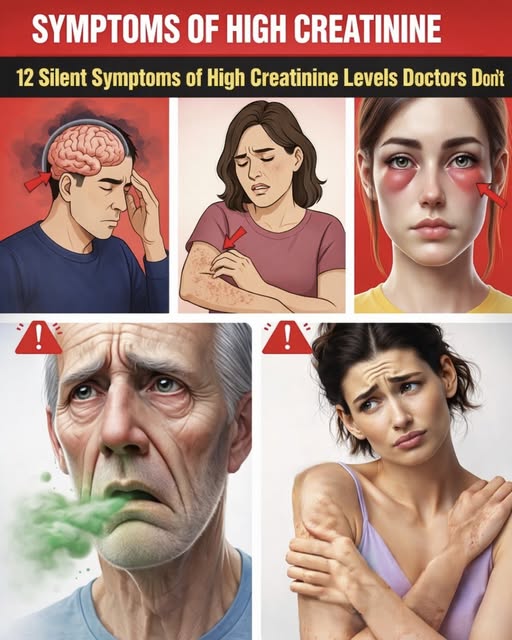
Learn about 12 subtle symptoms that may occur when creatinine levels rise, what high creatinine can indicate about kidney function, when testing is important, and which warning signs should never be ignored.
12 Silent Symptoms of High Creatinine Your Doctor Might Miss Until It’s Serious
Creatinine is a waste product produced naturally by your muscles. Healthy kidneys filter creatinine from the blood and remove it through urine. When kidney filtration declines, creatinine can build up in the bloodstream.
One important point, however, is that high creatinine itself usually does not cause specific symptoms. Rather, symptoms may develop because reduced kidney function allows waste products and excess fluid to accumulate. A blood creatinine test and estimated glomerular filtration rate (eGFR) are therefore much more useful than symptoms alone for assessing kidney function.
Some early changes can be easy to overlook. Here are 12 possible warning signs that deserve medical attention, especially when several occur together.
1. Unusual or Persistent Fatigue
Feeling exhausted despite getting enough sleep can occur when kidney function is significantly reduced. Anemia, buildup of waste products, and changes in fluid and electrolyte balance can all contribute to fatigue.
Fatigue has many possible causes, so it should not automatically be blamed on the kidneys. Persistent or unexplained tiredness is a reason to discuss symptoms with a healthcare professional.
2. Swelling Around the Ankles or Feet
Reduced kidney function can make it harder for the body to maintain normal fluid and sodium balance. Extra fluid may collect in the lower legs, ankles, feet, or sometimes around the eyes.
New or worsening swelling deserves evaluation, particularly if it occurs with changes in urination or shortness of breath.
3. Changes in Urination
Urination may change when kidney function is impaired. Some people notice:
- Urinating more frequently, especially at night
- Producing less urine than usual
- Foamy or unusually bubbly urine
- Blood-colored or dark urine
- Increased urgency
Foamy urine can sometimes indicate protein in the urine, although temporary foam can occur for other reasons.
4. Puffiness Around the Eyes
Swelling around the eyes, particularly in the morning, can sometimes be associated with protein loss through the kidneys.
It is not a reliable sign of high creatinine by itself, but persistent facial or eyelid swelling should be assessed rather than ignored.
5. Nausea or Reduced Appetite
As kidney function becomes severely impaired, waste products can accumulate in the bloodstream. This may contribute to nausea, loss of appetite, or an unpleasant taste in the mouth.
Persistent nausea should not be assumed to be a kidney problem because gastrointestinal disorders, medications, infections, and many other conditions can cause similar symptoms.
6. Itchy or Dry Skin
Persistent itching can occur in advanced kidney disease, partly because of changes in mineral balance and accumulation of waste products.
Dry skin and itching are extremely common and have many causes, so testing is necessary before connecting them to kidney dysfunction.
7. Muscle Cramps or Weakness
Kidney disease can affect levels of electrolytes and minerals such as potassium, calcium, and phosphorus. These changes may contribute to muscle cramps, weakness, or unusual muscle discomfort.
Sudden or severe weakness requires prompt medical assessment because significant electrolyte abnormalities can sometimes become dangerous.
8. Trouble Concentrating
People with advanced kidney dysfunction may experience difficulty concentrating, sleepiness, or mental fogginess. These symptoms can occur when waste products accumulate or when metabolic and electrolyte disturbances develop.
Because concentration problems have numerous possible causes, they should be evaluated in context.
9. Sleep Problems
Kidney disease may be associated with difficulty sleeping, restless legs, itching, nighttime urination, or daytime fatigue.
A change in sleep alone does not indicate elevated creatinine, but persistent sleep problems combined with other kidney-related symptoms may warrant testing.
10. Shortness of Breath
Shortness of breath can occur when excess fluid accumulates in the body and, in more serious cases, affects the lungs. Anemia associated with kidney disease can also contribute to breathlessness.
Sudden or severe difficulty breathing is an emergency and should not be attributed to high creatinine without medical evaluation.
11. Metallic Taste or Bad Breath
Advanced kidney dysfunction can cause changes in taste and an ammonia-like odor to the breath because certain waste products accumulate in the bloodstream.
This is generally associated with more significant kidney impairment rather than a mildly elevated creatinine level.
12. Confusion or Marked Drowsiness
Severe kidney dysfunction can affect the nervous system. Increasing confusion, extreme sleepiness, difficulty staying awake, or major changes in behavior can indicate a serious metabolic problem.
These symptoms require urgent medical attention.
Why Symptoms Alone Aren’t Enough
The biggest misconception is that you can reliably tell whether creatinine is high by how you feel.
You usually cannot.
Creatinine levels can rise because of kidney disease, dehydration, certain medications, intense exercise, high muscle mass, or other factors. Conversely, a person can have chronic kidney disease without obvious symptoms, particularly during its earlier stages.
Doctors commonly assess kidney function using:
- Serum creatinine
- eGFR
- Urine albumin-to-creatinine ratio (UACR)
- Urinalysis
- Blood pressure
- Electrolytes and other blood tests when appropriate
A single elevated creatinine result also doesn’t necessarily mean permanent kidney damage. Your clinician may repeat the test and consider your previous results, medications, hydration status, and overall health.
When to Seek Medical Attention
Contact a healthcare professional if you have persistent swelling, significant changes in urination, unexplained fatigue, blood in the urine, or other symptoms that concern you.
Seek urgent medical care for severe shortness of breath, very little or no urine, severe confusion, fainting, chest pain, or rapidly worsening symptoms.
The Bottom Line
High creatinine is best viewed as a laboratory finding, not a disease or a symptom by itself. Subtle symptoms can sometimes accompany declining kidney function, but many people with early kidney disease feel completely normal.
If you’re concerned about your kidneys, a simple blood test for creatinine/eGFR combined with urine testing can provide much more useful information than trying to identify symptoms alone.