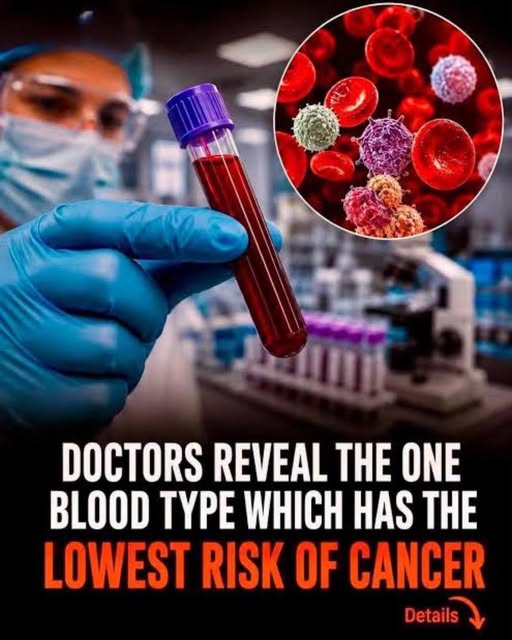
Discover what scientific research says about blood types and cancer risk, why blood group O has been linked to lower risks of certain cancers, and which proven steps can help protect your health.
Can Your Blood Type Affect Your Cancer Risk?
Could your blood type have a connection to your risk of developing cancer? Researchers have been investigating this question for decades, and several studies suggest that the ABO blood group system may be associated with certain types of cancer.
Among the four main blood groups—A, B, AB, and O—blood group O has been associated with a lower risk of some cancers in several studies. However, this does not mean that people with type O blood are protected from cancer or that everyone with another blood type has a high risk.
Scientists are still investigating how these associations work and why the results differ between populations and cancer types.
Why Is Blood Type O Often Mentioned?
Blood types are determined by specific markers, called antigens, on the surface of red blood cells. These inherited characteristics may also influence certain biological processes beyond blood transfusion compatibility.
A systematic review and meta-analysis published in 2014 examined 89 studies involving more than 100,000 cancer cases. The researchers found that blood group O was associated with a lower overall cancer risk compared with non-O blood groups in the studies analyzed. The review also reported associations between blood group O and lower risks of certain cancers, including stomach and pancreatic cancer.
A larger meta-analysis published in 2023 examined 127 publications involving approximately 20 million participants. It also found associations between ABO blood groups and several cancers, particularly cancers of the digestive system. These findings support further investigation, but they do not establish that blood type alone determines whether someone will develop cancer.
Which Cancers Have Been Linked to Blood Type?
Research has identified associations between blood groups and several cancer types.
1. Stomach Cancer
Some studies have found that people with blood group A have a higher risk of stomach cancer than those with blood group O. Researchers are investigating whether differences in immune responses, inflammation, or interactions with infections such as Helicobacter pylori may help explain this association.
Nevertheless, blood type is only one possible factor among many. Infection, smoking, dietary habits, and other health factors can also influence stomach cancer risk.
2. Pancreatic Cancer
Pancreatic cancer is another type that has attracted considerable attention in blood-group research. Several large studies have associated non-O blood groups, particularly type A, with a higher risk of pancreatic cancer compared with type O.
The relationship is statistical rather than absolute. Most people with non-O blood types will not necessarily develop pancreatic cancer, and people with type O can develop it too.
3. Colorectal Cancer
Some research has reported modest differences in colorectal cancer risk between blood groups. However, the findings are not consistent enough to use blood type as a reliable way to predict an individual’s risk.
Age, family history, inherited genetic conditions, lifestyle, and screening history are more useful considerations when assessing personal risk.
4. Other Cancers
Researchers have also examined possible links between ABO blood groups and cancers of the breast, ovaries, liver, bladder, and other organs. The strength and direction of these associations vary, and not every study reaches the same conclusion.
This variation is one reason scientists caution against labeling a particular blood group as the safest for every type of cancer.
Does Having Blood Type O Mean You Cannot Get Cancer?
No. This is one of the most important points to understand.
Even if a study finds a lower average risk among people with a particular blood group, that difference does not guarantee protection for an individual. Blood type is not a diagnostic test for cancer and cannot determine whether someone will develop the disease.
Likewise, people with blood groups A, B, or AB should not assume they are destined to develop cancer.
Cancer develops through complex interactions involving genetic changes, age, environmental exposures, infections, lifestyle, and other biological processes. Blood group is only one area of ongoing research.
What Actually Helps Reduce Cancer Risk?
Rather than worrying about your blood type, focus on measures supported by stronger evidence.
Avoid tobacco: Smoking and other tobacco use increase the risk of several cancers. Avoiding tobacco is one of the most important preventive steps.
Maintain a healthy weight: Excess body fat is associated with an increased risk of several cancers. Aim for balanced meals and regular physical activity.
Eat a balanced diet: Include vegetables, fruits, whole grains, beans, and other nutritious foods. Limit processed meat and avoid making any single food or supplement the foundation of a cancer-prevention plan.
Protect your skin: Reduce excessive ultraviolet exposure and use appropriate sun protection.
Consider vaccination: HPV and hepatitis B vaccination can help prevent infections associated with certain cancers. Eligibility and vaccination schedules depend on age and medical circumstances.
Follow recommended screening guidelines: Screening for cancers such as cervical, breast, and colorectal cancer can help detect disease or precancerous changes when treatment may be more effective. The appropriate tests and starting ages depend on individual circumstances and local guidance.
Know your family history: Several close relatives with cancer, or a relative diagnosed at a young age, may indicate a need for a medical assessment of inherited risk.
When Should You Talk to a Doctor?
Speak with a healthcare professional if you have persistent unexplained symptoms, such as blood in your stool or urine, an unusual lump, unexplained weight loss, persistent changes in bowel habits, or a cough that does not resolve.
These symptoms can have many causes and do not automatically mean cancer. However, persistent or concerning changes deserve appropriate assessment.
Do not wait for symptoms if you are due for a recommended screening examination or have a strong family history of cancer.
The Bottom Line
Blood group O is often described as the blood type with the lowest cancer risk because several studies have linked it to a lower risk of certain cancers, especially stomach cancer and pancreatic cancer. However, the scientific evidence does not support calling it a universally cancer-proof or definitively safest blood type.
Your blood group is inherited, but many important cancer-risk factors can be addressed through preventive care, healthier habits, vaccination when appropriate, and recommended screening.
The most useful takeaway is simple: know your family history, follow evidence-based prevention advice, and never use your blood type as a substitute for medical screening or professional guidance.
Medical disclaimer: This article is for general educational purposes and is not a substitute for individual medical advice.