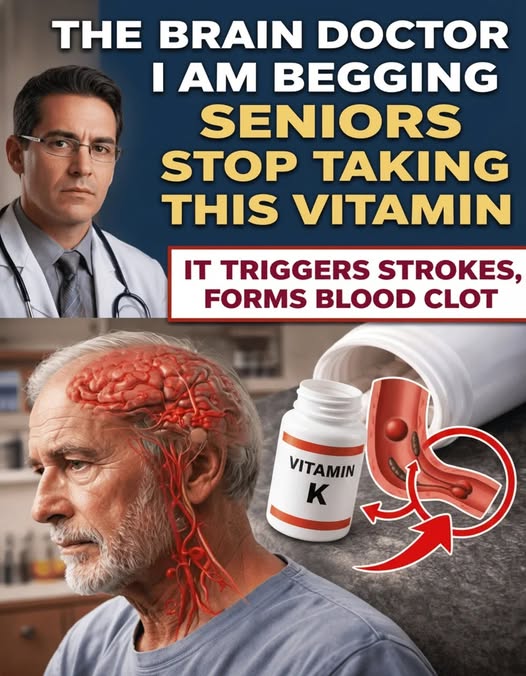
Could a vitamin really increase stroke risk overnight in adults over 60? Learn what the evidence says about vitamins, supplements, blood pressure, medications, and stroke risk—and which warning signs should never be ignored.
Wake-Up Call from a Brain Doctor: This Vitamin Could Skyrocket Stroke Risk OVERNIGHT for Seniors Over 60!
A dramatic claim that a common vitamin can make stroke risk “skyrocket overnight” may sound alarming—but there is no good evidence that simply taking a standard vitamin suddenly causes a stroke in otherwise healthy adults over 60.
That doesn’t mean every supplement is harmless. Certain high-dose supplements, interactions with medications, or products containing multiple ingredients can create health risks. The important question is which vitamin, how much is being taken, and what medications or medical conditions are involved.
The Vitamin Usually Behind the Confusion
Vitamin E is sometimes discussed in connection with bleeding and stroke risk, particularly when taken in high doses.
Vitamin E has anticoagulant-like effects in some circumstances and may increase bleeding risk, especially when combined with blood-thinning medicines. Some research has also raised concerns about hemorrhagic stroke with high-dose vitamin E supplementation.
However, this does not mean that normal dietary vitamin E suddenly causes a stroke.
Vitamin E is naturally found in foods such as nuts, seeds, vegetable oils, and some vegetables. Food sources are generally very different from taking concentrated supplements.
Why Seniors Should Be Especially Careful With Supplements
Adults over 60 are more likely to take several prescription medications at the same time. This makes supplement–drug interactions particularly important.
For example, people taking anticoagulants or antiplatelet medicines should speak with their healthcare professional before starting high-dose vitamin E or other supplements that may affect bleeding.
Never stop prescribed blood-thinning medication simply because you are concerned about a supplement.
What Actually Drives Stroke Risk?
Rather than focusing on one vitamin, it is more useful to pay attention to the established risk factors for stroke.
These include:
- High blood pressure
- Atrial fibrillation and other heart conditions
- Diabetes
- High cholesterol
- Smoking
- Obesity and physical inactivity
- Excessive alcohol consumption
- Previous stroke or transient ischemic attack (TIA)
- Certain blood-vessel conditions
- Increasing age
High blood pressure is one of the most important modifiable stroke risk factors.
Can a Supplement Affect Blood Pressure?
Some supplements can interact with medications or potentially influence blood pressure, heart rhythm, or bleeding. “Natural” does not automatically mean risk-free.
Before taking a high-dose vitamin or herbal supplement, older adults should consider:
- Why am I taking it?
- Do I actually have a deficiency?
- What dose am I taking?
- Could it interact with my medications?
- Does my doctor or pharmacist know I’m using it?
A pharmacist can often check supplement–medication interactions quickly.
Don’t Confuse Vitamin Deficiency With Vitamin Overdose
Some vitamins are genuinely important for neurological and cardiovascular health.
For example, vitamin B12 deficiency can cause neurological problems and anemia, while folate deficiency can also cause health complications. Correcting a documented deficiency can be beneficial.
The problem is assuming that taking increasingly large doses will automatically provide greater protection.
More is not always better.
What About Vitamin D?
Vitamin D is another supplement frequently marketed as a cure-all for older adults. Maintaining adequate vitamin D is important for bone and overall health, but taking very large amounts without medical guidance can cause toxicity and dangerous elevations in calcium.
Vitamin D should therefore be taken according to an individual’s needs rather than in megadoses simply for stroke prevention.
Warning Signs of a Stroke
Regardless of what vitamins or supplements someone takes, recognizing stroke symptoms is far more important.
Remember FAST:
F — Face: One side of the face droops.
A — Arm: One arm becomes weak or numb.
S — Speech: Speech becomes slurred, confused, or difficult to understand.
T — Time: Call emergency medical services immediately.
Other warning signs can include sudden vision problems, severe dizziness, loss of balance, sudden numbness or weakness, or a sudden severe headache.
Do not wait to see whether symptoms disappear. A TIA can produce temporary symptoms but still requires urgent medical evaluation.
The Bottom Line
The idea that one ordinary vitamin can “skyrocket stroke risk overnight” is too simplistic and potentially misleading. High-dose supplements can have risks, and some can interact with medications, but stroke risk depends on many factors.
For adults over 60, the safest approach is to review supplements with a doctor or pharmacist—particularly if taking blood thinners, blood-pressure medication, or multiple prescriptions.
And if sudden neurological symptoms appear, don’t wait for a supplement to wear off or try a home remedy—seek emergency medical care immediately.