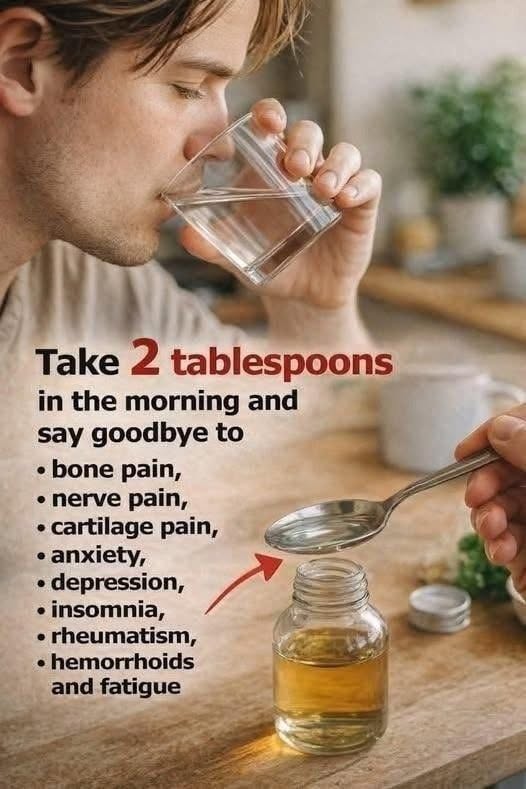
Discover why the advice to “take 2 tablespoons” can be misleading without knowing the ingredient, how tablespoon measurements work, and what to consider before using any food, drink, supplement, or home remedy.
Take 2 Tablespoons—but of What?
You may have come across a health tip, home remedy, or recipe that begins with the words “Take 2 tablespoons…” and promises an impressive result.
But there is one important detail that should never be overlooked: the ingredient matters.
Two tablespoons is a measurement, not a treatment. Depending on what is being measured, the same quantity can be perfectly ordinary in a recipe but inappropriate or potentially harmful when used as a concentrated supplement or remedy.
Before following any recommendation, make sure you know exactly what the two tablespoons contain, how often they should be used, and whether the advice is appropriate for you.
How Much Is 2 Tablespoons?
In standard U.S. kitchen measurements:
- 1 tablespoon = 3 teaspoons
- 2 tablespoons = 6 teaspoons
- 2 tablespoons = approximately 30 milliliters
Kitchen spoons are not always standardized, so when an exact amount matters, a proper measuring spoon or measuring cup is preferable.
Why the Ingredient Makes All the Difference
Two tablespoons of ordinary food may be used in a recipe without concern. However, concentrated products can be very different.
For example, an ingredient might contain significant amounts of sugar, sodium, caffeine, fat, or other active compounds. Supplements and concentrated extracts may have even stronger effects.
That’s why a statement such as “take two tablespoons every morning” should not be treated as universally safe.
Don’t Assume “Natural” Means Risk-Free
Many viral health tips involve ingredients described as natural. But natural substances can still have side effects or interact with medications.
Some people may need extra caution, particularly those who:
- Take prescription medications
- Have kidney or liver problems
- Have diabetes
- Have high or low blood pressure
- Are pregnant or breastfeeding
- Have allergies or food intolerances
- Are preparing the remedy for a child or older adult
If a recommendation involves a concentrated supplement, herbal product, or medicinal substance, it is wise to check with a qualified healthcare professional before using it.
What About Taking It Every Day?
Another important question is frequency.
“Take 2 tablespoons” is incomplete advice if it doesn’t explain whether the amount should be taken once, several times a day, or only occasionally.
More is not necessarily better. Increasing the amount in an attempt to achieve faster results can increase the chance of unwanted effects.
Always follow the directions on a properly labeled product or a trusted recipe rather than increasing the dose yourself.
Use the Right Measuring Tool
If an exact quantity is recommended, don’t rely on an ordinary eating spoon from the kitchen drawer.
A measuring tablespoon provides a more consistent amount. This becomes particularly important when dealing with concentrated ingredients or products where the amount matters.
For liquid medicines, use the measuring device supplied with the product whenever possible rather than a household spoon.
Be Careful With Viral “2-Tablespoon” Remedies
Social media is full of claims suggesting that taking a specific amount of an ingredient can:
- Melt body fat
- Lower blood sugar
- Clean the kidneys
- Remove toxins
- Cure joint pain
- Improve circulation
- Reverse chronic conditions
- Produce rapid weight loss
Such claims should be approached carefully.
A food or household ingredient may be nutritious or useful in certain circumstances, but that does not automatically mean it can treat or cure a medical condition.
The Bottom Line
“Take 2 tablespoons” is not enough information on its own.
Before trying any health tip or home remedy, identify the ingredient, check the recommended frequency, consider possible interactions and side effects, and make sure the advice comes from a reliable source.
Two tablespoons may sound like a small amount, but the substance being measured is what determines whether that amount is appropriate.
This article is for general educational purposes and does not replace professional medical advice. If you provide the exact ingredient or the original health tip containing “Take 2 tablespoons,” the recommendation can be evaluated more specifically.