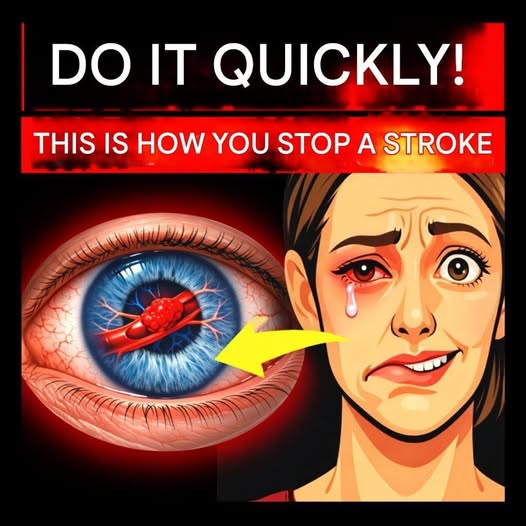
Learn the critical warning signs of stroke and what to do immediately. Fast emergency treatment can reduce brain damage, and some clot-busting treatments may be possible within 4.5 hours.
A stroke can happen suddenly, without much warning. One moment a person may feel completely normal; the next, they may have difficulty speaking, moving an arm, seeing clearly, or maintaining their balance.
When this happens, every minute matters.
The phrase “save your brain in 4 hours” refers to an important treatment window for some people experiencing an ischemic stroke, the type caused by a blood clot. Certain clot-dissolving medicines may be used in eligible patients within 4.5 hours of symptom onset. Some patients with large-vessel blockages may also qualify for mechanical clot removal much later, in selected circumstances.
The key message is simple: don’t spend those hours trying home remedies. Get emergency medical care immediately.
Know the B.E. F.A.S.T. Warning Signs
A useful way to recognize a possible stroke is B.E. F.A.S.T.
B — Balance
Watch for sudden:
- Loss of balance
- Difficulty walking
- Dizziness
- Loss of coordination
E — Eyes
Look for sudden:
- Blurred vision
- Double vision
- Loss of vision in one or both eyes
F — Face
Ask the person to smile.
Does one side of the face droop or feel numb?
A — Arms
Ask the person to raise both arms.
Does one arm become weak, numb, or drift downward?
S — Speech
Listen for:
- Slurred speech
- Difficulty speaking
- Trouble understanding speech
- Words that don’t make sense
T — Time
Time is critical. Call your local emergency medical service immediately.
Don’t wait to see whether the symptoms disappear. The American Stroke Association specifically recommends emergency evaluation even when symptoms resolve.
What Should You Do During the First Few Minutes?
If you suspect a stroke:
1. Call emergency medical services immediately.
Tell the dispatcher that you suspect a stroke and describe the symptoms.
2. Record when the symptoms started.
If you don’t know the exact time, note the last time the person was known to be normal. This information can be extremely important when doctors determine which treatments may be appropriate.
3. Don’t drive yourself if emergency transport is available.
Emergency medical personnel can begin assessment during transport and can help alert the receiving hospital to the suspected stroke.
4. Don’t wait for symptoms to become severe.
A person doesn’t need to have every B.E. F.A.S.T. symptom. Even one sudden warning sign can justify emergency evaluation.
Why the 4-Hour Window Matters
When a blood clot blocks blood flow to part of the brain, brain tissue is deprived of oxygen and nutrients.
Some eligible patients with ischemic stroke can receive intravenous clot-busting medication such as alteplase or tenecteplase within 4.5 hours of symptom onset. The sooner appropriate treatment is provided, the better the potential outcome.
But 4.5 hours is not a period you should wait through.
The goal is to reach medical care as quickly as possible because doctors need time to determine:
- Whether it is actually a stroke
- Whether it is caused by a clot or bleeding
- When the symptoms began
- Whether clot-busting medication is appropriate
- Whether a clot-removal procedure may be needed
Some Patients May Have Treatment Options Beyond 4.5 Hours
Modern stroke treatment is more advanced than the old idea that everything ends after four hours.
In selected patients with certain large blood clots, mechanical thrombectomy can sometimes be performed up to 24 hours after symptoms begin, depending on brain imaging and other eligibility criteria.
That does not mean someone should wait.
The earlier a person reaches a stroke-capable hospital, the sooner doctors can determine which treatment options are available.
What If the Symptoms Go Away?
This is a common and dangerous mistake.
If weakness, facial drooping, speech problems, or vision changes disappear after several minutes, it could have been a transient ischemic attack (TIA).
A TIA is sometimes called a “mini-stroke,” but it should still be treated as a medical emergency because it can warn of a future stroke.
Never assume that disappearing symptoms mean everything is fine.
What NOT to Do
When stroke symptoms occur, avoid delaying emergency treatment by trying:
- Herbal remedies
- Lemon water
- Garlic or other foods
- Massage
- Exercise
- Sleeping it off
- Waiting for symptoms to disappear
- Taking someone else’s medication
These measures cannot substitute for emergency stroke evaluation.
The Most Important Lesson
There isn’t a magic trick that can “save your brain” at home within four hours.
The most important action is recognizing the symptoms and getting emergency medical care immediately.
A stroke is an emergency, and rapid treatment can reduce brain damage and improve the chances of recovery.
Remember:
B — Balance loss
E — Eye/vision changes
F — Face drooping
A — Arm weakness
S — Speech difficulty
T — Time to call emergency services
If these symptoms appear suddenly, act immediately—even if they improve or disappear.
This article is for educational purposes and does not replace emergency medical care. If stroke symptoms are happening now, seek emergency medical assistance immediately.