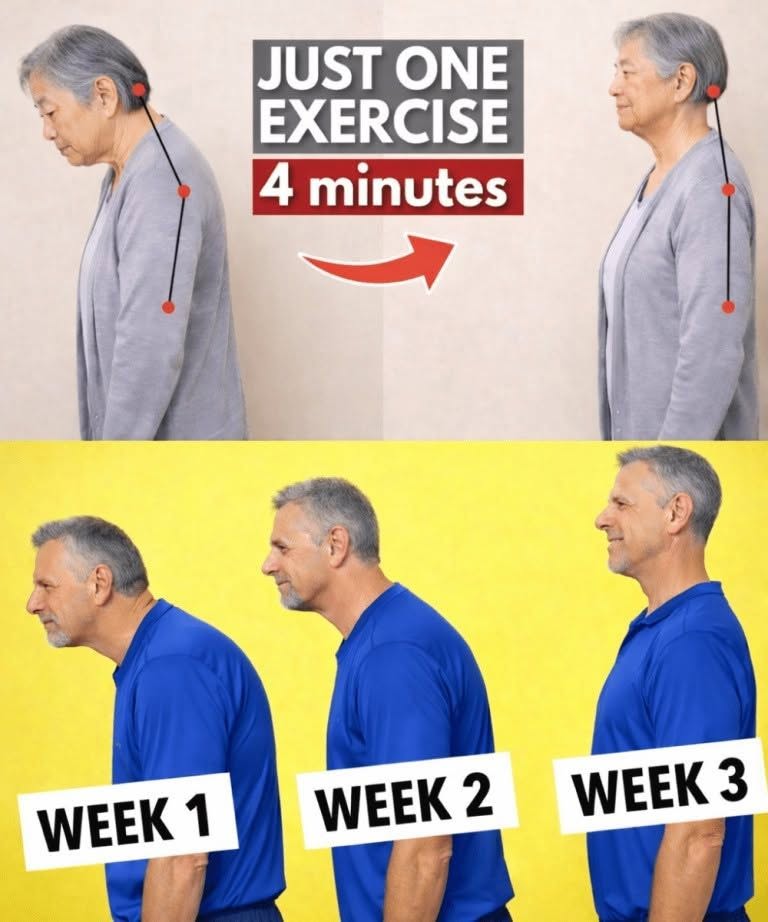
Learn a gentle 4-minute routine that may help older adults improve forward head posture, neck mobility, and upper-body alignment while reducing stiffness and tension.
As we get older, it is common to notice the head gradually moving forward, the shoulders rounding, and the upper back becoming stiffer. Spending long periods looking down at phones, reading, watching television, or sitting at a computer can make these habits more noticeable.
This is often called forward head posture.
The good news is that gentle, consistent exercises can help improve posture and mobility. However, no four-minute routine can permanently “fix” posture overnight. The goal is to gradually strengthen the muscles that support your head and upper back while improving flexibility and body awareness.
What Is Forward Head Posture?
In an ideal standing position, the head is balanced relatively comfortably over the shoulders.
With forward head posture, the head sits farther forward than usual. This can place additional demands on the muscles and joints of the neck and upper back.
You may notice:
- A forward-positioned head
- Rounded shoulders
- Tightness in the neck
- Upper-back stiffness
- Shoulder discomfort
- Difficulty maintaining an upright posture
Posture naturally varies between individuals, and a slightly forward head does not automatically mean something is wrong.
A Gentle 4-Minute Routine
The following routine is designed to be simple and low-impact. Perform the movements slowly and comfortably rather than forcing your neck into a particular position.
Minute 1: Chin Tucks
Sit or stand upright with your shoulders relaxed.
Look straight ahead and gently draw your chin backward, as though you’re trying to create a small “double chin.”
Do not look down.
Hold for about 3–5 seconds, then relax.
Repeat several times.
This movement helps you practice positioning the head more directly over the shoulders.
Minute 2: Shoulder Blade Squeezes
Sit or stand comfortably.
Gently draw your shoulder blades backward and slightly downward, as though you are trying to bring them toward each other.
Hold for a few seconds, then release.
Repeat slowly.
Don’t shrug your shoulders toward your ears or force them backward. The movement should feel controlled and comfortable.
Minute 3: Gentle Chest Stretch
Tight chest muscles can contribute to a rounded-shoulder posture.
Stand in a doorway and place your forearms gently against the door frame if comfortable.
Take a small step forward until you feel a mild stretch across your chest.
Hold for approximately 15–30 seconds while breathing normally.
There should be no sharp pain or numbness.
Minute 4: Neck and Upper-Back Mobility
Finish with gentle movement.
Slowly turn your head toward one shoulder, return to center, and then turn toward the other side.
You can also gently move your upper back by sitting upright and extending through the chest without forcing the neck.
Keep the movements small and controlled.
The objective is mobility—not stretching as far as possible.
Why Consistency Matters More Than Speed
Doing a routine once won’t permanently change posture.
Muscles, joints, and movement habits generally respond to consistent practice over time.
Instead of performing aggressive exercises once a week, it may be more useful to incorporate brief periods of gentle movement throughout the day.
For example, after reading, using a phone, or sitting for a long period, stand up, move your shoulders, and reset your posture.
Don’t Try to Force Your Head Back
One common mistake is aggressively pulling the head backward or repeatedly stretching the neck.
This can increase muscle tension and discomfort.
Think about creating a comfortable, tall posture, rather than trying to make your neck perfectly straight.
Your head should feel balanced rather than held rigidly in place.
Your Everyday Habits Matter
Exercises are only part of the solution.
Consider adjusting your daily environment:
Raise Your Phone
Instead of constantly looking down at your phone, bring it closer to eye level when practical.
Improve Your Reading Position
If you read frequently, use adequate lighting and consider a book stand that allows you to keep your head in a more comfortable position.
Check Your Computer
The top portion of your monitor should generally be positioned so you don’t have to constantly bend your neck downward.
Take Movement Breaks
Long periods of sitting can encourage poor posture.
Stand up and move regularly rather than remaining in one position for hours.
What About the “Oldest Doctor in Japan” Claim?
Online headlines sometimes attribute posture routines to a particular elderly Japanese doctor and claim that the technique can dramatically reverse aging or permanently correct posture in only a few minutes.
Such claims should be treated cautiously unless they are supported by a reliable medical source.
The exercises themselves may be reasonable gentle mobility and strengthening movements, but there is no need to rely on an extraordinary claim to justify basic posture exercises.
When Should You Get Medical Advice?
Not every neck or posture problem should be treated with exercises.
Speak with a healthcare professional or physical therapist if you have persistent or worsening neck pain, especially if it is accompanied by:
- Numbness or tingling
- Arm or hand weakness
- Significant headaches
- Dizziness
- Loss of coordination
- Pain following an injury
- Difficulty walking
- Changes in bladder or bowel control
Stop an exercise if it causes significant pain, dizziness, numbness, or other concerning symptoms.
The Bottom Line
Forward head posture can become more noticeable with age, but gentle movement, strengthening, flexibility work, and better everyday habits can help improve comfort and posture.
A simple four-minute routine can be a useful starting point, but lasting improvement comes from regular practice rather than a one-time exercise.
The goal isn’t to force your body into a perfect position. It’s to help your neck, shoulders, and upper back move comfortably and support a more natural upright posture.
This article is for general educational purposes and does not replace individualized advice from a doctor or physical therapist. Older adults with significant pain, neurological symptoms, osteoporosis, or recent injuries should seek professional guidance before beginning new exercises.