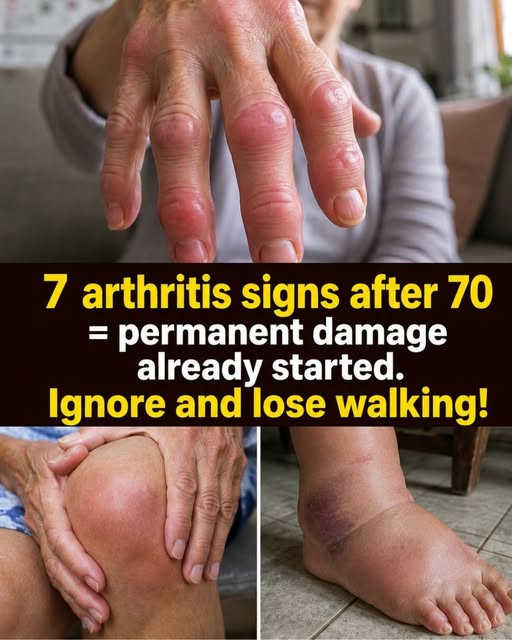
Learn 7 arthritis warning signs after 70 that deserve medical attention, including persistent joint pain, swelling, stiffness, reduced mobility, and sudden changes that may signal a more serious condition.
Arthritis becomes more common with age, but severe joint problems should never simply be dismissed as “normal aging.” Arthritis includes many different conditions, and some can be managed much more effectively when recognized early.
Having arthritis does not mean you will inevitably become disabled or “crippled.” With appropriate treatment, exercise, weight management when appropriate, and medical care, many older adults remain active and independent for years.
Here are seven signs worth taking seriously.
1. Persistent Joint Pain
Occasional aches after an active day are common.
But pain that persists for weeks, repeatedly returns, or progressively interferes with walking, sleeping, dressing, or other everyday activities deserves an evaluation.
Pain can come from osteoarthritis, inflammatory arthritis, injuries, gout, or other conditions.
2. Significant Joint Swelling
A joint that repeatedly becomes swollen, warm, or tender shouldn’t automatically be blamed on aging.
Swelling can occur with osteoarthritis, but pronounced inflammation may also suggest conditions such as rheumatoid arthritis or gout.
If swelling is sudden, severe, or accompanied by fever, seek medical attention promptly.
3. Morning Stiffness That Lasts a Long Time
Some stiffness after waking is common, particularly with osteoarthritis.
However, prolonged morning stiffness, especially when it affects several joints, can sometimes indicate inflammatory arthritis.
Pay attention to how long the stiffness lasts and whether it improves as you begin moving.
4. Difficulty Walking or Climbing Stairs
If joint pain or stiffness is making it increasingly difficult to walk, climb stairs, get out of a chair, or perform household activities, don’t simply accept the decline.
Reduced activity can lead to loss of muscle strength and balance, which may make mobility problems worse.
Early assessment can help identify appropriate treatments and exercises.
5. Loss of Joint Movement
A joint that becomes increasingly difficult to bend, straighten, or rotate deserves attention.
Reduced range of motion can interfere with simple activities such as:
- Getting dressed
- Bathing
- Opening containers
- Reaching overhead
- Getting into a car
Physical therapy and appropriate medical treatment may help preserve function.
6. Joints That Look Increasingly Deformed
Some forms of arthritis can cause changes in joint shape over time.
Visible enlargement, crooked fingers, or changes in the alignment of weight-bearing joints should be discussed with a healthcare professional, particularly when accompanied by pain or declining function.
A deformity does not automatically mean that severe disability is inevitable.
7. Pain or Stiffness That Keeps Getting Worse
Perhaps the most important warning sign is progressive loss of function.
If you’re gradually walking less, avoiding stairs, giving up hobbies, or needing increasing assistance because of joint symptoms, it’s time to seek professional advice.
Don’t wait until everyday movement becomes extremely difficult.
When Joint Pain May Be Something More Urgent
Not every painful joint is arthritis.
Seek prompt medical attention for a joint that suddenly becomes very painful, swollen, hot, and red, especially if you also have a fever.
This can occur with a joint infection or an acute attack of gout and requires appropriate evaluation.
Sudden inability to bear weight after an injury can also indicate a fracture or other significant injury.
What Can Help Protect Mobility After 70?
Keep Moving
Appropriate physical activity can help maintain muscle strength, joint mobility, balance, and independence.
Low-impact activities such as walking, swimming, cycling, and water exercise may be suitable for many people.
Strengthen the Muscles
Strong muscles around a joint can help support movement and everyday function.
A physical therapist can design exercises appropriate for your condition and abilities.
Maintain a Healthy Weight When Appropriate
For people carrying excess weight, even modest weight reduction can reduce stress on weight-bearing joints such as the knees.
Don’t Ignore Persistent Symptoms
Waiting until pain becomes severe can make it harder to remain active.
An evaluation can help determine whether medication, physical therapy, exercise, assistive devices, or another treatment would be appropriate.
The Bottom Line
Arthritis after 70 is common, but progressively worsening pain, swelling, prolonged stiffness, loss of mobility, reduced range of motion, joint deformity, or increasing difficulty with everyday activities should not simply be accepted as inevitable aging.
Early evaluation can help identify the type of arthritis and provide options for controlling symptoms and maintaining independence.
And one important correction to the alarming headline: arthritis does not automatically mean you will become “crippled.” Many people with arthritis remain mobile and active well into their later years with appropriate care.
This article is for general educational purposes and does not diagnose arthritis. New, severe, hot, swollen joints or sudden loss of mobility should be medically evaluated promptly.