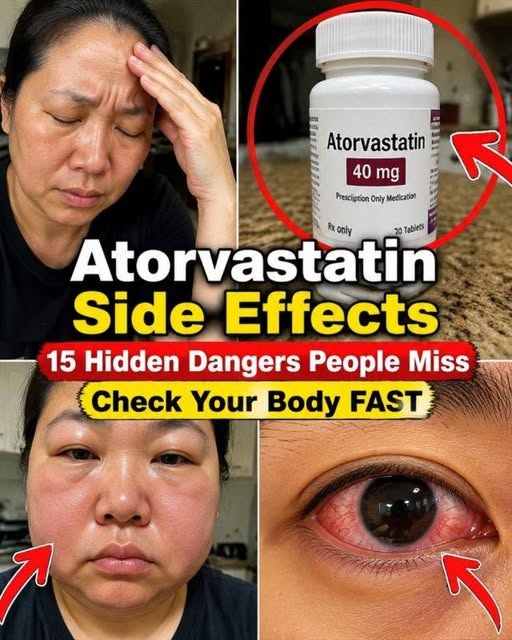
Learn about 15 possible atorvastatin side effects, including muscle pain, digestive symptoms, headache, liver-related warning signs, and rare serious reactions—and when to contact a doctor.
Atorvastatin is a widely prescribed statin used to lower LDL (“bad”) cholesterol and reduce the risk of heart attack and stroke. Like all medicines, it can cause side effects, although many people take it without significant problems.
Some effects can be mild and easy to overlook. Others are uncommon but important to recognize.
One important correction to the headline: there is no medically recognized “FAST check” for detecting atorvastatin side effects. The FAST acronym is commonly used to recognize symptoms of a stroke—not medication side effects.
1. Muscle Aches or Pain
One of the better-known possible statin-related effects is muscle discomfort.
You might notice:
- Aching
- Tenderness
- Muscle soreness
- Unusual discomfort in the arms or legs
Muscle pain can also have many causes unrelated to atorvastatin, so don’t automatically assume the medicine is responsible.
2. Muscle Weakness
Some people report weakness rather than pain.
If you develop unexplained or persistent muscle weakness after starting atorvastatin or changing its dose, tell your healthcare professional.
3. Headache
Headache can occur while taking atorvastatin, although headaches are common in the general population and aren’t necessarily caused by the medicine.
Persistent or severe headaches should be assessed in context.
4. Nausea
Some people may experience nausea or an unsettled stomach.
Taking the medication exactly as prescribed and discussing persistent symptoms with a pharmacist or doctor can help determine whether atorvastatin may be contributing.
5. Diarrhea
Digestive symptoms such as diarrhea can occur.
If diarrhea is severe or persistent, dehydration and other causes should also be considered.
6. Indigestion or Abdominal Discomfort
Some people experience digestive discomfort while taking atorvastatin.
Persistent abdominal symptoms should not automatically be attributed to the medication because gastrointestinal problems have many possible causes.
7. Constipation
Constipation has also been reported in people taking atorvastatin.
Adequate fluids, dietary fiber, and regular physical activity can help many people, unless a medical condition requires different advice.
8. Sleep Problems
Some people report changes in sleep while taking statins.
If you notice a clear and persistent change after starting atorvastatin, keep track of when it occurs and discuss it with your healthcare professional.
9. Dizziness
Dizziness can have numerous causes, including dehydration, low blood pressure, blood-sugar changes, and other medications.
If it repeatedly occurs after starting atorvastatin, mention it to your doctor or pharmacist.
10. Unusual Fatigue
Feeling unusually tired can have many explanations.
However, new persistent fatigue should be discussed with a healthcare professional, especially if it occurs together with weakness, dark urine, yellowing of the skin or eyes, or other concerning symptoms.
11. Changes in Liver Tests
Atorvastatin can cause changes in liver enzymes in some people.
This doesn’t necessarily produce noticeable symptoms, which is why your doctor may consider blood testing depending on your circumstances.
Do not assume that feeling well means your medication is having no effect—or that feeling tired automatically means your liver is being damaged.
12. Elevated Blood Sugar
Statins can cause a small increase in blood glucose in some people.
For most people who need a statin, the cardiovascular benefits outweigh this potential risk, but people at risk of diabetes may need appropriate monitoring.
13. Joint Pain
Joint discomfort can occur for many reasons, particularly with increasing age.
If new symptoms begin after starting a medication, keep your healthcare professional informed rather than stopping treatment on your own.
14. Allergic Reactions
Serious allergic reactions are uncommon but can occur with almost any medication.
Warning signs can include:
- Facial or throat swelling
- Difficulty breathing
- Severe rash
- Widespread itching
Difficulty breathing or significant swelling is an emergency.
15. Severe Muscle Injury — Rare but Important
A very rare but serious complication is rhabdomyolysis, in which muscle tissue breaks down and can potentially damage the kidneys.
Warning signs can include:
- Severe muscle pain
- Marked muscle weakness
- Dark or cola-colored urine
- Extreme tiredness
These symptoms require urgent medical evaluation.
What About the “FAST” Check?
FAST is primarily a tool for recognizing stroke symptoms:
F — Face: Is one side of the face drooping?
A — Arms: Is there sudden weakness or numbness in one arm?
S — Speech: Is speech suddenly slurred or difficult to understand?
T — Time: If these symptoms appear suddenly, seek emergency medical help immediately.
FAST is not a test for atorvastatin side effects.
Should You Stop Atorvastatin If You Notice a Side Effect?
Don’t stop atorvastatin on your own simply because you notice a symptom.
Statins can substantially reduce cardiovascular risk in appropriate patients. Stopping treatment without medical guidance can leave cholesterol levels uncontrolled and may increase cardiovascular risk.
Instead, contact your doctor or pharmacist. They may consider:
- Checking for other causes
- Reviewing your dose
- Checking for medication interactions
- Performing blood tests when appropriate
- Trying a different statin
- Adjusting the treatment plan
Some Drug Interactions Matter
The risk of certain statin-related problems can increase when atorvastatin is combined with particular medications or substances.
That’s why your doctor and pharmacist should know about all prescription medicines, over-the-counter products, and supplements you take.
Don’t assume a supplement is automatically safe simply because it is labeled “natural.”
When Should You Seek Urgent Help?
Seek prompt medical attention if you develop severe or unexplained muscle pain or weakness, especially with dark urine, or signs of a serious allergic reaction.
And if you suddenly develop facial drooping, arm weakness, or speech difficulty, remember: FAST is about stroke recognition, and emergency care should not be delayed.
The Bottom Line
Atorvastatin is an effective medication for lowering cholesterol and reducing cardiovascular risk. Most people tolerate it well, but possible side effects include muscle symptoms, digestive problems, headache, fatigue, and changes in laboratory tests.
The most important thing is not to panic and not to stop the medication without medical advice.
If you notice a new, persistent, or unusual symptom after starting atorvastatin, write down when it began and discuss it with your healthcare professional. This makes it easier to determine whether the medicine—or something else—is responsible.
This article is for general educational purposes and does not replace advice from your doctor or pharmacist.