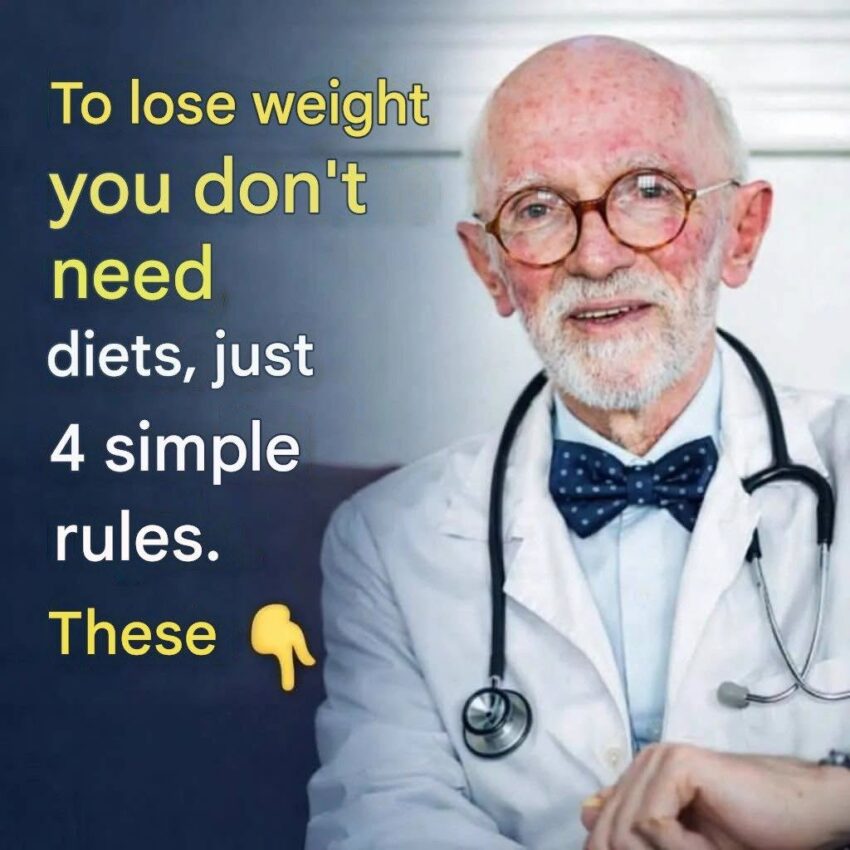
Discover Franco Berrino’s four simple habits for supporting healthy weight loss without extreme diets: chew slowly, eat dinner earlier, prioritize whole foods, and limit ultra-processed foods.
Franco Berrino, the Italian physician and epidemiologist known for his work in preventive medicine, argues that sustainable weight management should be based less on restrictive dieting and more on everyday eating habits. His approach focuses on slowing down at meals, respecting meal timing, choosing filling whole foods, and cutting back on highly processed products.
1. Chew Your Food Slowly
One of Berrino’s most emphasized habits is surprisingly simple: take your time while eating.
Eating slowly and chewing thoroughly gives your body more opportunity to recognize that food is arriving. Research discussed by Berrino has examined how prolonged chewing may influence appetite-related signals, including ghrelin, cholecystokinin and GLP-1.
Instead of rushing through a meal, try putting your fork down between bites, eating without distractions, and allowing yourself enough time to finish your meal comfortably.
2. Eat Dinner Earlier and Keep It Light
Berrino recommends avoiding heavy late-night meals and allowing a substantial overnight period without food. His frequently cited approach suggests approximately 14 hours between dinner and breakfast, when practical.
For example, someone who finishes dinner at 7 p.m. might have breakfast around 9 a.m. the next morning. However, this isn’t appropriate for everyone, and longer fasting periods aren’t automatically better.
The bigger takeaway is to avoid turning late-night eating into a daily habit and to make dinner lighter when possible.
3. Build Meals Around Foods That Keep You Satisfied
Rather than focusing exclusively on calories, Berrino emphasizes foods such as:
- Vegetables
- Whole grains
- Legumes such as beans, lentils and chickpeas
- Fruit in sensible portions
- Nuts and seeds
- Fermented foods such as yogurt, kefir and fermented vegetables
These foods can provide fiber and nutrients while helping meals feel more satisfying.
Whole grains and legumes are particularly useful alternatives to highly refined carbohydrates because they generally digest more slowly and can contribute to better satiety.
4. Reduce Foods That Make Weight Management Harder
The fourth rule is about what to limit, particularly ultra-processed and highly refined foods.
Berrino highlights foods such as sugary drinks, chips, processed meats, refined flour products and commercial sweets among foods worth reducing.
This doesn’t mean that one particular food automatically causes weight gain. Rather, regularly consuming large amounts of calorie-dense, highly processed foods can make it harder to maintain a healthy overall eating pattern.
The Bigger Message
Berrino’s philosophy isn’t really about finding a magical food or eliminating an entire food group. It’s about creating habits that can realistically be maintained for years.
A practical version might look like this:
Eat slowly → finish eating earlier → choose mostly minimally processed foods → reduce ultra-processed foods.
Regular physical activity can also complement these habits and support overall metabolic and cardiovascular health.
One important caveat: these four rules shouldn’t be presented as a guaranteed substitute for a medically appropriate weight-management plan. Weight loss ultimately depends on overall energy balance, food quality, activity, sleep, medications, and individual health factors. For people with medical conditions, pregnancy, or special nutritional needs, restrictive fasting or major dietary changes should be discussed with a qualified healthcare professional.
The most useful lesson is simple: sustainable weight management usually comes from consistent habits—not a crash diet that lasts only a few weeks.