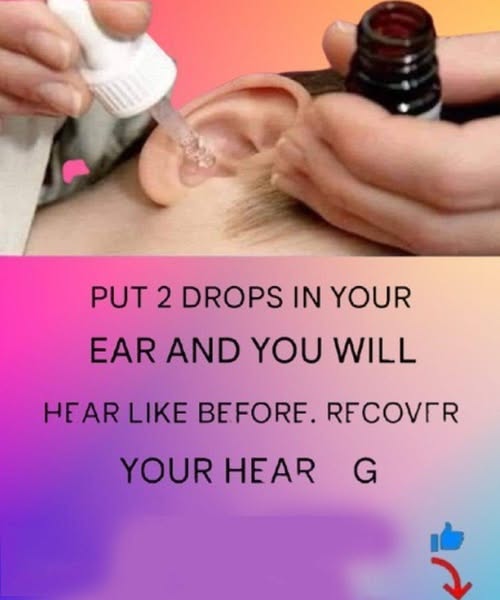
Putting drops in your ear may sound like a simple way to restore hearing, but there is no safe universal “2-drop” remedy that can recover hearing loss. Learn what can cause blocked hearing, when ear drops may help, and when you should see a doctor.
Put 2 Drops in Your Ear and You Will Hear Like Before? What You Really Need to Know
The idea that “two drops in your ear can restore your hearing” sounds appealing, especially if your ears feel blocked or sounds seem muffled. However, hearing loss has many different causes, and there is no single home remedy or ear-drop treatment that can safely restore hearing in everyone.
Sometimes reduced hearing is caused by something relatively simple, such as earwax buildup. In that situation, appropriate wax-softening drops may help the earwax come out and hearing may improve. But hearing loss can also result from an ear infection, damage to the eardrum, age-related changes, medication effects, prolonged loud-noise exposure, or problems involving the inner ear or auditory nerve.
When Ear Drops May Actually Help
If muffled hearing is caused by excess earwax, doctors may recommend earwax-softening drops. Common ingredients include mineral oil or certain wax-softening preparations.
The purpose isn’t to “repair” hearing. Instead, the drops soften hardened wax, making it easier for the wax to leave the ear naturally or be removed by a healthcare professional.
You should follow the product instructions rather than putting an unknown substance into the ear.
Don’t Put Random Liquids Into Your Ear
Home remedies involving oils, hydrogen peroxide, herbal extracts, garlic, alcohol, or other household ingredients are sometimes promoted online as ways to restore hearing.
They aren’t appropriate for everyone.
Putting substances into the ear can be particularly risky if you have:
- A perforated eardrum
- Ear tubes
- Ear drainage or bleeding
- Significant ear pain
- An active ear infection
- Previous ear surgery
A damaged eardrum can allow substances to reach areas where they shouldn’t be, potentially causing irritation or injury.
Sudden Hearing Loss Is Different
One of the most important things to understand is that sudden hearing loss should not be treated as simple earwax.
If hearing suddenly decreases in one or both ears—particularly over hours or a few days—you should seek urgent medical evaluation. Some types of sudden sensorineural hearing loss require prompt treatment, and delaying care can reduce the chance of recovery.
Seek medical attention promptly if hearing loss occurs together with:
- Severe dizziness
- Facial weakness
- Severe ear pain
- Ear discharge or bleeding
- New neurological symptoms
- Sudden hearing loss in one ear
- A loud explosion or injury immediately before the hearing change
What Should You Do If Your Hearing Is Getting Worse?
Rather than relying on a viral “two drops” trick, the safest approach is to determine why your hearing has changed.
A healthcare professional can examine the ear for wax, infection, inflammation, or eardrum problems. If necessary, a hearing test can determine whether the problem involves the outer/middle ear or the inner ear.
The Bottom Line
Two drops cannot universally restore hearing “like before.” Ear drops can sometimes help when temporary hearing reduction is caused by earwax, but they cannot reverse every type of hearing loss.
If your hearing has suddenly changed, is getting progressively worse, or is accompanied by pain, dizziness, drainage, or other symptoms, don’t experiment with home remedies—get your ear examined.