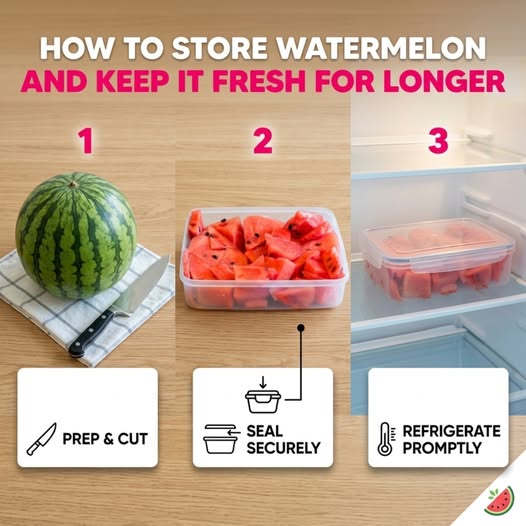
Learn how to store watermelon properly so it stays juicy, fresh, and delicious for longer. Discover the best ways to store whole, cut, and leftover watermelon while reducing spoilage and food waste.
It Often Goes Sour Too Quickly and Ends Up in the Trash: Here’s How to Store Watermelon the Right Way
Watermelon is one of the most refreshing fruits of summer, but once it is cut, it can spoil surprisingly quickly. A large watermelon may look perfectly fresh on the outside while the cut fruit gradually loses its crisp texture, becomes watery, or develops an unpleasant sour smell.
The good news is that proper storage can make a big difference. Whether you have a whole watermelon, half a melon, or a container full of cut pieces, a few simple habits can help preserve its freshness.
1. Keep a Whole Watermelon at Room Temperature—Until You Cut It
An uncut watermelon can generally be kept at room temperature in a cool, dry place away from direct sunlight.
Avoid leaving it beside a hot stove, in a sunny window, or somewhere exposed to excessive heat. High temperatures can speed up deterioration.
Once you cut the watermelon, however, refrigeration becomes important.
2. Refrigerate Cut Watermelon Promptly
After cutting watermelon, place the pieces in the refrigerator rather than leaving them sitting on the counter.
Transfer cut pieces to a clean, airtight container or cover the cut surface tightly. This helps reduce exposure to air, odors from other foods, and contamination.
For the best quality, try to eat refrigerated cut watermelon within a few days.
3. Don’t Leave It Sitting Out for Hours
Cut watermelon shouldn’t be treated like an uncut fruit. Once it has been cut, its storage requirements change.
If you’re serving watermelon at a picnic, barbecue, or gathering, put out only what you expect people to eat and keep the rest chilled.
If cut watermelon has been sitting at room temperature for an extended period, especially in hot weather, it’s safer to discard it rather than trying to refrigerate it again.
4. Store Pieces Without Excess Moisture
Watermelon naturally contains a lot of water. When pieces sit in their own juice, they can become soft and lose their appealing texture.
Use a container that doesn’t allow the fruit to sit submerged in accumulated liquid. If necessary, gently drain excess juice before storing.
Don’t squeeze or press the pieces, because bruised fruit tends to deteriorate faster.
5. Keep the Refrigerator Cold
A properly functioning refrigerator is essential for keeping cut watermelon fresh.
Store the fruit in the refrigerator rather than in the door if possible, where temperatures can fluctuate more frequently. A consistently cold refrigerator helps slow microbial growth and preserves quality.
6. Don’t Wash the Entire Watermelon Before Storage
If you’re storing an uncut watermelon, there’s usually no need to wash it and then put it away wet.
Instead, keep the outside dry and wash the watermelon thoroughly under running water immediately before cutting. This helps prevent dirt or microorganisms on the rind from being transferred to the edible flesh by the knife.
Also use a clean knife and clean cutting surface.
7. Freeze Watermelon If You Have Too Much
If you have more watermelon than you can eat while it’s fresh, freezing is an option.
Cut the watermelon into small pieces, remove the seeds if desired, and arrange the pieces in a single layer on a tray. Freeze until firm, then transfer them to a freezer-safe container or bag.
Frozen watermelon won’t have exactly the same crisp texture after thawing, so it’s often better for smoothies, chilled drinks, or frozen treats than for eating as fresh slices.
How Can You Tell If Watermelon Has Gone Bad?
Don’t rely only on appearance. Check for several warning signs:
- A strong sour, fermented, or unpleasant odor
- Slimy or unusually sticky flesh
- Significant discoloration
- Mold
- Excessively mushy texture
- Bubbling or other signs of fermentation
- A clearly unpleasant taste
If you’re unsure whether the fruit is safe, don’t taste it to test it. When watermelon shows obvious signs of spoilage, throwing it away is the safest choice.
The Simple Rule to Remember
Whole watermelon → keep it in a cool place.
Cut watermelon → refrigerate it promptly in a clean, covered container.
Too much watermelon → freeze it for later use.
Proper storage won’t make watermelon last forever, but it can help you enjoy more of the fruit while reducing unnecessary food waste.