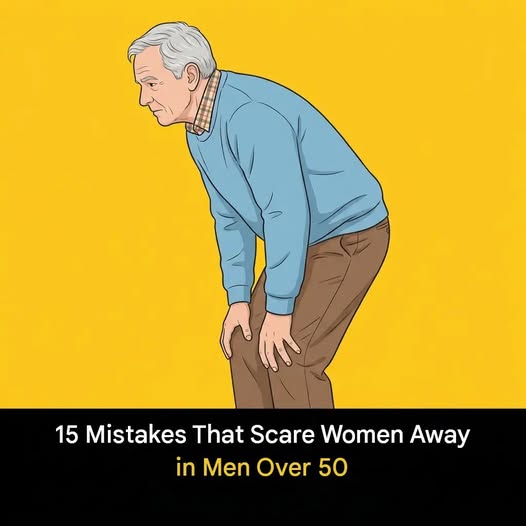
Turning 50 doesn’t mean losing your attractiveness or dating appeal. Discover 15 attitudes that can push people away and learn how confidence, respect, independence, communication, and authenticity can create stronger connections.
Fifty and Attractive: 15 Attitudes That Can Turn Women Off—and How to Avoid Them
Being 50 doesn’t mean you have to compete with younger women or change who you are to be attractive. In fact, dating later in life can come with an advantage: greater self-awareness, clearer priorities, and a better understanding of what you want from a relationship.
Attraction, however, isn’t only about appearance. The way someone communicates, treats others, handles disagreement, and respects boundaries can have a major influence on whether a connection develops.
Here are 15 attitudes worth watching—not because every woman will dislike them, but because they can make relationships unnecessarily difficult.
1. Constantly Seeking Validation
Needing occasional reassurance is completely human. But repeatedly asking, “Do you still find me attractive?” or needing constant compliments can put pressure on a partner.
Try instead: Build confidence from several sources—friendships, interests, accomplishments, and your own sense of self-worth.
2. Talking Constantly About an Ex
Past relationships are part of your history, but a new person shouldn’t feel as though they’re competing with someone from your past.
Try instead: Share your history honestly when appropriate, then focus on the person you’re getting to know now.
3. Comparing Yourself With Younger Women
Statements such as “I’m too old for this” or constantly comparing your appearance with women decades younger can undermine your own confidence.
Aging doesn’t eliminate romance or intimacy. Research from the National Institute on Aging notes that intimacy can remain an important and fulfilling part of life as people get older.
Try instead: Appreciate what your experience, personality, and confidence bring to a relationship.
4. Expecting Someone to Read Your Mind
A partner can’t always know what you want, need, or feel.
Try instead: Say what you mean clearly and respectfully. Healthy relationships rely on communication and honesty rather than guessing games.
5. Being Overly Critical
Constant criticism of someone’s clothes, friends, habits, appearance, or lifestyle can quickly make a relationship feel exhausting.
Try instead: If something genuinely matters, discuss it constructively. Not every difference needs correcting.
6. Trying to Control the Relationship
Wanting to know where someone is every minute, who they’re talking to, or what they’re doing can feel controlling rather than caring.
Healthy relationships allow both people to maintain independence, friendships, interests, and personal boundaries.
7. Playing Emotional Games
Ignoring messages deliberately, creating jealousy, pretending not to care, or withholding affection to gain control may create drama—but it rarely creates trust.
Try instead: Be straightforward about your interest and expectations.
8. Rushing Into a Relationship
Strong chemistry can be exciting, but there is no need to decide immediately that someone is your forever partner.
Taking time to get to know each other can help reveal whether your values and lifestyles actually fit.
9. Talking Only About Problems
Everyone has difficult days. But if every conversation becomes a list of complaints about family, work, money, neighbors, or previous relationships, the other person may eventually feel emotionally drained.
Try instead: Make room for humor, curiosity, shared experiences, and positive conversations.
10. Pretending to Be Someone You’re Not
Trying to appear younger, wealthier, more sophisticated, or more adventurous than you really are may attract someone temporarily—but maintaining a false image is exhausting.
Authenticity is more sustainable.
AARP’s current guidance on dating after 50 similarly emphasizes being authentic and communicating intentions clearly.
11. Having No Life Outside the Relationship
A relationship shouldn’t become your entire identity.
Maintaining your own friends, hobbies, routines, and interests gives both partners healthy breathing room.
Try instead: Build a relationship that adds to your life rather than replacing it.
12. Refusing to Compromise
Having boundaries is healthy. Expecting everything to happen exactly your way is different.
Healthy relationships involve two people whose needs and preferences sometimes differ. Respectful compromise can help both people feel valued.
13. Speaking Disrespectfully During Arguments
Disagreements are normal. Insults, humiliation, threats, or deliberately hurting someone’s insecurities are not.
Try instead: Talk about the problem without attacking the person. If emotions become overwhelming, take a break and return to the conversation when both people are calmer.
14. Making Age the Center of Everything
Being 50 can be an important part of your identity, but it doesn’t have to define every conversation.
You don’t need to apologize for your age—or constantly prove that you’re “still young.”
Your experience can be an advantage.
15. Ignoring Red Flags Because You Want Love
This may be the most important one.
Being attractive and confident doesn’t mean accepting disrespectful or manipulative behavior simply because you’re interested in someone.
Watch for controlling behavior, dishonesty, excessive jealousy, pressure, or someone who repeatedly ignores your boundaries. Healthy relationships should include respect, equality, honesty, and independence.
And if you’re dating online, be especially careful about people who quickly profess intense affection, avoid meeting or video chatting, or ask for money. Romance scams can target older adults.
What Makes a Woman Attractive After 50?
There isn’t a universal formula for attraction. But qualities such as confidence, kindness, emotional maturity, humor, independence, curiosity, and authenticity can make someone enjoyable to be around at any age.
You don’t have to look 30 to be attractive at 50.
You don’t have to behave differently to earn someone’s attention.
And you certainly don’t need to tolerate disrespect just to avoid being alone.
The Bottom Line
Turning 50 can be an opportunity to become more—not less—selective about relationships.
Instead of asking, “How can I make someone like me?” consider asking:
“Do we respect each other? Can we communicate honestly? Do I feel comfortable being myself around this person?”
Those questions can lead to much healthier connections than trying to follow a rigid list of rules about what makes a woman attractive.