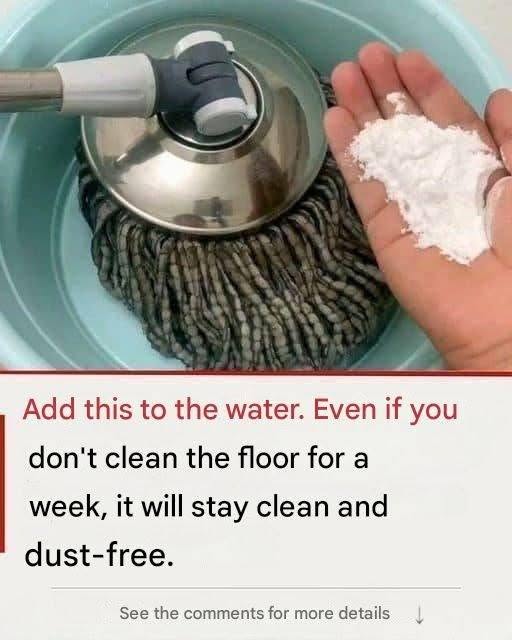
Discover simple and safe additions to mop water that can help remove dirt, reduce residue, and keep your floors looking cleaner for longer.
check this item on amazon

Add This to Your Mop Water: Keep Your Floors Cleaner and Dust-Free for Longer
Keeping floors clean can feel like a never-ending household chore. Even after mopping, dust and dirt can quickly return, especially in busy homes with children, pets, or frequent foot traffic.
While there is no ingredient that can literally keep a floor dust-free for an entire week, a simple and effective cleaning routine can help reduce visible dust and keep floors looking fresh for longer.
What Can You Add to Mop Water?
For many sealed, washable floors, a small amount of mild dish soap can help loosen everyday dirt and grime.
Simple Method
- Fill a bucket with warm water.
- Add only a few drops of mild dishwashing liquid.
- Mix gently.
- Dip your mop into the solution and wring it out well.
- Mop the floor without soaking it.
- Allow the surface to dry completely.
The key is using very little soap. Too much can leave a sticky film that actually attracts more dirt and makes the floor look dull.
Add Vinegar? Be Careful
White vinegar is often recommended as a natural floor-cleaning ingredient, but it is not suitable for every type of flooring.
It may be appropriate for some sealed surfaces when properly diluted, but acidic cleaners can damage or dull certain materials, including some natural stone surfaces.
If you’re considering vinegar, check the flooring manufacturer’s cleaning recommendations first.
What About Essential Oils?
A few drops of an essential oil may make a room smell pleasant, but essential oils are not necessary for cleaning and don’t provide a reliable dust-prevention effect.
If you use them, avoid applying oily mixtures to floors where they could create a slippery surface.
The Secret Is Often the Mop, Not the Ingredient
The type of mop and cleaning technique can make a bigger difference than adding extra ingredients to the water.
A microfiber mop can pick up fine dust and dirt effectively. Before wet-mopping, remove loose dust with a microfiber dust mop or vacuum.
This two-step approach helps prevent dust from turning into muddy residue during mopping.
Don’t Use Too Much Water
One of the most common floor-cleaning mistakes is soaking the floor.
Excess water can damage certain flooring materials and may leave behind streaks or residue. Use a damp—not dripping—mop and follow the manufacturer’s instructions for your specific floor.
Important: Avoid Mixing Cleaning Chemicals
Never combine household cleaning products unless the product label specifically says the combination is safe.
In particular, never mix bleach with vinegar, ammonia, or other cleaning products, because dangerous gases can form.
Simple cleaning solutions are usually safer than complicated mixtures containing several household chemicals.
How to Keep Floors Cleaner Between Moppings
You can reduce the amount of dust that reaches your floors by making a few small changes:
- Place doormats at entrances.
- Remove outdoor shoes before entering.
- Vacuum or dry-mop high-traffic areas regularly.
- Clean pet areas frequently.
- Keep windows and fans reasonably clean.
- Wipe dusty surfaces before cleaning the floor.
- Avoid using excessive detergent.
These habits can make a noticeable difference in how quickly dust accumulates.
Does This Trick Keep Floors Clean for a Week?
Unfortunately, no mop-water ingredient can guarantee that floors will remain dust-free for a full week. Dust comes from many sources, including outdoor particles, fabric fibers, skin cells, and everyday household activity.
However, using the right amount of cleaner, choosing an appropriate mop, and removing dry dust before wet-mopping can help your floors stay cleaner for longer.
Final Thoughts

You don’t need an expensive collection of cleaning products to maintain clean floors. For many sealed floors, warm water with a few drops of mild dish soap, combined with good cleaning technique, can be enough for everyday dirt.
Most importantly, always check your flooring manufacturer’s recommendations before using any homemade cleaning solution. What works for tile or certain sealed surfaces may damage wood, natural stone, laminate, or other specialty flooring.
A simple routine—dry dust removal first, followed by careful damp mopping—is often the safest and most effective way to keep floors looking clean and fresh.