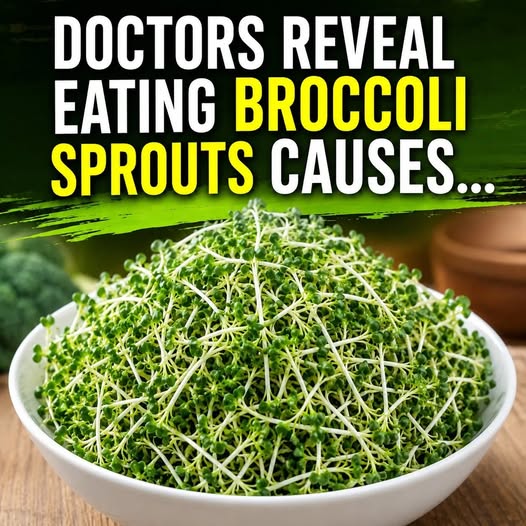
Discover the evidence-based benefits of broccoli sprouts, their sulforaphane content, possible health effects, and how to safely grow fresh broccoli sprouts at home.
Broccoli sprouts may look like tiny plants, but they contain a concentrated supply of compounds that have attracted considerable scientific interest.
The most famous is sulforaphane, an isothiocyanate produced when compounds in broccoli sprouts are converted by the enzyme myrosinase. Researchers have investigated sulforaphane for its effects on oxidative stress, inflammation, metabolism, and the body’s handling of certain environmental chemicals. (PubMed)
That doesn’t mean broccoli sprouts are a miracle food or a treatment for disease. Human studies have produced some promising findings, but results vary depending on the preparation, dose, and individual. The strongest reason to eat broccoli sprouts is that they are a nutrient-rich vegetable that can complement an overall healthy diet.
What Are Broccoli Sprouts?
Broccoli sprouts are the young shoots that grow from broccoli seeds.
They are usually harvested when they are only a few days old, when the stems are delicate and the first leaves have appeared.
Unlike mature broccoli, which develops a large head, sprouts are eaten while they are still young.
Their slightly peppery flavor makes them easy to add to:
- Salads
- Sandwiches
- Wraps
- Grain bowls
- Soups
- Omelets
- Smoothies
- Avocado toast
Why Are Broccoli Sprouts So Interesting?
The main reason is glucoraphanin.
Glucoraphanin is a glucosinolate found in broccoli and particularly concentrated in young broccoli sprouts. When plant tissue is damaged by chewing or cutting, the enzyme myrosinase can help convert glucoraphanin into sulforaphane.
Sulforaphane has been extensively studied in laboratory research and human clinical trials. Reviews of the research describe more than 50 clinical trials investigating broccoli, broccoli sprouts, glucoraphanin, or sulforaphane in different settings. (PubMed)
1. They Provide Sulforaphane Precursors
This is arguably the biggest reason people include broccoli sprouts in their diet.
Sulforaphane activates cellular pathways involved in the body’s antioxidant and protective responses. Much of the research focuses on the Nrf2 pathway and the enzymes involved in handling oxidative stress.
However, it’s important to distinguish biological effects demonstrated in research from claims that broccoli sprouts prevent or cure a particular disease.
Scientists are still studying exactly how much sulforaphane people need and which forms provide the greatest benefit.
2. They May Support the Body’s Handling of Certain Pollutants
One of the more interesting human studies involved 291 adults who consumed a broccoli-sprout beverage for 12 weeks.
Researchers found increased urinary excretion of metabolites associated with benzene and acrolein, suggesting enhanced elimination of some compounds after exposure. (PubMed)
This is an interesting finding, but it should not be interpreted as meaning that broccoli sprouts “detoxify your entire body” or make exposure to pollution harmless.
They are not a substitute for reducing exposure to pollutants.
3. They May Support Metabolic Health
Researchers have also studied broccoli sprouts and sulforaphane in people with metabolic problems.
A randomized controlled trial in people with prediabetes found that broccoli sprout extract produced a modest reduction in fasting blood glucose compared with placebo. However, the study did not meet its prespecified primary outcome, and the researchers found that responses varied between participants. (PubMed Central (PMC))
This is why it would be misleading to call broccoli sprouts a treatment for diabetes or prediabetes.
Instead, they may be considered one nutritious food within a broader eating pattern.
4. They May Have Anti-Inflammatory Effects
Sulforaphane has been investigated for its effects on inflammatory and oxidative-stress pathways.
Some human studies involving broccoli sprouts have reported changes in inflammatory markers. Reviews of clinical research have summarized findings involving markers such as C-reactive protein and interleukin-6. (PubMed Central (PMC))
Still, changes in a laboratory marker don’t necessarily translate into prevention or treatment of a disease.
More research is needed to determine the long-term clinical significance.
5. They Are Being Studied for Liver Health
Broccoli sprout preparations have also been investigated in people with liver abnormalities.
In one randomized, placebo-controlled study involving Japanese men with fatty liver, a broccoli-sprout extract containing the sulforaphane precursor glucoraphanin was associated with reductions in several liver-related blood markers after two months. (PubMed Central (PMC))
This is encouraging, but it involved a specific extract under controlled study conditions, not simply eating a handful of homemade sprouts.
Broccoli sprouts should therefore not be promoted as a cure for fatty liver.
6. They May Support the Body’s Antioxidant Defenses
Sulforaphane doesn’t simply act like a conventional antioxidant that directly neutralizes every free radical.
Instead, it can stimulate cellular defense systems that help the body respond to oxidative stress.
This is one reason sulforaphane continues to attract scientific interest.
Nevertheless, eating broccoli sprouts should be viewed as part of an overall nutritious diet rather than as a way to eliminate oxidative stress completely.
How to Grow Broccoli Sprouts at Home
Growing broccoli sprouts requires surprisingly little equipment.
You’ll Need:
- 1–2 tablespoons broccoli sprouting seeds
- A clean glass jar
- A fine mesh sprouting lid or clean breathable covering
- Clean drinking water
- A clean area away from direct sunlight during the early sprouting stage
Use seeds specifically sold for sprouting rather than ordinary garden seeds, because sprouting conditions are warm and moist and can allow bacteria to multiply.
Step 1: Soak the Seeds
Place the broccoli seeds in a clean jar.
Cover them with plenty of clean water and allow them to soak for approximately 6–12 hours.
The seeds will absorb water and begin the germination process.
Step 2: Drain Thoroughly
After soaking, drain the water completely.
Rinse the seeds with clean water and drain again.
Turn the jar upside down at an angle so excess water can escape.
This is important because standing water increases the risk of spoilage and microbial growth.
Step 3: Rinse Twice Daily
Rinse the seeds with clean water about twice each day.
After each rinse, drain them thoroughly.
You want the seeds to remain moist without sitting in a pool of water.
Within a day or two, tiny roots should begin appearing.
Step 4: Let Them Grow
Continue rinsing and draining daily.
Broccoli sprouts generally develop quickly, and you may see small green leaves within several days.
Keep the jar clean and provide good air circulation.
Avoid leaving the sprouts submerged.
Step 5: Harvest
When the sprouts have developed small green leaves and reached the size you prefer, give them a final rinse and drain them thoroughly.
Refrigerate them in a clean container and use them promptly.
An Important Safety Warning About Homemade Sprouts
This is one area where healthy-food articles often overlook an important issue.
Raw sprouts can carry harmful bacteria, including Salmonella and pathogenic E. coli.
The warm, moist conditions needed for sprouting are also favorable for bacterial growth. CDC food-safety guidance advises avoiding raw or undercooked sprouts, particularly for people at higher risk of severe foodborne illness. (CDC Stacks)
People who should be particularly cautious include:
- Young children
- Older adults
- Pregnant people
- People with weakened immune systems
For these groups, cooked sprouts are a safer option.
Cooking can reduce the risk of foodborne illness, although heating may affect some of the compounds that make raw sprouts attractive nutritionally.
How to Reduce the Risk When Growing Sprouts
If you choose to grow sprouts at home:
- Start with seeds intended for sprouting.
- Wash your hands before handling them.
- Use a clean jar and clean equipment.
- Rinse and drain them regularly.
- Don’t allow sprouts to sit in stagnant water.
- Discard sprouts that smell unpleasant or look slimy or moldy.
- Refrigerate harvested sprouts promptly.
- Don’t keep them longer than necessary.
- Consider cooking them if you are in a higher-risk group.
Even careful home preparation cannot guarantee that raw sprouts are free from harmful bacteria.
How to Eat Broccoli Sprouts
Fresh sprouts can be added to many everyday foods.
Try them in:
Breakfast
Add a small handful to an omelet or egg sandwich.
Lunch
Put them inside a chicken, tuna, or vegetable sandwich.
Salad
Combine them with leafy greens, cucumber, tomatoes, carrots, and a simple vinaigrette.
Dinner
Use them as a topping for grain bowls, cooked vegetables, or soups.
If you are concerned about food safety, lightly cooking the sprouts is a safer approach than eating them raw.
How Many Broccoli Sprouts Should You Eat?
There is no universally established daily amount of fresh broccoli sprouts that guarantees a particular health benefit.
Studies have used different forms and quantities, including whole sprouts, beverages, powders, and extracts.
Because the sulforaphane content can vary considerably, it is not appropriate to assume that a specific handful of homemade sprouts provides the same dose used in a clinical trial.
For most people, the sensible approach is to treat broccoli sprouts as one vegetable among many, rather than consuming very large quantities in an attempt to obtain a therapeutic dose.
What About Broccoli Sprout Supplements?
Supplements containing broccoli sprout extract or sulforaphane are widely marketed.
However, supplements can differ substantially in their glucoraphanin and myrosinase content, and the amount of sulforaphane ultimately produced can vary.
Clinical studies have used carefully characterized preparations that aren’t necessarily equivalent to products purchased online.
If you’re taking medication or have a medical condition, discuss concentrated supplements with a healthcare professional before using them regularly.
Are Broccoli Sprouts a Cancer Cure?
No.
Sulforaphane has demonstrated interesting anticancer-related mechanisms in laboratory and animal research, and researchers have conducted human studies examining various cancer-related outcomes. But this does not establish broccoli sprouts as a cancer treatment or guarantee that eating them prevents cancer. (PubMed)
People with cancer should never replace prescribed treatment with broccoli sprouts, supplements, or another dietary remedy.
The most reasonable claim is that cruciferous vegetables can be part of a nutritious dietary pattern associated with overall health.
Frequently Asked Questions
Are broccoli sprouts better than mature broccoli?
Not necessarily. They are different foods with different nutrient and phytochemical profiles. Broccoli sprouts are particularly interesting because of their glucoraphanin and potential sulforaphane production.
Can I grow broccoli sprouts without soil?
Yes. Sprouts are commonly grown in jars without soil. They obtain what they need from the seed during the early stages of growth.
How long do broccoli sprouts take to grow?
They grow quickly. Depending on temperature, seed quality, and conditions, harvestable sprouts may develop within several days.
Should I eat broccoli sprouts raw?
Raw sprouts are commonly eaten, but they carry a food-safety risk. CDC guidance recommends avoiding raw or undercooked sprouts, especially for people at higher risk of severe foodborne illness. (CDC Stacks)
Can broccoli sprouts replace vegetables?
No. A varied diet containing different vegetables, fruits, legumes, whole grains, nuts, seeds, and appropriate protein sources provides a broader range of nutrients and beneficial plant compounds.
Final Thoughts
Broccoli sprouts are a fascinating addition to the diet because they contain glucoraphanin, the precursor to sulforaphane, a compound that has been extensively investigated in laboratory and human research.
Studies suggest potential benefits involving cellular antioxidant defenses, metabolism, inflammatory pathways, and the body’s processing of certain environmental compounds. However, the human evidence is still developing, and broccoli sprouts should not be presented as a cure for cancer, diabetes, fatty liver, or other diseases. (PubMed)
If you want to try them, growing broccoli sprouts at home can be simple—but food safety is essential. Sprouts should be grown using clean equipment, rinsed and drained properly, stored safely, and cooked when appropriate, particularly for people at higher risk of foodborne illness.
The best way to think about broccoli sprouts is simple: they’re a nutrient-rich food with promising research behind some of their plant compounds—not a miracle medicine.