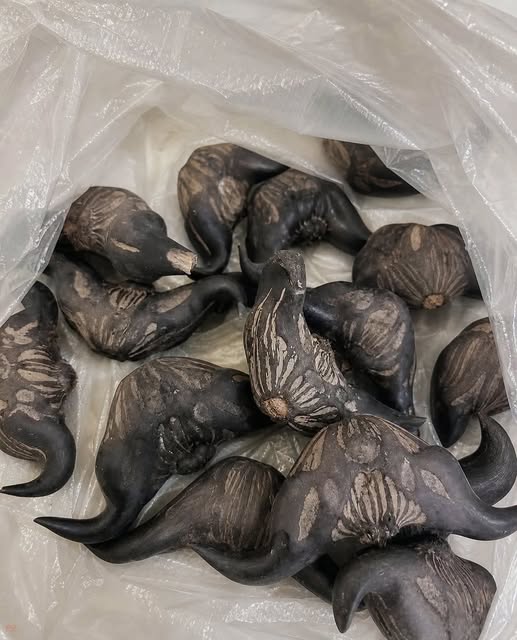
Received an unfamiliar food, seed, fruit, or plant from a neighbor? Learn why proper identification matters, how to determine whether it is edible, and safe ways to prepare it.
A bag of unfamiliar food can be exciting, especially when someone says it is something delicious or nutritious. But don’t eat it until you know exactly what it is.
Without a photograph or description of the items, it isn’t possible to safely identify them. Different seeds, nuts, dried fruits, roots, mushrooms, and wild plants can look surprisingly similar, and some poisonous varieties resemble edible foods.
First, take a close look
Before preparing anything, check:
- Shape and size: Are they round, long, flat, or irregular?
- Color: Are they green, brown, black, red, cream, or another color?
- Texture: Are they fresh, dried, wrinkled, hard, or soft?
- Inside: If the item is known to be safe to cut, what does the inside look like?
- Smell: Does it have a recognizable food aroma, or an unusual smell?
- Packaging: Is there a label, local name, date, or information from your neighbor?
- Origin: Was it purchased from a shop, grown in a garden, or collected from the wild?
Don’t taste-test an unknown item
A common mistake is to take a tiny bite to see whether something tastes bitter or sweet. That’s not a reliable safety test. Some naturally toxic plants can resemble edible foods, and the absence of an unpleasant taste doesn’t prove that something is safe. WHO specifically advises that wild mushrooms and plants should only be eaten when they have been definitively identified as nonpoisonous.
Cooking isn’t necessarily a solution either. Certain natural toxins aren’t reliably destroyed by ordinary cooking.
If they’re a familiar food
If your neighbor confirms the exact name and it’s a commercially or commonly consumed food, the preparation method will depend on what it is.
For example, some foods are:
- soaked before cooking,
- boiled or steamed,
- roasted,
- ground into flour,
- added to curries or soups,
- eaten as a snack,
- or used as a spice.
But the correct preparation cannot be determined from the bag alone.
What if they’re wild plants or mushrooms?
Be especially cautious. Some poisonous mushrooms and plants can look very similar to edible varieties. The consequences of misidentification can include severe gastrointestinal symptoms and, with some toxins, serious organ damage.
The safest next step
Send a clear photo of the items—ideally showing the whole bag, several individual pieces, and one item close up. If possible, also tell me what country/region they’re from and what your neighbor called them.
I can then help narrow down what they are and explain whether they’re edible and how they’re traditionally prepared. Until they’re positively identified, it’s safest not to eat them.