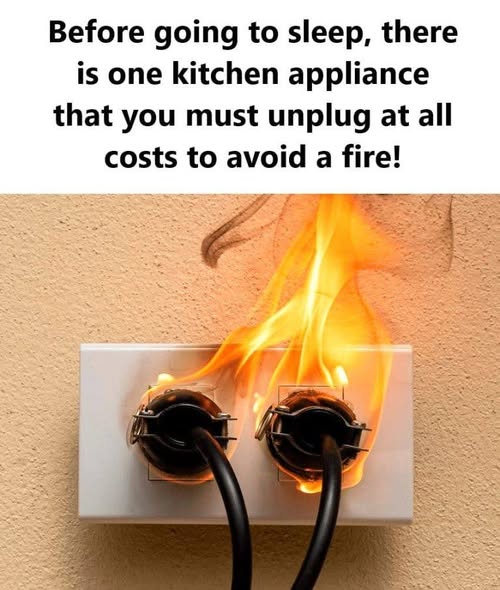
Learn which kitchen appliance is safest to unplug before bed, why it can pose a fire risk, and simple precautions that can help protect your home overnight.
One small habit in the kitchen can make a meaningful difference to household safety: unplug appliances that don’t need to remain powered while you’re sleeping.
The appliance to pay particular attention to: the toaster
A toaster is often mentioned in fire-safety advice because it contains heating elements that become extremely hot during normal operation. Crumbs and food particles can accumulate inside the appliance, creating an additional fire hazard if something goes wrong.
Even when you’re finished making toast, leaving a toaster plugged in means it remains connected to the electrical supply. For that reason, many fire-safety organizations recommend unplugging a toaster when it isn’t being used, particularly before going to bed or leaving home.
Why toasters deserve extra attention
Several factors can increase the risk:
- Crumbs can accumulate inside the toaster.
- Heating elements operate at very high temperatures.
- A malfunctioning appliance or damaged electrical component can potentially overheat.
- A toaster placed close to curtains, paper towels, cabinets, or other combustible materials has a greater potential for causing a fire.
This doesn’t mean every plugged-in toaster is about to start a fire. Modern appliances have safety features, and the absolute risk for any individual appliance is difficult to quantify. The point is that there is little benefit to keeping a toaster energized overnight when you’re not using it.
Other kitchen appliances to check
Before going to sleep, consider switching off or unplugging appliances that don’t need to remain on, particularly:
Coffee makers: If yours doesn’t have an automatic shutoff, make sure it is switched off after use.
Air fryers: Allow them to cool properly and make sure they’re switched off and unplugged when appropriate.
Electric kettles: Don’t leave them heating unnecessarily, and follow the manufacturer’s instructions.
Slow cookers: These are an exception—some are specifically designed for long cooking periods. Follow the manufacturer’s instructions rather than automatically unplugging them.
Microwaves: These normally remain plugged in because they require standby power, but make sure they’re switched off and in good condition.
A few simple overnight fire-safety habits
Before heading to bed:
- Check that the stove and oven are switched off.
- Make sure portable cooking appliances have finished operating.
- Unplug small appliances that don’t need overnight power.
- Keep electrical cords away from hot surfaces.
- Don’t use appliances with damaged cords or plugs.
- Keep combustible items away from cooking equipment.
- Make sure smoke alarms are functioning properly.
One important point
Unplugging a toaster is a sensible precaution, but it isn’t a guarantee against kitchen fires. Electrical faults can occur in many appliances, and cooking equipment itself remains an important source of household fires.
The safest approach is to combine good appliance maintenance with careful cooking habits and functioning smoke alarms.
Bottom line: If you have a conventional toaster sitting on your kitchen counter, unplugging it after use—especially before going to sleep or leaving home—is a simple precaution that costs almost nothing.