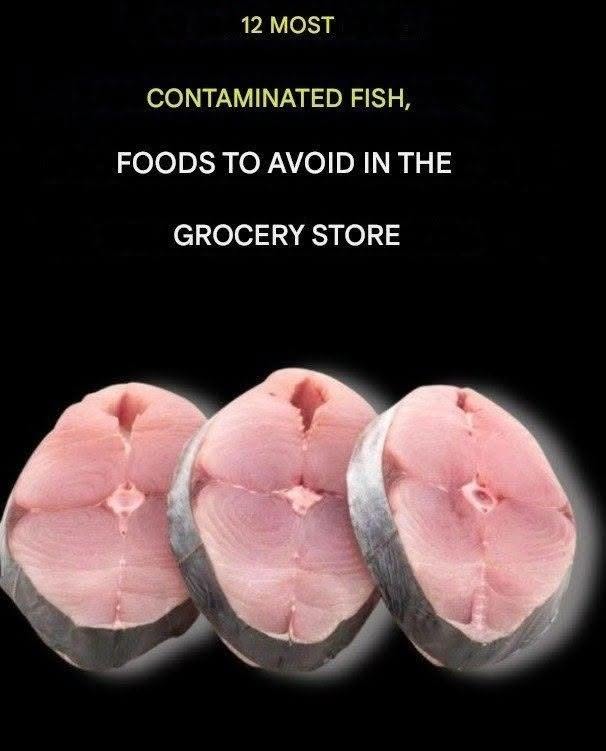
Concerned about mercury and contaminants in seafood? Learn which fish are commonly higher in mercury, who should limit them, and safer seafood choices for your grocery list.
Fish can be an excellent source of protein, omega-3 fatty acids, vitamin D, and other nutrients. But not every fish carries the same level of environmental contaminants.
When people talk about “contaminated fish,” they’re usually referring to methylmercury, PCBs, dioxins, or other pollutants that can accumulate in fish over time. Larger, longer-lived predatory fish tend to accumulate more mercury because they eat many smaller fish.
That doesn’t mean you need to stop eating seafood. In fact, health authorities generally recommend eating a variety of lower-mercury fish while limiting certain high-mercury species.
Here are 12 fish that deserve particular caution.
1. King Mackerel
King mackerel is one of the fish that health authorities advise consumers to avoid because of its high mercury content.
Don’t confuse it with Atlantic mackerel, which is a much lower-mercury option.
If you’re buying mackerel, check the species rather than assuming all mackerel have the same mercury level.
2. Shark
Sharks are large, long-lived predators, which means they can accumulate substantial amounts of mercury.
For this reason, shark is included among fish that people should avoid, particularly children and people who are pregnant or breastfeeding.
3. Swordfish
Swordfish is another large predatory fish that can contain high levels of mercury.
It may be popular as a steak-like seafood option, but it’s not one of the best choices if you’re trying to minimize mercury exposure.
4. Tilefish From the Gulf of Mexico
Tilefish can vary considerably depending on where it was caught.
Tilefish from the Gulf of Mexico is particularly high in mercury and is listed among fish to avoid.
However, tilefish from the Atlantic Ocean is treated differently in U.S. seafood guidance. Always check the species and harvest location when purchasing it.
5. Orange Roughy
Orange roughy are slow-growing, long-lived fish. Their long lifespan gives them more time to accumulate mercury.
Although they can be found in supermarkets and restaurants, they’re generally not a first-choice fish for people trying to minimize mercury exposure.
6. Marlin
Marlin is another large predatory fish that can contain elevated mercury levels.
Because of its size and position high on the food chain, it falls into the category of seafood that should be avoided or limited, depending on the specific health guidance being followed.
7. Bigeye Tuna
Not all tuna is equal.
Bigeye tuna is significantly higher in mercury than some commonly consumed tuna varieties and is included among fish to avoid in U.S. FDA guidance.
This is one reason why checking the species matters when purchasing fresh tuna or ordering it at restaurants.
8. Orange-Listed Tuna and Other High-Mercury Tuna
Tuna deserves special attention because mercury levels vary by species and product.
Canned light tuna generally contains less mercury than albacore or white tuna. However, albacore tuna should be eaten less frequently than canned light tuna.
The important takeaway is simple: “tuna” isn’t one single mercury category.
9. Ahi or Yellowfin Tuna
Yellowfin tuna can contain more mercury than some lower-mercury seafood choices.
It’s not necessarily in the same category as the highest-mercury fish, but frequent consumption can increase overall mercury exposure.
If you regularly eat tuna, consider rotating it with lower-mercury options such as salmon, shrimp, pollock, or canned light tuna.
10. Albacore Tuna
Albacore, often sold as white tuna, generally contains more mercury than canned light tuna.
That doesn’t mean you can never eat it. Instead, pay attention to portion size and frequency, especially if you’re pregnant or feeding young children.
11. Pacific Bluefin Tuna
Bluefin tuna are large predatory fish and can accumulate mercury.
Because tuna species can differ significantly in contaminant levels, consumers who eat tuna frequently may benefit from choosing lower-mercury varieties more often.
12. Spanish Mackerel
Some mackerel species can contain relatively high mercury levels.
This is another example of why the exact species matters. “Mackerel” on a label isn’t enough information to determine mercury exposure.
Why Does Mercury Build Up in Fish?
Mercury enters aquatic ecosystems from both natural sources and human activities. Certain forms can be converted into methylmercury, which is absorbed by aquatic organisms.
Small fish consume contaminated organisms, and larger fish consume many smaller fish.
Over time, mercury becomes more concentrated in the tissues of larger predators. This process is known as biomagnification.
That’s why a large, long-lived predator can contain substantially more mercury than a small fish lower on the food chain.
Who Needs to Be Especially Careful?
Mercury exposure is particularly important for developing nervous systems.
Pregnant people, people who may become pregnant, breastfeeding people, and young children should follow current seafood guidance carefully.
For these groups, seafood isn’t something that needs to be eliminated. Instead, choosing lower-mercury fish can provide nutritional benefits while reducing exposure.
Safer Fish to Put in Your Grocery Cart
The good news is that there are plenty of seafood choices that are generally lower in mercury.
Some popular options include:
- Salmon
- Shrimp
- Pollock
- Tilapia
- Cod
- Catfish
- Sardines
- Atlantic mackerel
- Canned light tuna
- Trout
These fish can provide protein and other nutrients while generally carrying less mercury than large predatory species.
Don’t Let the Word “Contaminated” Scare You Away From Seafood
The title “most contaminated fish” sounds alarming, but the bigger picture is important.
Fish remains a nutritious part of many diets. The goal isn’t to avoid seafood altogether. It’s to understand that mercury levels vary between species and to choose a variety of lower-mercury options.
It’s also important to distinguish mercury from other types of contamination. Local waters can have their own advisories for PCBs, PFAS, bacteria, or other pollutants. If you’re eating recreationally caught fish, check your local fish-consumption advisory.
How to Shop Smarter for Seafood
Before putting fish in your cart, ask three simple questions:
1. What species is it?
“Fish” or “tuna” isn’t specific enough to determine mercury levels.
2. Where was it caught?
Harvest location can matter for certain species and local contamination advisories.
3. How often am I eating it?
Occasional consumption is very different from eating the same high-mercury species several times a week.
Variety is one of the easiest ways to reduce exposure.
Final Thoughts
Some fish are more likely to accumulate mercury because they’re large, long-lived predators. King mackerel, shark, swordfish, Gulf of Mexico tilefish, orange roughy, marlin, and bigeye tuna are among the species that deserve particular caution.