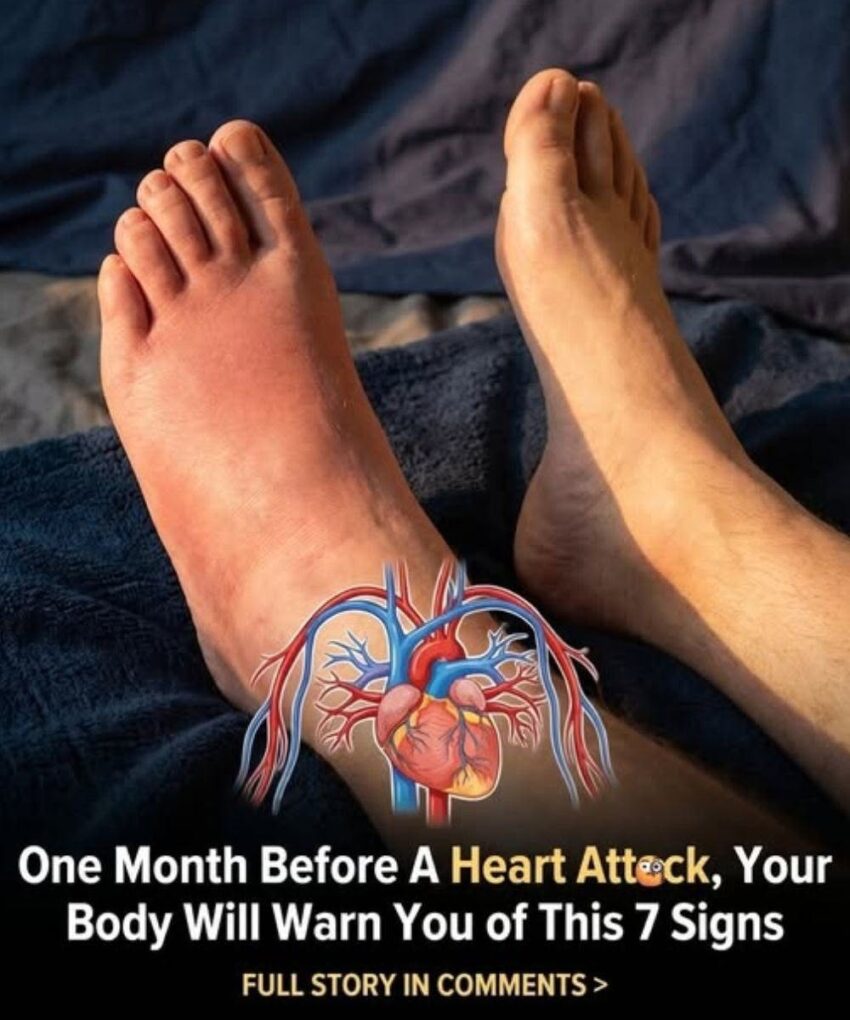
7 warning signs involving the arms and legs that may occur during a heart attack, when symptoms require emergency care, and what you should do next.
A heart attack does not always begin with dramatic chest pain. In some people, symptoms can appear in less obvious ways, including unusual sensations involving the arms, shoulders, or legs. Recognizing possible warning signs and acting quickly can be critical because heart muscle can be permanently damaged when blood flow is interrupted.
It is important to remember that symptoms vary from person to person. Arm or leg symptoms can also have many causes that are unrelated to the heart. However, when they occur suddenly or alongside other possible heart-attack symptoms, they should never be ignored.
1. Pain or Pressure in the Arm
One of the classic warning signs of a heart attack is discomfort that spreads from the chest into an arm. The left arm is commonly mentioned, but pain or pressure can affect either arm.
The sensation may feel like:
- Aching or heaviness
- Pressure or squeezing
- Burning
- Tightness
- Unusual discomfort that does not have an obvious cause
Arm discomfort is particularly concerning when it occurs together with chest pressure, shortness of breath, sweating, nausea, or dizziness.
2. Pain That Spreads to the Shoulder
Heart-related discomfort can sometimes travel toward the shoulder or upper back. Instead of feeling like a localized muscle injury, the sensation may develop suddenly or occur along with other symptoms.
If unexplained shoulder discomfort appears with chest pressure or breathing difficulty, seek emergency medical attention rather than assuming it is simply a pulled muscle.
3. Numbness or Tingling in an Arm
Sudden numbness, tingling, heaviness, or weakness in an arm can have several causes. Heart attacks can sometimes produce unusual sensations in the arm, particularly when accompanied by other symptoms.
However, sudden one-sided numbness or weakness can also be a sign of a stroke. This makes sudden neurological symptoms especially important to evaluate urgently.
4. Unusual Heaviness or Weakness
Some people describe heart-related symptoms as a feeling of unusual heaviness rather than sharp pain. An arm may feel weak, tired, or difficult to use.
If unexplained weakness occurs together with chest discomfort, shortness of breath, sweating, nausea, or lightheadedness, it should be treated as a potential emergency.
5. Discomfort Extending Into the Upper Back
Although the upper back is not technically part of the arm or leg, discomfort can radiate from the chest toward the back and shoulders during a heart attack.
Sudden, unexplained upper-body discomfort deserves particular attention when it occurs with other heart-related symptoms.
6. Leg Symptoms With Severe Shortness of Breath or Weakness
Leg discomfort by itself is not a typical heart-attack symptom. However, sudden weakness, unusual heaviness, or feeling faint can occur during a serious cardiovascular event.
If leg symptoms occur together with severe shortness of breath, chest pressure, fainting, or significant weakness, emergency evaluation is appropriate.
7. Unusual Symptoms Without Obvious Pain
Not every heart attack causes severe or recognizable pain. Some people experience symptoms such as unusual fatigue, nausea, sweating, dizziness, shortness of breath, or discomfort in the upper body without classic chest pain.
Women, older adults, and people with diabetes may be more likely to experience less typical symptoms.
When Should You Call Emergency Services?
If you suspect that you or someone else is having a heart attack, call your local emergency medical service immediately. Do not wait to see whether symptoms disappear and do not attempt to drive yourself to the hospital.
Possible heart-attack symptoms can include:
- Chest pressure, squeezing, fullness, or pain
- Pain or discomfort spreading to one or both arms
- Shoulder, back, neck, jaw, or upper-abdominal discomfort
- Shortness of breath
- Cold sweating
- Nausea or vomiting
- Lightheadedness or fainting
- Sudden unexplained weakness
Prompt treatment can help restore blood flow and limit damage to the heart.
Arm or Leg Pain Does Not Always Mean a Heart Attack
It is important not to assume that every arm or leg symptom is heart-related. Muscle strains, nerve compression, arthritis, circulation disorders, blood clots, and other conditions can cause pain, numbness, swelling, or weakness.
For example, sudden swelling, warmth, redness, and pain in one leg can be associated with a blood clot and also requires prompt medical assessment.
The combination of symptoms matters. New or unexplained symptoms that occur suddenly, particularly alongside chest discomfort or breathing problems, deserve urgent attention.
What Should You Do?
If symptoms suggest a possible heart attack, don’t try to diagnose yourself at home. Contact emergency medical services and follow the instructions provided by the dispatcher.
While waiting for help, remain as calm and still as possible and avoid exertion. If the person becomes unconscious and is not breathing normally, someone nearby should begin CPR and use an automated external defibrillator (AED) if available.
Final Thoughts
Arm or shoulder discomfort can sometimes be part of a heart attack, but leg symptoms alone are not usually a classic warning sign. The safest approach is to consider the entire pattern of symptoms rather than focusing on one body part.
If you have sudden chest discomfort, unexplained upper-body pain, severe shortness of breath, fainting, or other symptoms that could indicate a heart attack, seek emergency medical care immediately.
Disclaimer: This article is for general educational purposes and does not replace professional medical advice, diagnosis, or treatment.