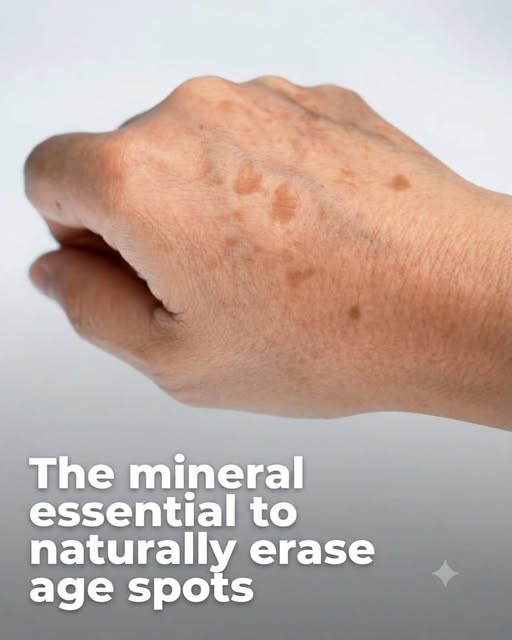
Discover which minerals are involved in healthy skin and why there is no single mineral proven to erase age spots. Learn evidence-based ways to fade dark spots and protect your skin.
The #1 Mineral for Removing Age Spots: What You Should Know
Age spots—also called solar lentigines—are flat areas of darker skin that commonly develop on places exposed to the sun, such as the face, hands, shoulders, and arms.
You may see claims online that one particular mineral can “remove” age spots. But the reality is more complicated:
No mineral has been proven to erase age spots on its own.
Some minerals are important for normal skin function, but treating established pigmentation usually requires approaches that target excess melanin and, most importantly, reduce further ultraviolet (UV) exposure.
What Causes Age Spots?
Despite their name, age spots aren’t caused simply by getting older.
Repeated exposure to ultraviolet radiation stimulates pigment-producing cells called melanocytes. Over time, this can result in localized areas of increased melanin production.
That’s why age spots are particularly common on areas that receive years of sun exposure.
What About Zinc?
If you see claims about a “#1 mineral” for skin health, zinc is often mentioned.
Zinc is essential for normal skin function and wound healing. It also plays a role in numerous cellular processes.
However, taking zinc supplements does not mean that existing age spots will disappear.
If you are deficient in zinc, correcting that deficiency is important for overall health—but taking extra zinc beyond your body’s needs isn’t a proven treatment for solar lentigines.
What About Copper?
Copper is another mineral involved in normal connective-tissue formation and pigmentation-related biological processes.
But that doesn’t mean copper supplements should be used to remove dark spots.
There is insufficient evidence that taking copper will safely and effectively eliminate age spots.
What Actually Helps Fade Age Spots?
For visible solar lentigines, treatments with better evidence include certain topical ingredients and dermatological procedures.
Depending on your skin and the diagnosis, a dermatologist may recommend treatments such as:
- Topical retinoids
- Hydroquinone, where appropriate and medically advised
- Azelaic acid
- Vitamin C-containing products
- Chemical peels
- Cryotherapy
- Laser or light-based treatments
The right option depends on the type of pigmentation, your skin tone, and whether the spot has been correctly identified.
Sunscreen Is Essential
If you’re trying to fade age spots, treating the pigmentation while continuing to expose your skin to strong UV radiation is working against yourself.
Use a broad-spectrum sunscreen with SPF 30 or higher on exposed skin.
Protective clothing, shade, and avoiding intense midday sun can also help.
Consistent sun protection can reduce the development of new pigmentation and help prevent existing spots from becoming darker.
Be Careful With DIY “Mineral” Remedies
Avoid rubbing concentrated mineral powders, supplements, baking soda, or other household substances directly onto dark spots.
Skin irritation can cause inflammation and sometimes make pigmentation more noticeable, particularly in people prone to post-inflammatory hyperpigmentation.
“Natural” or “mineral-based” doesn’t automatically mean safe for the skin.
Not Every Dark Spot Is an Age Spot
This is extremely important.
A new or changing dark spot should not automatically be assumed to be an age spot.
See a dermatologist or healthcare professional if a spot:
- Changes in size, shape, or color
- Has an irregular border
- Develops multiple colors
- Bleeds or crusts
- Itches or repeatedly becomes irritated
- Looks significantly different from your other spots
These changes can sometimes indicate skin cancer or another skin condition that requires proper diagnosis.
The Bottom Line
There isn’t a magic “number one mineral” that removes age spots.
Minerals such as zinc and copper are important for normal skin function, but supplements aren’t a proven way to erase sun-induced pigmentation.
For fading genuine age spots, sun protection plus evidence-based topical treatments or dermatological procedures are much more reliable approaches.
And before treating any persistent dark spot, make sure you know what it actually is.