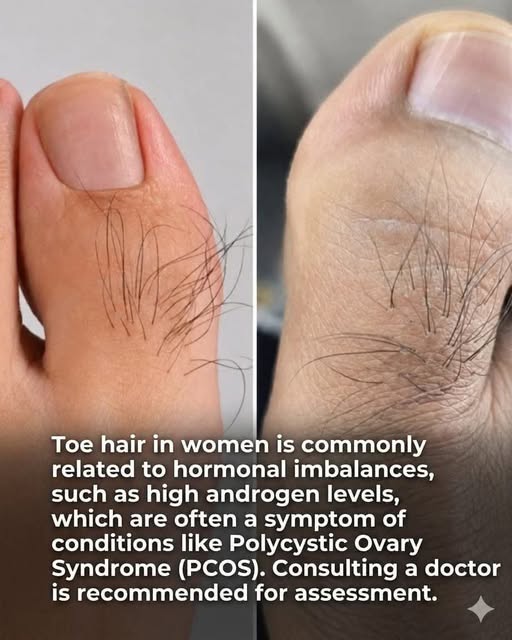
Toe hair is usually a normal feature, but sudden or unusually coarse hair growth can sometimes be associated with hormones, genetics, medications, or other health factors. Learn what toe hair may—and may not—tell you about your health.
Hair on the toes is something many women rarely think about. Some have fine, light hair, while others naturally develop darker or thicker hair on their toes, feet, or legs. In most cases, toe hair is completely normal and does not indicate a health problem.
However, changes in body-hair growth can sometimes provide clues about hormonal activity. Here is what women should know before assuming that toe hair automatically means something is wrong.
Is Toe Hair Normal in Women?
Yes. Women naturally have body hair, and the amount, color, thickness, and distribution vary greatly from person to person. Genetics and ethnic background can influence how noticeable body hair is.
Hair on the toes by itself is not a reliable test of hormone levels or overall health.
The important factor is whether the hair has always been there or whether there has been a noticeable change in its thickness, darkness, or amount.
When Could Extra Body Hair Be Hormonal?
When women develop unusually thick, dark hair in areas that typically have finer hair—such as the face, chest, abdomen, back, or inner thighs—it may be classified as hirsutism.
Hirsutism is often related to androgen hormones, which include testosterone. One of the most common underlying causes is polycystic ovary syndrome (PCOS), although other conditions and medications can contribute.
Toe hair alone, however, does not mean that a woman has PCOS or a hormonal disorder.
What If the Hair Suddenly Becomes Thicker?
A sudden increase in coarse, dark body hair deserves more attention than hair that has been present for years.
Hormonal changes can sometimes cause increased hair growth. Depending on the circumstances, doctors may consider conditions such as PCOS, thyroid disorders, Cushing syndrome, adrenal disorders, or—rarely—an ovarian or adrenal tumor. Certain medicines can also contribute to unwanted hair growth.
This does not mean that sudden hair growth is necessarily dangerous. It simply means that a new or rapidly changing pattern is worth discussing with a healthcare professional.
Pay Attention to Other Symptoms
Body-hair changes are more meaningful when they occur alongside other symptoms.
Consider speaking with a doctor if increased hair growth occurs together with:
- Irregular or missed menstrual periods
- New or worsening acne
- Unexplained difficulty with fertility
- Thinning hair on the scalp
- Significant unexplained weight changes
- Increasingly coarse facial or chest hair
- A deeper voice
- Rapid development of muscular features
Some of these symptoms can accompany androgen excess and should be evaluated rather than diagnosed from appearance alone.
Genetics Can Play a Major Role
Not every woman with noticeable body hair has a hormone problem.
Some women naturally have more body hair because of genetics or increased sensitivity of their hair follicles to normal androgen levels. Hirsutism can occur even when laboratory hormone levels are normal.
This is particularly important because cultural ideas about what constitutes “too much” body hair vary considerably.
What About Age and Menopause?
Hormonal changes throughout life can affect hair growth.
After menopause, changes in estrogen and androgen balance can make facial or other coarse hairs more noticeable in some women. At the same time, ordinary fine body hair can also change with age.
Therefore, a few darker hairs appearing on the toes or elsewhere do not automatically signal a medical condition.
Should You Remove Toe Hair?
That is entirely a personal choice.
If toe hair bothers you cosmetically, common options include:
- Shaving
- Trimming
- Waxing
- Depilatory products
- Laser hair removal
- Electrolysis
The best option depends on your skin type, hair color, sensitivity, budget, and personal preference. Medical treatment is generally considered when excessive hair growth is caused by an underlying hormonal or medical condition.
The Bottom Line
Toe hair usually tells you very little by itself. It is often simply a normal variation in body hair.
The bigger clue is a new, rapid, or widespread change in coarse dark hair, especially when accompanied by irregular periods, acne, scalp hair loss, or other signs of hormonal changes.
So rather than worrying about a few hairs on your toes, pay attention to the overall pattern of hair growth and any other changes occurring in your body. If the change is sudden or concerning, a healthcare professional can determine whether hormone testing or further evaluation is appropriate.
Remember: body hair is normal, and having toe hair does not make you unhealthy or unusual.