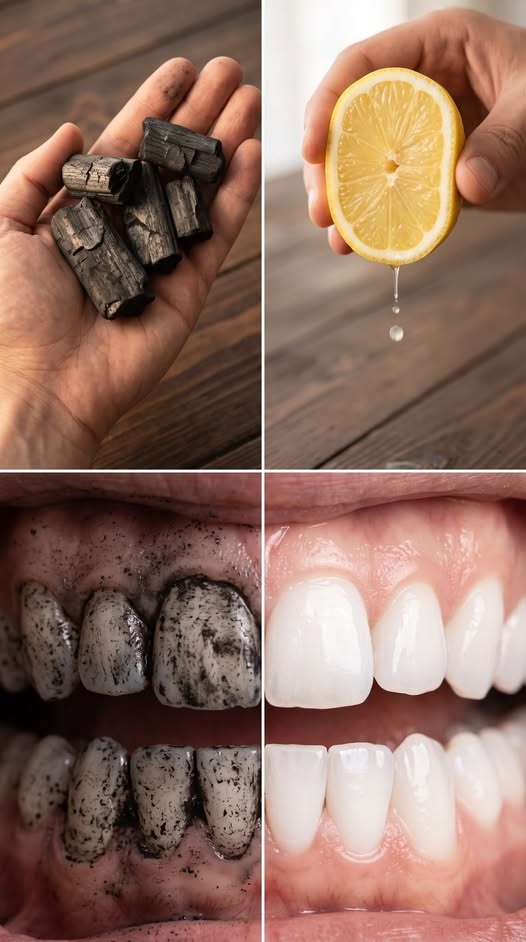
Charcoal and lemon are often promoted online as a natural teeth-whitening remedy, but does the viral combination really work? Learn what dental experts say about charcoal, lemon juice, enamel damage, and safer whitening options.
A brighter smile is something many people want, which helps explain why homemade teeth-whitening hacks spread so quickly on social media. One particularly popular combination is activated charcoal mixed with lemon juice.
The idea sounds simple: charcoal is supposed to absorb stains while acidic lemon juice supposedly helps brighten the teeth.
But there is an important problem with this viral remedy: a method that appears to make teeth look brighter isn’t necessarily making them healthier or truly whitening them.
Why Did Charcoal + Lemon Become So Popular?
Activated charcoal has become a common ingredient in viral beauty and dental hacks. Videos often show people brushing with black charcoal and then rinsing to reveal what appears to be a dramatically brighter smile.
Lemon adds another appealing element because it contains citric acid. Online claims often suggest that the acidity can break down stains.
The combination therefore sounds scientifically plausible—but appearance and dental safety are two different things.
Does Activated Charcoal Actually Whiten Teeth?
The evidence isn’t very convincing.
The American Dental Association notes that there is insufficient evidence showing that charcoal-based oral-care products provide measurable whitening benefits with adequate safety and effectiveness.
A 2024 randomized clinical trial comparing activated-charcoal powder and toothpaste with regular toothpaste and a peroxide-based whitening treatment found that the charcoal products produced only a minor and unsatisfactory whitening effect. The charcoal treatments performed similarly to regular toothpaste rather than providing the stronger whitening effect people might expect from a dedicated bleaching treatment.
So the viral before-and-after videos shouldn’t be interpreted as proof that charcoal dramatically bleaches teeth.
What About Lemon Juice?
This is where the bigger concern appears.
Lemon juice is highly acidic. Repeatedly exposing teeth to acids can contribute to dental erosion, which means gradual loss of enamel.
The ADA specifically warns against DIY whitening methods involving acidic fruits such as lemons because prolonged acid contact can wear away enamel.
And once enamel is lost, the body does not simply grow it back.
Could the Combination Actually Make Teeth Look Worse?
Potentially, yes.
Charcoal can be abrasive, particularly when used as a powder and scrubbed against the teeth. Lemon acid can soften and weaken enamel.
Using an abrasive material against acid-softened enamel is therefore not a good whitening strategy.
The ADA has warned that abrasive charcoal products can wear down enamel over time.
Ironically, excessive enamel wear can eventually make teeth appear more yellow, because the underlying dentin is naturally more yellow and becomes more visible as enamel becomes thinner.
Why Do Teeth Sometimes Look Whiter After Scrubbing?
There is an important distinction between removing surface stains and actually bleaching the tooth.
Coffee, tea, tobacco, and strongly colored foods can leave stains on the outside of teeth. Mechanical cleaning can sometimes reduce these surface stains.
But true bleaching changes the color of the tooth itself. Evidence-based whitening treatments commonly use peroxide-based ingredients such as hydrogen peroxide or carbamide peroxide.
That’s very different from aggressively scrubbing teeth with household ingredients.
What Can Happen If You Use Lemon on Your Teeth Repeatedly?
Repeated acid exposure may contribute to:
- Enamel erosion
- Increased tooth sensitivity
- Greater vulnerability to cavities
- Rougher tooth surfaces
- Changes in tooth appearance
The risk depends on factors such as frequency, concentration, contact time, and an individual’s dental health.
Using lemon in food or drinks isn’t the same as deliberately rubbing lemon juice directly onto your teeth.
What About Charcoal Toothpaste?
Charcoal toothpaste isn’t necessarily identical to homemade charcoal powder mixed with lemon.
However, the whitening claims surrounding charcoal products should still be approached cautiously. The ADA says there is insufficient evidence to establish charcoal-based oral-care products as adequately safe and effective for whitening.
Some charcoal products may also lack fluoride, which is an important ingredient for cavity prevention in toothpaste.
Safer Ways to Brighten Your Smile
If your goal is a whiter smile, there are better-supported options.
1. Brush Twice Daily
Regular brushing with a fluoride toothpaste helps remove plaque and surface staining while supporting cavity prevention.
2. Clean Between Your Teeth
Flossing or using another appropriate interdental cleaner can remove plaque and debris that brushing alone misses.
3. Consider an Evidence-Based Whitening Product
Some over-the-counter whitening products use peroxide-based ingredients and have been evaluated for safety and effectiveness. Products carrying the ADA Seal of Acceptance have met specific requirements established by the American Dental Association.
4. Talk to Your Dentist
A dentist can determine whether discoloration comes from surface staining, natural tooth color, decay, enamel problems, or another cause.
Professional whitening or dentist-supervised home whitening may be appropriate for some people.
What If Your Teeth Are Already Sensitive?
Avoid experimenting with acidic or highly abrasive DIY whitening methods.
Sensitivity can sometimes occur with legitimate whitening treatments as well, and the ADA identifies temporary sensitivity and gum irritation as common adverse effects of vital-tooth whitening.
If you already have significant sensitivity, ask a dental professional before starting a whitening treatment.
The Bottom Line
Charcoal + lemon is viral, but that doesn’t make it a safe or effective teeth-whitening treatment.
Activated charcoal has limited evidence for meaningful whitening, while lemon’s acidity can contribute to enamel erosion. Combining an acidic ingredient with an abrasive powder may be particularly unhelpful for protecting your teeth.
If you want a brighter smile, focus on good daily oral hygiene and choose a properly tested whitening product—or speak with your dentist about an appropriate whitening option.
Your enamel is precious and doesn’t grow back, so a viral whitening hack isn’t worth risking permanent enamel damage.