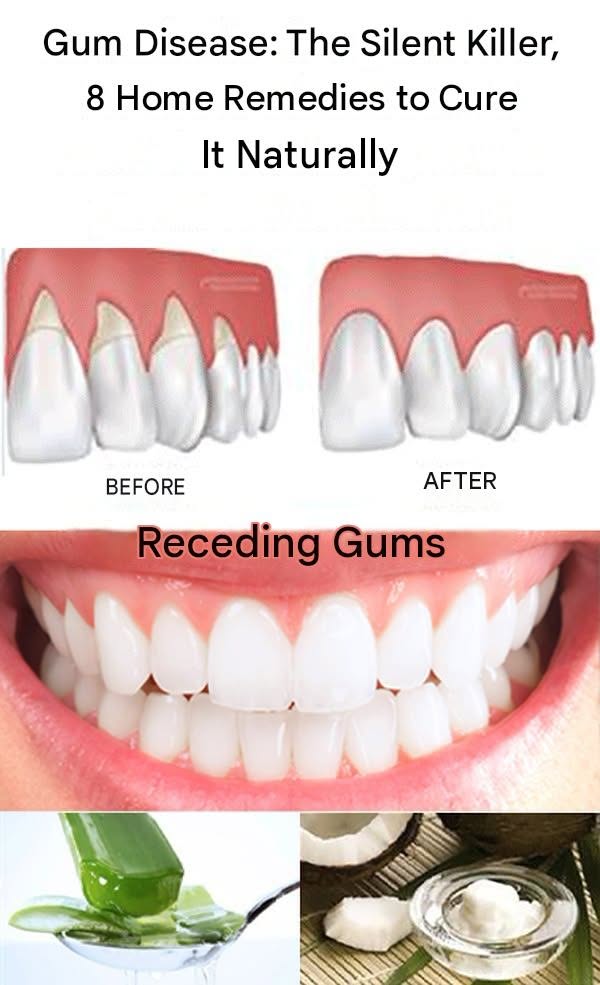
Discover 8 simple home remedies that may help support healthier gums, reduce irritation, and improve oral hygiene. Learn what can safely be tried at home—and when gum disease needs professional dental care.
Gum Disease: The Silent Threat — 8 Home Remedies to Support Healthy Gums
Gum disease can develop quietly. In its early stages, you may notice little more than occasional bleeding when brushing or mild redness around the gums. Because the symptoms can be easy to ignore, gum disease is sometimes called a “silent” oral health problem.
The good news is that early gum disease (gingivitis) can often be improved with better oral hygiene and professional dental care. Home remedies may provide additional support, but they cannot reliably cure advanced gum disease or replace treatment from a dentist.
Here are eight simple approaches that may help keep your gums healthier.
1. Rinse With Warm Salt Water
A warm salt-water rinse can temporarily soothe irritated gums.
How to use it:
- Mix about ½ teaspoon of salt into a cup of warm water.
- Swish gently for 20–30 seconds.
- Spit it out rather than swallowing.
- Use occasionally rather than relying on it as a replacement for brushing and flossing.
2. Brush Gently Twice a Day
Plaque is one of the main contributors to gingivitis. Brush your teeth twice daily using a soft-bristled toothbrush and fluoride toothpaste.
Avoid aggressive scrubbing. Brushing too hard can irritate the gums and contribute to gum recession.
3. Clean Between Your Teeth
A toothbrush cannot effectively clean every space between your teeth. Floss or use an appropriate interdental cleaner once a day to remove plaque and food particles.
If your gums bleed when you first begin cleaning between your teeth, don’t automatically stop. However, persistent or heavy bleeding should be evaluated by a dental professional.
4. Try a Gentle Salt-Free Rinse
If salt water feels irritating or unpleasant, simply rinsing your mouth with plain water after meals can help remove loose food particles.
This is particularly useful when you cannot brush immediately.
5. Stay Hydrated
Drinking enough water helps support saliva production. Saliva naturally helps wash away food particles and contributes to the mouth’s normal defenses against harmful bacteria.
Choose plain water more often than sugary drinks.
6. Eat More Nutrient-Rich Foods
A balanced diet supports general and oral health. Include foods such as:
- Leafy green vegetables
- Fruits and vegetables
- Eggs and other protein sources
- Dairy or fortified alternatives
- Nuts and seeds
Try to limit frequent sugary snacks and drinks, which can increase the risk of tooth decay.
7. Avoid Smoking and Tobacco
Smoking can significantly increase the risk of gum disease and make it harder for gums to heal. Quitting tobacco is one of the most beneficial steps you can take for your oral health.
8. Don’t Ignore the Warning Signs
Home care works best as prevention and support, not as a substitute for diagnosis and treatment.
See a dentist if you experience:
- Gums that bleed regularly
- Persistent bad breath
- Swollen, red, or tender gums
- Gums pulling away from your teeth
- Loose or shifting teeth
- Pain while chewing
- Pus around the gums
These can be signs of periodontal disease, which may require professional cleaning or other treatment.
Final Thoughts
Healthy gums require consistent care. Gentle brushing twice a day, cleaning between the teeth, a balanced diet, adequate hydration, and avoiding tobacco can all help protect your mouth.
There is no proven home remedy that can “cure” advanced gum disease naturally. If symptoms persist, a dental examination is important because untreated periodontal disease can damage the tissues and bone supporting your teeth.