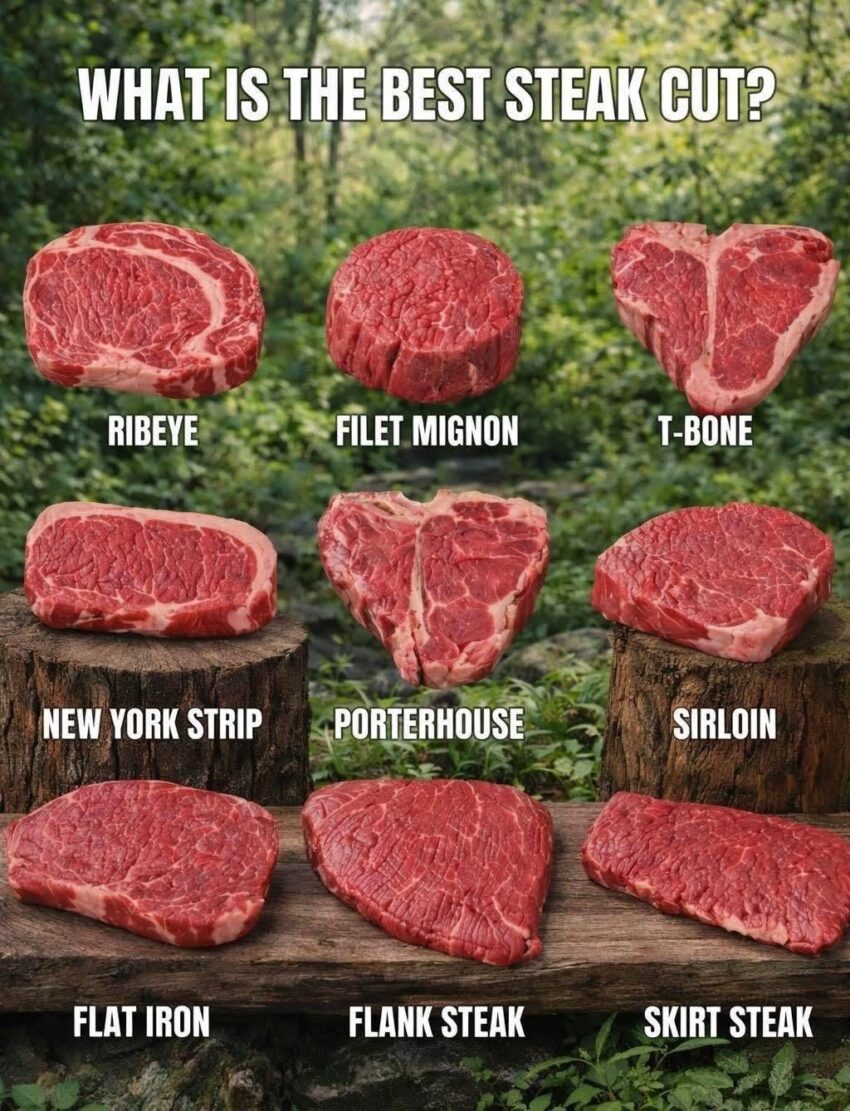
Discover the best steak cut for flavor, tenderness, and value. Compare ribeye, filet mignon, New York strip, sirloin, T-bone, and more to find the perfect steak for your budget and taste.
The Best Steak Cut: Flavor, Tenderness, or Value—What Really Matters?
Walk into a butcher shop or supermarket and you’ll quickly realize that choosing a steak isn’t as simple as picking the most expensive piece of beef. Ribeye, filet mignon, New York strip, sirloin, T-bone, and other cuts all have their strengths.
So, which steak is actually the best?
The answer depends on what matters most to you: deep beefy flavor, melt-in-your-mouth tenderness, or getting the most steak for your money.
There isn’t one universally perfect cut. Different muscles have different amounts of connective tissue and marbling, and those characteristics strongly influence the eating experience. Cuts from muscles that do less work tend to be more tender, while marbling contributes to flavor and juiciness.
1. Ribeye: The Flavor Champion
If your priority is rich, juicy, intensely beefy flavor, ribeye is difficult to beat.
Ribeye comes from the rib section and is known for abundant marbling. As that fat melts during cooking, it helps create a juicy steak with a rich flavor.
Best for: Flavor lovers
Why choose it?
- Excellent marbling
- Rich, beefy flavor
- Naturally juicy
- Tender enough for a premium steak
- Great for grilling or pan-searing
The trade-off is that you’re paying for that marbling. Ribeye also tends to contain more fat than leaner cuts.
2. Filet Mignon: The Tenderness King
If your definition of a perfect steak is extremely tender, filet mignon is the classic choice.
Filet mignon comes from the tenderloin, a muscle that performs relatively little work. That results in exceptionally tender meat.
Research from the National Beef Tenderness Survey found retail tenderloin steaks had the lowest measured shear-force values among the retail cuts examined and received particularly strong consumer ratings for tenderness, flavor, juiciness, and overall liking.
But there’s a catch: filet mignon is relatively lean and doesn’t have the intense marbling of ribeye.
Best for: People who prioritize tenderness above everything else
The downside: It’s expensive, and some steak lovers find it less flavorful than fattier cuts.
3. New York Strip: The Best Balance
Can’t decide between tenderness and flavor?
The New York strip may be your sweet spot.
Strip steak has a firm, satisfying texture and good marbling. It’s generally a little less tender than ribeye but still offers excellent flavor.
It’s also versatile enough for grilling, broiling, or cooking in a cast-iron skillet.
Best for: People who want a balanced steak
Think of it as the middle ground:
Flavor: ★★★★★
Tenderness: ★★★★☆
Value: ★★★★☆
4. Top Sirloin: The Value Winner
If you’re watching your budget but still want a proper steak, top sirloin deserves attention.
It’s generally leaner than ribeye and strip steak and can be less tender, but it offers a solid beef flavor at a more accessible price.
That makes it particularly useful for everyday steak dinners rather than special occasions.
Best for: Budget-conscious steak lovers
The key is not to overcook it. Since it contains less fat than ribeye, cooking it too far can make it noticeably drier and tougher.
5. T-Bone: Two Steaks in One
A T-bone gives you two different experiences on the same plate: strip steak on one side of the bone and tenderloin on the other.
That means you get both flavor and tenderness in one cut. A porterhouse is essentially a larger version, with a larger portion of tenderloin.
Best for: Special dinners and people who can’t choose between filet and strip
It’s also a dramatic steak to put on the grill.
6. Flat Iron and Other Value Cuts
Don’t overlook lesser-known cuts.
Flat iron, Denver steak, bavette, and similar cuts can deliver impressive flavor and tenderness without the price tag associated with famous premium steaks. Butchers increasingly recommend these cuts when diners want strong flavor without paying premium prices.
These cuts can be especially appealing when you’re cooking for several people.
So, Which Steak Really Wins?
There’s no single winner because each cut wins a different category.
| Steak Cut | Flavor | Tenderness | Value | Best For |
|---|---|---|---|---|
| Ribeye | ⭐⭐⭐⭐⭐ | ⭐⭐⭐⭐½ | ⭐⭐⭐ | Maximum flavor |
| Filet Mignon | ⭐⭐⭐½ | ⭐⭐⭐⭐⭐ | ⭐⭐ | Maximum tenderness |
| New York Strip | ⭐⭐⭐⭐⭐ | ⭐⭐⭐⭐ | ⭐⭐⭐⭐ | Best overall balance |
| Top Sirloin | ⭐⭐⭐½ | ⭐⭐⭐ | ⭐⭐⭐⭐⭐ | Budget-friendly steak |
| T-Bone | ⭐⭐⭐⭐⭐ | ⭐⭐⭐⭐½ | ⭐⭐⭐ | Special occasions |
| Flat Iron | ⭐⭐⭐⭐½ | ⭐⭐⭐⭐½ | ⭐⭐⭐⭐⭐ | Affordable quality |
These ratings are best understood as practical comparisons rather than scientific scores; the actual eating experience depends heavily on marbling, aging, cooking, and preparation.
What Matters More Than the Cut?
Here’s the part many steak shoppers overlook.
A great steak isn’t determined by the cut alone.
Two ribeyes can taste dramatically different depending on their marbling, quality, aging, thickness, and cooking method.
Look for marbling
Marbling refers to the small streaks of fat distributed throughout the muscle. It contributes significantly to flavor, juiciness, and texture.
Rather than automatically choosing the steak with the highest price, look for evenly distributed marbling.
Consider thickness
A thicker steak gives you more control while cooking. It can develop a browned crust without the center becoming overcooked.
Don’t ignore preparation
Even an expensive steak can disappoint if it’s overcooked.
A well-seasoned, properly seared sirloin can be more satisfying than an expensive steak that’s been cooked poorly.
The Final Verdict
If flavor is your number-one priority, choose ribeye.
If tenderness is what matters most, choose filet mignon.
If you want a balance of flavor, texture, and price, the New York strip is an excellent choice.
If value is your main concern, look toward top sirloin or lesser-known cuts such as flat iron.
And if you want a steak that combines two classic experiences, go for a T-bone or porterhouse.
Ultimately, the “best” steak isn’t necessarily the most expensive one. It’s the steak that matches your taste, your cooking method, and your budget.