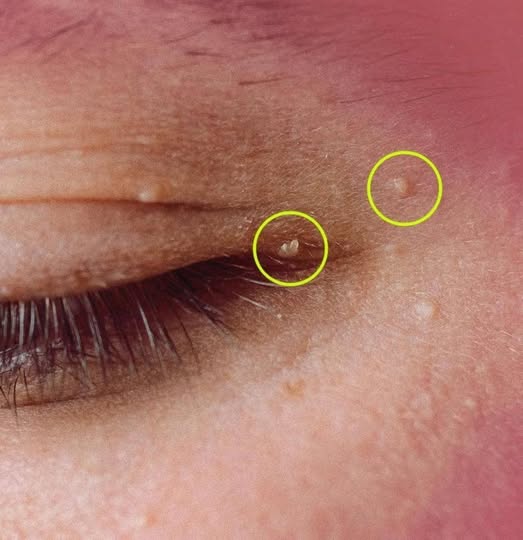
Learn what milia are, why these tiny white bumps appear on the skin, and the safest ways to get rid of them. Discover gentle skincare options, treatments that may help, and mistakes to avoid when dealing with milia.
How to Get Rid of Milia: Those Annoying “Fat Cysts”
Those tiny white or flesh-colored bumps around the eyes, cheeks, nose, or forehead can be surprisingly stubborn. Often called milia, they are small keratin-filled cysts that form just beneath the surface of the skin. Although they can look like whiteheads, milia aren’t ordinary pimples and usually don’t respond well to typical acne treatments.
The good news is that milia are generally harmless and can often be managed safely with the right approach.
What Exactly Are Milia?
Milia are small, firm cysts containing keratin, a protein naturally found in the skin, hair, and nails. They commonly appear as tiny white or pearly bumps and are especially noticeable around the delicate skin of the eyes.
They aren’t caused by being “dirty,” and trying to squeeze them like a pimple can irritate the skin without actually removing the cyst.
Why Do Milia Develop?
Milia can develop for several reasons. Some occur spontaneously, while others may appear after skin irritation or damage.
Possible contributing factors include:
- Skin injuries or irritation
- Sun damage
- Certain heavy skincare or cosmetic products
- Blistering or inflammatory skin conditions
- Normal changes in how dead skin cells are shed
Milia can occur in people of any age.
1. Don’t Try to Squeeze Them
This is one of the most important things to remember.
Because milia are enclosed beneath the skin’s surface, squeezing or picking at them usually won’t work like squeezing a pimple. Instead, you may cause redness, inflammation, infection, or even scarring.
The area around the eyes is particularly delicate, so avoid trying to puncture milia yourself.
2. Keep Your Skincare Routine Gentle
Use a mild cleanser and avoid harsh scrubbing. Aggressive exfoliation can damage the skin barrier and make irritation worse.
A simple routine with cleansing, moisturizing, and daily sun protection is often a better starting point than using several strong products at once.
3. Consider Gentle Exfoliating Ingredients
Certain exfoliating ingredients may help encourage normal shedding of dead skin cells and can be useful for some people with persistent milia.
Products containing ingredients such as salicylic acid or alpha-hydroxy acids may be appropriate depending on your skin type.
Start slowly, particularly if you have sensitive skin, and follow the product’s directions. Avoid getting these products directly into the eyes.
4. Retinoids May Help Some People
Topical retinoids can increase skin-cell turnover and may help prevent or treat certain types of milia.
However, they can cause dryness and irritation and aren’t appropriate for everyone. Pregnant people should avoid topical retinoids unless specifically advised otherwise by their healthcare professional.
If milia are persistent, a dermatologist can determine whether a retinoid is appropriate for you.
5. Professional Removal Is Often the Quickest Option
If you want an individual milia removed, a dermatologist or other appropriately trained medical professional can usually remove it using a sterile technique.
Professional extraction is preferable to home extraction because the skin can be opened and the cyst removed with less risk of unnecessary trauma.
For milia around the eyes, professional treatment is especially advisable.
6. Protect Your Skin From the Sun
Sun exposure can contribute to skin damage and may make some skin conditions more noticeable.
Applying a broad-spectrum sunscreen regularly can help protect your skin and support overall skin health.
Choose a formula that feels comfortable and doesn’t irritate your skin, particularly if you’re prone to bumps or sensitivity.
How Long Do Milia Last?
Some milia disappear naturally over time, while others can remain for months or longer.
Adult milia that don’t disappear or that repeatedly return may benefit from professional evaluation. A dermatologist can also make sure the bumps really are milia rather than another type of skin condition.
When Should You See a Dermatologist?
Consider getting professional advice if:
- The bumps are spreading or changing.
- They become painful, red, or inflamed.
- You’re unsure whether they’re actually milia.
- Home skincare isn’t helping.
- The bumps are close to your eyes and you want them removed.
- They keep coming back.
Final Thoughts
Milia may be small, but they can be frustrating—especially when they appear in highly visible areas of the face. The safest strategy is not to squeeze, scratch, or puncture them at home.
Gentle skincare, appropriate exfoliation, sun protection, and professional removal when necessary can help you manage these stubborn little bumps without unnecessarily damaging your skin.