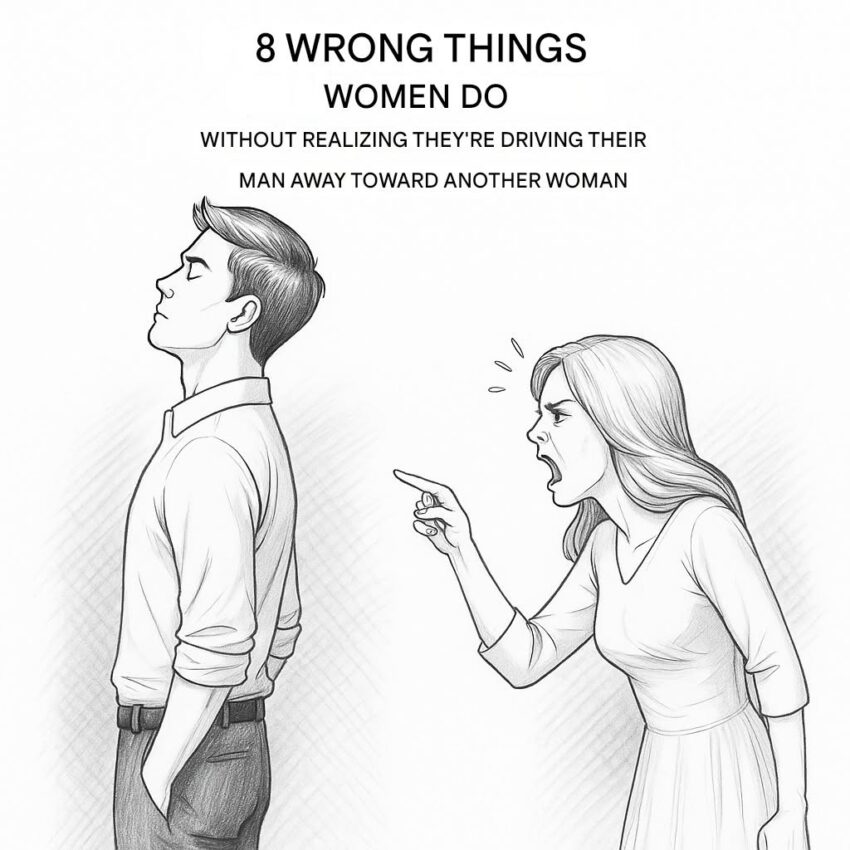
Relationships rarely fall apart because of one big mistake. More often, distance develops slowly through everyday habits, misunderstandings, and patterns that neither partner realizes are causing damage.
And while these behaviors aren’t exclusive to women—any partner can fall into them—recognizing them early can help create a healthier, more connected relationship.
Here are eight common patterns that may unintentionally create emotional distance.
1. Expecting Your Partner to Read Your Mind
One of the most common relationship traps is assuming that your partner should automatically know what you need.
You might think, “If he really loved me, he would know what’s wrong.”
But even loving partners can’t read minds.
Instead of withdrawing or waiting for your partner to figure things out, try communicating clearly: “I felt hurt when that happened, and what I need from you is…”
Clear communication gives your partner an opportunity to understand and respond.
2. Turning Every Disagreement Into a Personal Attack
Arguments are normal. Constant criticism is different.
Statements such as “You never care” or “You always do this” can make your partner feel attacked rather than encouraged to solve the problem.
Focus on the behavior rather than attacking the person’s character.
Instead of saying, “You are so inconsiderate,” try:
“I felt overlooked when you made that decision without asking me.”
The difference may seem small, but it can completely change the tone of a conversation.
3. Using Silence as Punishment
Taking some time to calm down during an argument can be healthy. Completely shutting your partner out to punish them is another matter.
When silence becomes a weapon, the other person may feel rejected, anxious, or emotionally unsafe.
If you need space, communicate it.
For example: “I’m upset and need an hour to cool down. Let’s talk about this tonight.”
That creates distance temporarily without creating uncertainty about the relationship.
4. Comparing Your Partner to Other Men
Comparisons can be incredibly damaging.
Talking about how another man’s husband, boyfriend, or partner behaves may seem like a way to motivate change, but it can instead create resentment and insecurity.
Your relationship isn’t competing with someone else’s highlight reel.
If you want something to change, explain what you need directly rather than using another person as a comparison.
5. Criticizing More Than You Appreciate
When you’re disappointed repeatedly, it’s easy to focus on what’s wrong and overlook what’s going right.
A relationship can become emotionally exhausting when one partner constantly feels that nothing they do is good enough.
Appreciation doesn’t mean ignoring genuine problems. It means making room to acknowledge the things your partner does well.
A simple “I really appreciate you doing that” can have more impact than you might expect.
6. Trying to Control Every Decision
Healthy relationships require compromise.
If one person constantly decides where to go, who to spend time with, how money should be handled, or how the other person should behave, the relationship can begin to feel more like a set of rules than a partnership.
You don’t have to agree on everything.
The goal is to find solutions where both people feel heard and respected.
7. Neglecting Emotional Connection
Life gets busy. Work, family responsibilities, finances, and daily stress can gradually push romance to the background.
You may still live together, eat together, and handle responsibilities—but stop actually connecting.
Small habits can help:
- Ask how your partner’s day really went.
- Put your phones away for a while.
- Have regular conversations that aren’t about chores.
- Make time for affection.
- Do something enjoyable together.
Emotional closeness is usually built through small moments rather than grand gestures.
8. Losing Yourself in the Relationship
Ironically, becoming completely focused on your partner can sometimes create problems too.
Healthy relationships need two whole individuals, not one person whose entire identity revolves around the other.
Continue nurturing your friendships, interests, goals, hobbies, and personal growth.
Having your own life can make a relationship stronger because you bring new experiences, confidence, and energy back into the partnership.
The Bigger Picture
No relationship is perfect, and everyone makes mistakes.
The important question isn’t “Who is to blame?” It’s “What pattern are we creating together?”
If you notice some of these behaviors in yourself, don’t turn that realization into guilt. Use it as an opportunity to make a change.
And remember: relationships are a two-way street. If your partner is consistently disrespectful, controlling, manipulative, dismissive, or abusive, the solution isn’t simply for you to become “better” at keeping them happy.
A strong relationship requires mutual respect, honest communication, emotional safety, effort, and accountability from both people.
Sometimes, the smallest changes in how two people communicate can make the biggest difference in how connected they feel.