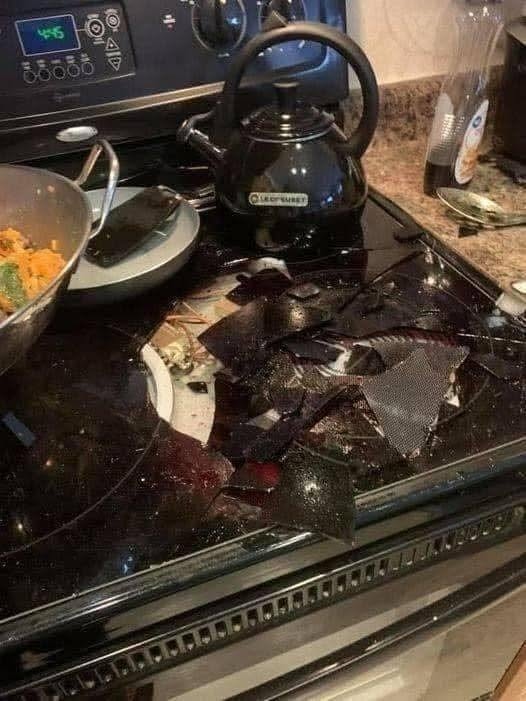
Discover 9 dangerous glass stovetop habits that can cause cracks, scratches, burns, or even shattering. Learn simple ways to protect your glass cooktop and keep your kitchen safer.
9 Dangerous Glass Stovetop Habits You Should Never Do
Glass stovetops look sleek, modern, and easy to clean, but they require a little more care than traditional coil or gas cooktops.
The smooth surface can be surprisingly durable, yet certain habits can cause scratches, stains, thermal shock, or damage to the glass. In extreme cases, improper use can even cause a cooktop to crack or shatter.
Here are 9 glass stovetop habits you should avoid.
1. Don’t Put a Hot Lid Directly on the Cooktop
One of the easiest mistakes to make is placing a hot pot lid directly onto the cool glass surface.
A very hot lid can trap heat against the cooktop, and sudden temperature changes may stress the glass.
Instead, place hot cookware lids on a heat-safe trivet or another suitable surface.
2. Don’t Slide Heavy Cookware Across the Glass
Dragging cast-iron pans, heavy pots, or other cookware across the cooktop can scratch the surface.
Even cookware that looks smooth underneath may have tiny rough areas capable of damaging the glass.
Whenever possible, lift cookware rather than sliding it.
3. Don’t Use Your Glass Cooktop as a Countertop
A glass cooktop may look like extra counter space when it’s turned off, but it’s still an appliance surface.
Avoid using it to:
- Chop vegetables
- Store kitchen items
- Place heavy appliances
- Stack cans or jars
- Prepare food with sharp utensils
A dropped object can chip or crack the glass.
4. Don’t Place Extremely Cold Items on a Hot Surface
Glass can be damaged by sudden temperature changes.
For example, placing a very cold container or wet object onto an extremely hot cooktop may create thermal stress.
Allow cookware and other objects to reach a more moderate temperature before placing them on or near a heated surface.
5. Don’t Use the Wrong Cleaning Products
Abrasive powders, rough scouring pads, steel wool, and unsuitable cleaners can scratch or dull the cooktop.
Use a cleaner specifically recommended for your cooktop’s surface and follow the manufacturer’s instructions.
For everyday messes, a soft cloth or non-abrasive sponge is usually the safer choice.
6. Don’t Cook With Damaged Cookware
Inspect the bottoms of your pots and pans.
If a pan has:
- A warped bottom
- Rough edges
- Cracks
- Burnt-on debris
- Loose or damaged components
it can create problems on a smooth glass surface.
A warped pan may also heat unevenly and become unstable.
7. Don’t Let Sugary Spills Burn Onto the Surface
Sugar and sugary foods deserve special attention.
Caramel, syrup, jam, and similar substances can become extremely difficult to remove once they burn onto a hot glass cooktop.
They can also damage the surface if left untreated.
If a sugary spill occurs, follow your appliance manufacturer’s instructions for safe cleanup. Never scrape a hot cooktop with an improvised sharp object.
8. Don’t Ignore Cracks or Chips
If you notice a crack, chip, or significant damage in the glass, don’t simply continue using the appliance as though nothing happened.
A damaged cooktop can present electrical or burn hazards, depending on the appliance design.
Turn it off and follow the manufacturer’s guidance regarding inspection or repair.
9. Don’t Pour Cold Water Over a Hot Cooktop
This may seem like a quick way to clean up a spill, but pouring cold water over a very hot glass surface can cause rapid temperature changes.
Instead, allow the surface to cool according to the manufacturer’s instructions, then clean it using an appropriate method.
Avoid soaking the controls or other electrical components.
How to Protect Your Glass Cooktop
A few simple habits can keep your cooktop looking better for longer:
- Lift cookware instead of dragging it.
- Keep the cooktop free of heavy objects.
- Clean spills according to the manufacturer’s instructions.
- Use cookware with smooth, flat bottoms.
- Avoid abrasive cleaning tools.
- Keep handles positioned safely to reduce accidental knocks.
- Never use a damaged cooktop without having it assessed.
What If Something Falls on the Cooktop?
Don’t panic.
If the cooktop is hot, turn off the affected heating element if it is safe to do so and allow the surface to cool.
Once it is cool, inspect the surface for cracks or chips.
If you see damage, stop using the appliance and consult the manufacturer’s instructions or a qualified technician.
The Bottom Line
A glass stovetop isn’t as fragile as it may look, but it isn’t indestructible either.
The biggest risks come from impact, scratching, improper cookware, abrasive cleaning, and sudden temperature changes.
Treat the surface gently, use cookware appropriately, and follow the care instructions supplied with your specific appliance.
A few seconds of caution can help prevent an expensive cooktop repair—or a