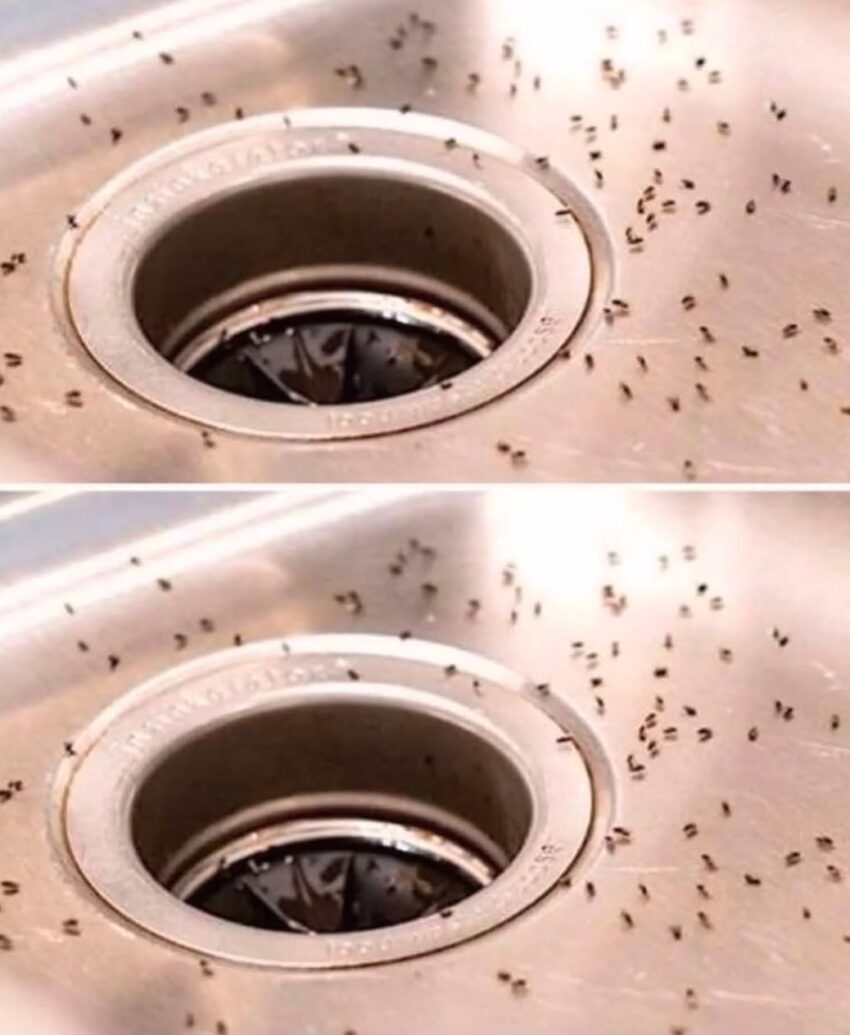
If you have ever walked into your kitchen or bathroom and noticed tiny black insects hovering around the sink, drain, or countertop, you are not alone. These small pests can seem to appear overnight—and once they establish a breeding spot, simply swatting the adults rarely solves the problem.
The good news is that you can often reduce and eliminate a small gnat problem without relying immediately on harsh chemical pesticides. The key is identifying where the insects are breeding and removing the moisture, food, and organic material they need to survive.


What Are Those Tiny Bugs Around Your Sink?
The insects in the photo appear to be small, dark, gnat-like insects concentrated around a sink drain. Drain flies (also called moth flies) are one possibility, particularly when tiny flies repeatedly appear around sinks, showers, or other damp drains. However, an image alone isn’t enough to identify the species with certainty.
Different small flies require different solutions.
Common culprits include:
Drain flies:
Often associated with damp drains and the organic film that can accumulate inside plumbing.
Fruit flies:
Usually attracted to ripe or fermenting fruit, spilled beverages, food residue, garbage, and recycling.
Fungus gnats:
Commonly associated with consistently moist potting soil and houseplants.
Knowing which one you’re dealing with makes getting rid of them much easier.
Why Do Gnats Keep Coming Back?
One of the biggest mistakes people make is focusing only on the adult insects.
You can kill dozens of flying insects and still have a problem if their breeding site remains undisturbed.
Depending on the type of insect, eggs and larvae may be developing in:
- Slime or organic buildup inside a drain
- Damp food residue
- Garbage or compost
- Overripe fruit
- Sticky spills
- Wet mops or cleaning cloths
- Standing water
- Damp potting soil
- Leaking pipes
- Moist areas underneath appliances
- Dirty garbage disposals
The adults you see flying around may therefore be only the visible part of the problem.
The most effective natural approach is source control: find the place where they are reproducing and eliminate it.
1. Start by Cleaning the Drain
If you are seeing tiny flies concentrated around a sink, the drain is one of the first places worth investigating.
Organic material can accumulate inside drains over time. This material can provide food and a suitable environment for certain small flies, especially drain flies.
Remove visible debris from the drain opening and clean the surrounding area thoroughly.
A drain brush can also help physically remove buildup from accessible portions of the drain.
Don’t just pour something down the drain and assume the problem is solved.
For drain-associated insects, physical cleaning is particularly important because removing the organic film takes away the material that can support their development.
Follow the manufacturer’s instructions if you use a commercial drain cleaner, and never mix different cleaning chemicals.
2. Clean Your Garbage Disposal
If your kitchen sink has a garbage disposal, don’t overlook it.
Food particles can remain around areas that aren’t immediately visible, creating odors and potentially attracting insects.
Clean the accessible parts of the disposal according to the manufacturer’s instructions.
You can also clean the rubber splash guard carefully, since food residue may accumulate underneath it.
Always turn the disposal off and follow appropriate safety precautions before putting your hands anywhere near the mechanism.
3. Keep the Sink Dry
Moisture is an important factor for many household pests.
After washing dishes, wipe down:
- The sink basin
- Faucet area
- Countertops
- Areas around the drain
- Any standing water
Fix dripping faucets or plumbing leaks as soon as possible.
A sink that stays wet for long periods creates a much more favorable environment for moisture-loving pests than a clean, dry sink.
4. Don’t Leave Food Exposed
Fruit flies in particular are attracted to fermenting and overripe food.
Keep ripe fruit in the refrigerator when appropriate, and remove damaged or overripe produce.
Also check for:
- Fruit juice spills
- Soda residue
- Wine or other fermented beverages
- Sticky countertops
- Food underneath appliances
- Dirty dishes
- Food scraps in containers
Even a small amount of sugary residue can become attractive to tiny flies.
5. Take Out the Garbage Regularly
Your garbage can can become an unexpected breeding and feeding site.
Food scraps, damp paper, fruit peels, and spilled liquids can accumulate at the bottom of the container.
Clean the inside of the trash can periodically and make sure garbage bags aren’t leaking.
If you have a compost container, keep it properly sealed and empty it regularly.
6. Try a Simple Vinegar Trap for Fruit Flies
If the insects are fruit flies rather than drain flies, a simple homemade trap can help reduce the adult population.
What you’ll need:
- A small bowl or jar
- Apple cider vinegar
- A few drops of dish soap
Pour a small amount of apple cider vinegar into the container and add a few drops of dish soap.
The vinegar’s smell can attract fruit flies, while the soap changes the surface properties of the liquid, making it more difficult for flies to escape after landing.
Place the trap close to where you are seeing the insects.
Important distinction
This method can be useful for fruit flies, but it does not address a drain breeding site.
If the insects are drain flies, cleaning the drain and removing the organic buildup is much more important than relying on a vinegar trap.
7. Check Your Houseplants
If you have plants indoors, inspect the soil.
Fungus gnats are tiny flying insects commonly associated with damp potting soil.
If small insects fly up whenever you disturb or water a plant, fungus gnats could be responsible.
One of the most useful measures is to allow the appropriate amount of the soil surface to dry between waterings rather than keeping it constantly wet.
However, don’t let plants dry excessively if their particular species requires consistently moist soil.
You can also use yellow sticky traps near affected plants to monitor and reduce adult fungus gnats.
8. Remove Standing Water
Check your home for small areas where water may be collecting.
Look around:
- Sink cabinets
- Refrigerator drip areas
- Air-conditioning equipment
- Plant saucers
- Buckets
- Pet-water areas
- Leaking pipes
- Damp cleaning supplies
Even when a puddle looks insignificant, persistent moisture can contribute to pest problems.
9. Clean Sponges, Towels, and Mops
Wet cleaning materials can harbor organic residue and remain damp for long periods.
Wash or replace old sponges regularly.
Hang dish towels so they can dry completely.
After using a mop, allow it to dry rather than leaving it sitting in a bucket of water.
This simple housekeeping step can help reduce unnecessary moisture around the home.
10. Seal Food Properly
Store food in sealed containers whenever possible.
Pay particular attention to:
- Sugar
- Flour
- Fruit
- Pet food
- Open beverages
- Snacks
- Fermenting foods
Keeping food covered reduces the odors and accessible food sources that attract insects.
11. Clean Hidden Areas
Sometimes the source isn’t the sink itself.
Move appliances when practical and inspect underneath and behind them.
Look for:
- Old food
- Sticky spills
- Damp cardboard
- Leaking containers
- Moldy organic material
- Accumulated trash
A refrigerator, dishwasher, or trash can may be close to the actual source even when the insects appear to be concentrated somewhere else.
What About Baking Soda and Vinegar?
Baking soda and vinegar are frequently promoted online as a natural drain-cleaning solution.
They can create a fizzing reaction, but the bubbling itself should not be considered a reliable solution for eliminating a gnat infestation.
For insects associated with drains, physically removing organic buildup is generally more important.
If you’re using any drain-cleaning product, follow its label directions and never combine cleaning chemicals.
What About Boiling Water?
People sometimes recommend pouring boiling water down a drain to kill insects or larvae.
Although very hot water may affect some organisms it contacts, it may not reach or remove all of the organic material deeper inside a drain.
There is also a risk of damaging certain plumbing materials or fixtures if inappropriate temperatures are used repeatedly.
For that reason, don’t rely on boiling water alone.
Cleaning and removing the material where insects are developing is the more important step.
How Long Does It Take to Get Rid of Gnats?
The answer depends on the insect and the breeding site.
If you remove the source, you may notice a reduction in adult insects relatively quickly, but you can continue seeing adults for a while as existing immature stages complete development.
That’s why consistency matters.
Continue:
- Cleaning the suspected breeding area.
- Removing food residue.
- Reducing unnecessary moisture.
- Emptying garbage regularly.
- Monitoring the area for new insects.
If the insects continue appearing despite thorough cleaning, there may be another breeding site that hasn’t been found.
How to Keep Gnats From Coming Back
Once you’ve eliminated the immediate problem, prevention becomes much easier.
Make these habits part of your routine:
Keep drains clean.
Don’t allow organic buildup to accumulate.
Keep counters clean and dry.
Wipe up sugary or sticky spills promptly.
Store produce properly.
Refrigerate appropriate fruits and discard spoiled produce.
Empty garbage regularly.
Don’t allow food waste to sit for extended periods.
Avoid overwatering plants.
Especially if fungus gnats are the problem.
Repair leaks.
Check under sinks and around plumbing fixtures.
Keep food covered.
Use sealed containers whenever practical.
Clean appliances periodically.
Pay attention to garbage disposals, dishwasher areas, and refrigerators.
A Simple Natural Gnat-Control Routine
If you’re dealing with tiny flies around your kitchen sink, try this routine:
Day 1: Find the source
Inspect the sink, drain, garbage disposal, trash can, nearby plumbing, and surrounding countertops.
Day 1: Clean thoroughly
Remove food residue and physically clean accessible drain surfaces and other suspected breeding areas.
Day 1–7: Keep everything dry
Wipe the sink after use, repair leaks, and remove standing water.
Day 1–7: Reduce food sources
Store fruit properly, clean spills immediately, and take out food-containing garbage.
During the week: Monitor
If you continue seeing insects, determine whether they’re coming from the drain, fruit, garbage, plants, or another damp location.
After the problem improves: Prevent recurrence
Continue regular drain and kitchen cleaning rather than stopping as soon as the adults disappear.
When Natural Methods May Not Be Enough
Natural control methods can work very well when the infestation is small and the breeding source can be identified.
However, consider contacting a pest-control professional if:
- The infestation is extensive.
- The insects continue appearing despite thorough cleaning.
- You cannot locate the breeding source.
- There is a persistent plumbing leak.
- You suspect insects are coming from inaccessible plumbing.
- The problem repeatedly returns.
- You are dealing with a commercial food-preparation area.
A professional can help identify the pest and determine where it is breeding.
Final Thoughts
Seeing dozens of tiny insects around a sink can be frustrating, but reaching immediately for a strong pesticide isn’t always necessary.
The most important lesson is simple:
Don’t just kill the bugs you can see—find out why they’re there.
For insects associated with drains, concentrate on removing organic buildup and correcting moisture problems. For fruit flies, eliminate fermenting food and sugary residues. For fungus gnats, examine your houseplants and watering habits.
Once the breeding and feeding sources are removed, the adult population should gradually decline.
A clean, dry environment, good food-storage habits, regular drain maintenance, and prompt attention to leaks can go a long way toward keeping these unwanted visitors from returning.
Note: The insects shown in the supplied image cannot be definitively identified from the photograph alone. The appearance and location are compatible with several types of small flies, including drain flies, so identification should be confirmed before choosing a specific treatment.
Disclaimer: This article is for general educational purposes and is not a substitute for professional pest-control advice. Follow product labels and safety instructions for any cleaning or pest-control products you use, and never mix household chemicals.