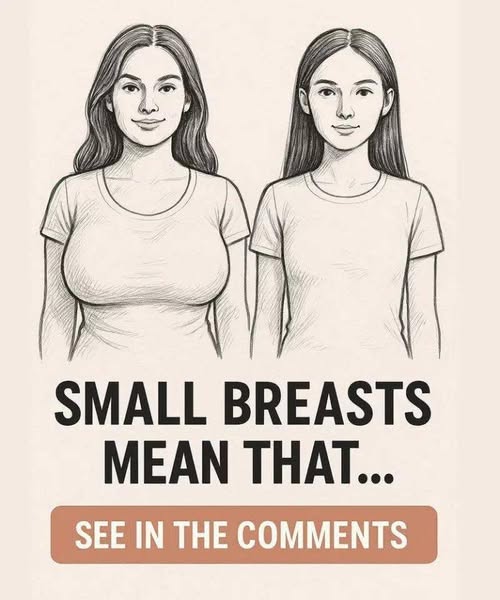
Breast size varies naturally from woman to woman and does not reliably indicate personality, femininity, sexual characteristics, fertility, or overall health. Learn what actually influences breast size and why common myths can be misleading.
If a Woman Has Small Breasts, It Means Her…
There are many myths about what breast size supposedly reveals about a woman. Some claims suggest that having small breasts says something about a woman’s personality, attractiveness, fertility, hormones, or intimate life. Most of these claims are not scientifically supported.
Breast size varies naturally and is influenced by several factors, including genetics, hormones, body composition, age, pregnancy, breastfeeding, and changes in weight.
Small Breasts Do Not Mean Low Femininity
Breast size has no reliable connection with how feminine a woman is. Women naturally have a wide range of breast shapes and sizes, and all of them can be completely normal.
Breast development is influenced largely by genetics and hormonal changes during puberty and throughout adulthood.
It Doesn’t Determine Fertility
Another common misconception is that smaller breasts indicate fertility problems.
Breast size does not determine whether a woman can become pregnant. Fertility is influenced by factors involving ovulation, reproductive organs, hormones, age, and other health factors—not simply the size of the breasts.
It Doesn’t Predict Sexual Desire
Breast size also cannot reliably tell you anything about a woman’s libido, sexual preferences, or sexual experience.
These characteristics are individual and cannot be determined by physical appearance.
Body Weight Can Influence Breast Size
Breasts contain both glandular tissue and fatty tissue. Because of this, changes in body weight can sometimes affect breast size and shape.
However, the amount of change varies considerably from person to person.
Pregnancy and Hormones Can Change Breast Size
Breasts may become larger or change shape during puberty, pregnancy, breastfeeding, and other hormonal changes.
They can also change as a woman gets older. These changes are normal and don’t necessarily indicate a health problem.
When Should Breast Changes Be Checked?
While naturally small breasts are usually nothing to worry about, a new or unusual change in one breast should be evaluated by a healthcare professional.
Pay attention to changes such as:
- A new lump
- Sudden change in breast size or shape
- Skin dimpling or unusual skin changes
- Nipple discharge that isn’t expected
- A newly inverted nipple
- Persistent unexplained breast pain
These symptoms don’t automatically mean cancer, but they deserve appropriate medical evaluation.
The Bottom Line
Small breasts don’t “mean” anything negative about a woman. Breast size is primarily a matter of natural anatomy and genetics and does not reliably reveal fertility, personality, sexual desire, or femininity.
It’s better to judge breast health by changes and symptoms—not by size.