Why Seniors Should Consider Wearing Socks Even at Home
For many older adults, wearing socks around the house may seem like a small personal preference. But keeping the feet protected can be surprisingly important, especially as changes in circulation, skin sensitivity, balance, and foot strength occur with age.
Socks aren’t necessary for every person or in every situation, but a comfortable, well-fitting pair can provide several practical benefits.
1. They Help Keep Feet Warm
Older adults may be more sensitive to cold temperatures, and some people naturally have colder hands and feet.
Warm socks can help maintain comfortable foot temperature, particularly during cooler nights or in homes with cold floors.
However, persistently cold feet can sometimes be associated with circulation problems or other medical conditions. If cold feet are accompanied by pain, numbness, color changes, or sores, speak with a healthcare professional.
2. They Can Protect the Skin
Walking barefoot around the house exposes the feet to small objects, rough surfaces, and accidental bumps.
A good pair of socks creates a light protective layer that can reduce direct contact with the floor and help prevent minor scratches or irritation.
This can be particularly useful for people whose skin has become thinner or more fragile with age.
3. They May Reduce Friction
Properly fitting socks can reduce rubbing between the feet and footwear.
Look for socks made from comfortable, breathable materials and avoid pairs that are excessively tight around the toes or ankles.
4. They Can Help Keep Feet Dry
Feet naturally sweat, even when you’re at home. Moisture trapped against the skin can contribute to irritation and, in some people, fungal infections.
Moisture-wicking or breathable socks can help keep the feet more comfortable.
Change socks regularly, particularly if they become damp.
5. They Can Add Warmth at Night
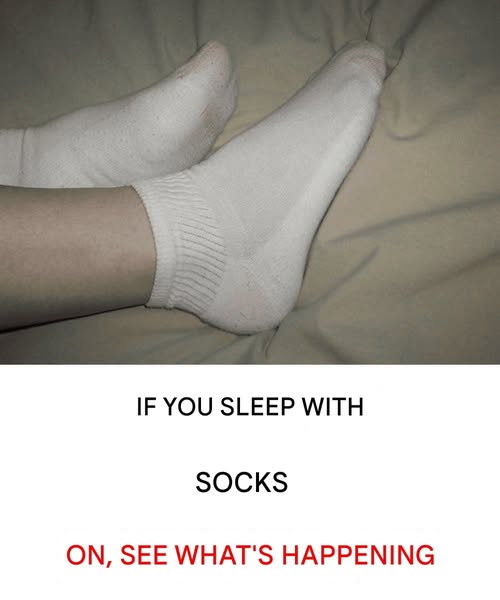
Some older adults prefer wearing socks to bed because warm feet make it easier to get comfortable.
There isn’t a rule that everyone should sleep in socks. If you find them uncomfortable, there’s no need to force the habit.
If you do wear them overnight, choose loose, breathable socks that don’t leave deep marks around the ankles.
6. But Ordinary Socks Aren’t Always Safer for Walking
Here’s an important point: wearing socks alone on smooth floors can actually increase the risk of slipping.
If an older adult has balance difficulties, slippery flooring, or a history of falls, walking barefoot isn’t necessarily the best solution—but ordinary socks may not be ideal either.
For walking around the home, consider properly fitting slippers or footwear with non-slip soles.
7. Check Your Feet Regularly
Older adults should pay attention to changes such as:
- Blisters or sores
- Cracked skin
- Swelling
- Persistent redness
- Numbness or tingling
- Unusual discoloration
- Pain that doesn’t go away
People with diabetes or reduced sensation in their feet should be especially careful and follow their healthcare professional’s foot-care recommendations.
Final Thoughts
Wearing socks at home can help keep feet warm, protected, and comfortable, but socks aren’t automatically safer in every situation. The most important thing is choosing footwear appropriate for your home’s surfaces and your individual balance and foot-health needs.
For older adults who are prone to falls, non-slip footwear may be a better choice than walking around in regular socks. Small changes like these can make the home environment more comfortable and safer.