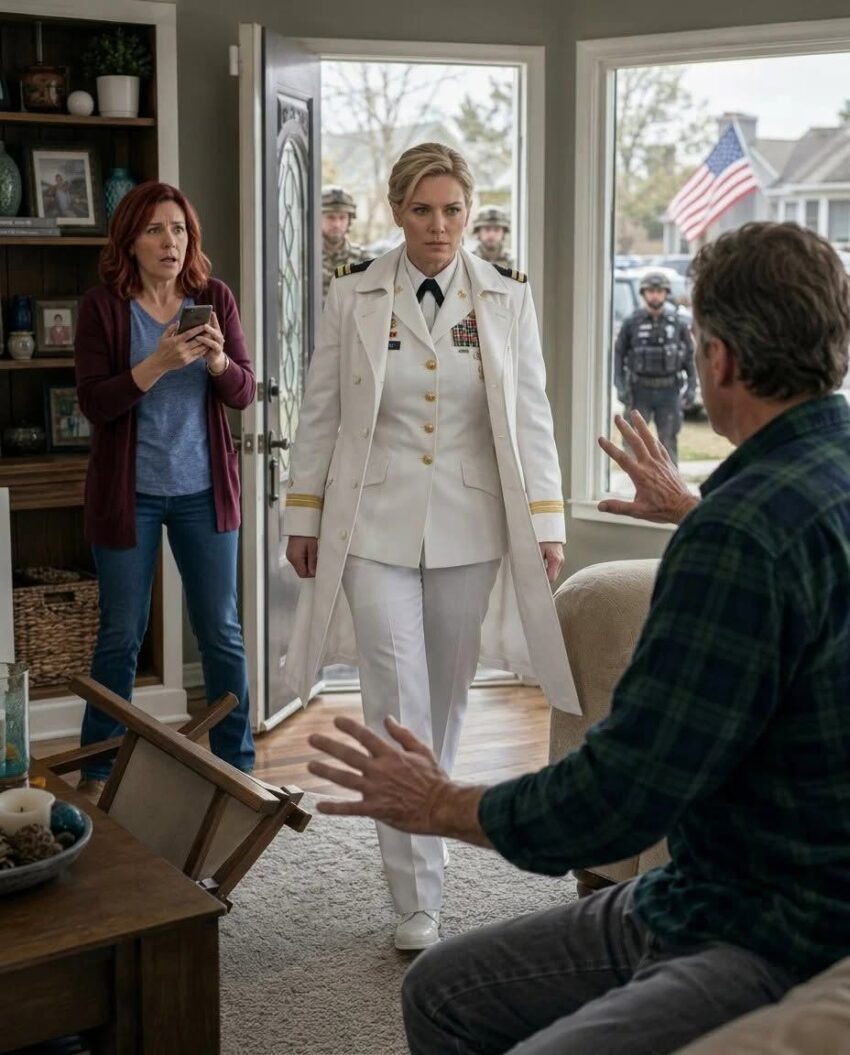
My stepfather mocked my military career for years, never knowing I had once served as a Special Forces colonel. Then one unexpected day forced him to see who I really was.
My stepfather had a way of making people feel small.
He didn’t shout.
He didn’t need to.
A sarcastic comment at the dinner table was enough.
A raised eyebrow.
A laugh when someone mentioned an accomplishment he didn’t consider important.
And when it came to me, he had always believed he knew exactly who I was.
To him, I was simply Marian’s quiet daughter.
The polite one.
The woman who visited on Sundays, brought groceries when my mother needed them, listened more than she spoke, and never corrected him when he made assumptions about my life.
He thought my career had been ordinary.
He thought I’d spent most of my adult life behind a desk.
He occasionally joked that I had “played soldier” when I was younger.
I never corrected him.
Because there were some things I had learned during my years in the military that were more valuable than proving yourself to someone who had already decided who you were.
I knew what I had accomplished.
I didn’t need him to know.
The Woman He Thought He Knew
My name is Claire.
For almost fifteen years, I had watched my stepfather, Richard, tell people stories about me that weren’t true.
“Claire was never the adventurous type.”
“She always preferred a quiet office job.”
“She doesn’t like confrontation.”
Sometimes people would look at me after he said those things.
I would simply smile.
My mother knew the truth.
She was the only person in the family who did.
She had watched me leave home when I was young.
She had watched me disappear for months at a time.
She had received phone calls that gave her almost no information.
And she had learned not to ask questions I couldn’t answer.
Richard never understood any of it.
He assumed my silence meant I had nothing interesting to say.
He was wrong.
My silence had been trained.
What I Never Told Him
Years earlier, I had served in the military.
Not in the way Richard imagined.
I had spent years working in demanding environments where discipline wasn’t optional and mistakes had consequences.
Eventually, I reached the rank of colonel and served in a Special Forces command.
There were missions I couldn’t discuss.
People I couldn’t name.
Places I couldn’t describe.
And experiences I would carry for the rest of my life.
I had learned to remain calm when everyone around me was afraid.
I had learned how to make decisions under pressure.
I had learned that leadership wasn’t about being the loudest person in the room.
It was about being the person everyone could depend on when things went wrong.
When I finally left military service, I wanted something completely different.
Peace.
Privacy.
A normal life.
So when my mother remarried Richard, I didn’t introduce myself with a list of accomplishments.
I simply became her daughter again.
And Richard decided that meant I was ordinary.
I let him believe it.
The Comments
At family dinners, Richard sometimes made jokes about my past.
“So, Claire, still telling people you were some kind of military hero?”
I would smile.
“I never said that.”
He laughed.
“You were probably behind a desk.”
My mother would give him a warning look.
He never noticed.
Another time, he told one of his friends:
“Claire was always too quiet to be a leader.”
I looked down at my coffee.
I had led people through situations he couldn’t imagine.
But I said nothing.
Because I had learned something during my military career:
Not every battle deserves your attention.
Sometimes the strongest response is silence.
Then Richard Got Sick
Everything changed when Richard became seriously ill.
It happened suddenly.
One week he was complaining about his knees.
The next week, he was struggling to breathe.
Within days, my mother was taking him to the hospital.
Doctors discovered that he needed specialized treatment.
The hospital staff began asking questions.
Medical history.
Medications.
Emergency contacts.
Previous procedures.
Richard became frustrated.
He hated feeling helpless.
I recognized that feeling immediately.
But I didn’t tell him.
Instead, I sat beside my mother.
I organized paperwork.
I spoke with nurses.
I made sure my mother ate.
And I quietly handled the things nobody else had thought about.
Richard noticed.
“You seem awfully comfortable around hospitals,” he said.
I smiled.
“I’ve spent some time around them.”
He laughed.
“Probably watching too many TV dramas.”
I didn’t answer.
The Emergency
Several days later, everything went wrong.
Richard’s condition suddenly deteriorated.
Doctors rushed into the room.
Nurses moved quickly.
My mother froze.
She didn’t know what to do.
I did.
Not because I was a doctor.
Not because I knew his medical treatment.
But because I knew how to remain calm when everyone else was overwhelmed.
I moved my mother out of the way.
I made sure she had a chair.
I asked the staff where they needed the family to stand.
Then I waited.
A nurse looked at me.
“Are you military?”
I hesitated.
“Yes.”
Richard heard her.
He looked at me.
“What did you do?”
For the first time in fifteen years, I didn’t give him the answer he expected.
“I was a colonel.”
He stared at me.
“What?”
“I served as a Special Forces colonel.”
The room became completely silent.
My mother looked at Richard.
Richard looked at me.
And for perhaps the first time in our relationship, he didn’t have a joke.
“You?”
He laughed nervously.
“You?”
I nodded.
“Yes.”
He looked confused.
“But…you never told me.”
“You never asked.”
That sentence stayed between us.
He looked away.
Then he asked quietly:
“What did you actually do?”
I could have told him everything.
I didn’t.
Some experiences aren’t stories you tell over dinner.
Instead, I said:
“I led people. I made difficult decisions. I spent years serving my country. And eventually, I decided I wanted a quieter life.”
Richard looked down at his hands.
“So all those times I made jokes…”
“I heard you.”
His face changed.
“I didn’t know.”
“I know.”
The Apology
Richard was silent for several minutes.
Then he said:
“I’m sorry.”
I wasn’t prepared for that.
Not because he had never apologized before.
Because he had never apologized to me.
Not sincerely.
Not like this.
He looked at me.
“I thought you were just…quiet.”
“I am.”
“No,” he said. “You’re not.”
I smiled.
“People can be both.”
He nodded.
Then he said something I will never forget.
“I spent years thinking you had nothing to prove because you had nothing to show.”
I shook my head.
“I never needed to show you.”
He swallowed.
“Maybe I needed to see it.”
What He Finally Understood
Richard eventually recovered.
The illness changed him.
Not overnight.
But slowly.
He stopped making jokes about my career.
He stopped telling people what he thought I had done.
Instead, when someone asked about me, he would simply say:
“Claire served her country for many years.”
And sometimes, he would smile.
He never knew every detail.
He didn’t need to.
Neither did my neighbors.
Neither did distant relatives.
The people who mattered knew enough.
I Didn’t Need a Medal
People sometimes assume that recognition is the reward for achievement.
It isn’t always.
Sometimes the reward is knowing that you did your job when it mattered.
Sometimes it’s knowing that people trusted you.
Sometimes it’s simply coming home and being able to live a quiet life afterward.
I didn’t need Richard to admire me.
I didn’t need him to apologize.
I didn’t even need him to understand everything I’d experienced.
But his apology taught me something.
People often judge the version of you they can see.
They don’t know what happened before they met you.
They don’t know the battles you fought privately.
They don’t know the sacrifices you made.
And they certainly don’t know what you’re capable of simply because you choose not to talk about it.
The Quiet Ones
For years, Richard thought my quietness meant weakness.
He eventually learned that it meant something else.
I had already spent much of my life in environments where confidence didn’t need to be announced.
I didn’t need to dominate conversations.
I didn’t need to remind people of my rank.
I didn’t need to tell everyone what I had survived.
I had nothing to prove.
And perhaps that was the greatest lesson my military career had taught me.
Real strength doesn’t always look powerful.
Sometimes it looks like sitting quietly at a family dinner.
Sometimes it looks like listening.
Sometimes it looks like letting someone underestimate you.
And sometimes it looks like knowing exactly who you are while allowing someone else to remain completely unaware.
Richard once thought I was only Marian’s quiet daughter.
Eventually, he realized I had been much more than that all along.
But by then, I no longer cared whether he knew.
Because I had finally understood something important:
You don’t have to announce your strength for it to be real.