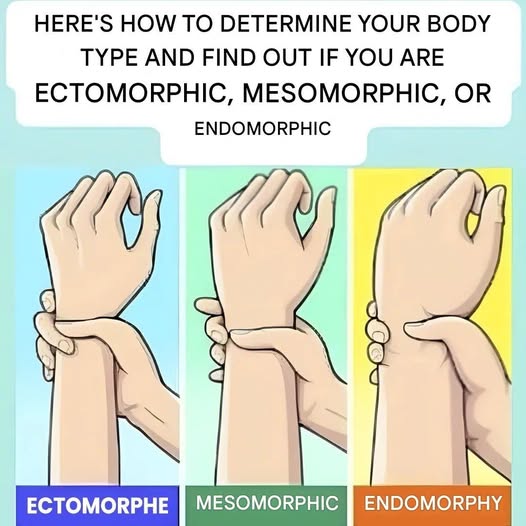
Are you an ectomorph, mesomorph, or endomorph? Learn what these classic body-type categories mean, how to recognize common characteristics, and why your body type doesn’t determine your fitness potential.
Are You an Ectomorph, Mesomorph, or Endomorph? Discover Your Body Type and How to Make the Most of It
Have you ever wondered why some people seem naturally slim, while others build muscle easily or tend to carry more body fat?
You may have come across the terms ectomorph, mesomorph, and endomorph. These three categories come from an older body-type classification system called somatotyping.
The idea is simple: people can be broadly described according to their natural body shape and build. But it’s important to remember that modern science doesn’t consider these categories a precise way to predict metabolism, genetics, or how your body will respond to exercise.
Think of them as a general description of body shape—not a permanent label.
1. Ectomorph: Naturally Leaner Build
Ectomorph is traditionally used to describe people with a slimmer frame, narrower shoulders, and relatively low body fat.
They may appear naturally lean and sometimes find it difficult to gain significant muscle or body weight.
If this sounds like you
Rather than simply eating as much as possible, focus on nutritious foods that provide plenty of calories and protein.
Good choices include:
- Eggs
- Yogurt and milk
- Beans and lentils
- Chicken, fish, or other protein sources
- Nuts and seeds
- Whole grains
- Rice and potatoes
- Healthy oils
Strength training can also help build muscle when combined with sufficient food and recovery.
However, being naturally slim doesn’t automatically mean you have a “fast metabolism.” Appetite, activity level, genetics, muscle mass, and many other factors influence body weight.
2. Mesomorph: Naturally Athletic-Looking Build
The mesomorph category traditionally describes people with broader shoulders, a more muscular appearance, and a tendency to gain muscle relatively easily.
Someone who fits this description may respond well to resistance training, but that doesn’t mean they can ignore nutrition or recovery.
If this sounds like you
A balanced approach usually works best.
Combine:
- Regular strength training
- Cardiovascular exercise
- Adequate protein
- Plenty of fruits and vegetables
- Whole-food carbohydrate sources
- Healthy fats
- Sufficient sleep
Your training goals should determine how you structure your workouts—not simply the body-type label you’ve been given.
3. Endomorph: Fuller or Rounder Build
Endomorph is traditionally used to describe people with a wider or softer body shape and a tendency to carry more body fat.
But this category should never be interpreted as meaning someone is destined to be overweight.
Body weight and body composition are influenced by many factors, including genetics, food intake, physical activity, sleep, medications, hormones, and environment.
If this sounds like you
Focus on sustainable habits rather than extreme dieting.
A good foundation includes:
- Regular walking or other enjoyable activity
- Resistance training
- Adequate protein
- High-fiber foods
- Mostly minimally processed foods
- Reasonable portion sizes
- Consistent sleep
You don’t need to completely eliminate carbohydrates or follow a highly restrictive diet to improve your health.
Can You Be a Combination?
Absolutely.
Most people don’t fit perfectly into one category. You may have a naturally slim upper body but carry more weight around your hips, or you may have a muscular frame while also gaining body fat easily.
That’s why trying to force yourself into one of three categories can be misleading.
Your body composition can also change over time as your activity level, diet, age, hormones, and lifestyle change.
Your Body Type Doesn’t Determine Your Fitness Potential
One of the biggest problems with strict body-type labels is the idea that your category determines what you can or cannot achieve.
It doesn’t.
A person with a naturally slim build can become strong and muscular. Someone with a larger frame can become lean and athletic. And someone who gains weight easily can still build excellent fitness through consistent habits.
Your starting point isn’t your final destination.
Focus on What You Can Control
Instead of worrying too much about whether you’re an ectomorph, mesomorph, or endomorph, pay attention to measurable factors such as:
Strength: Are you gradually getting stronger?
Fitness: Can you walk, run, cycle, or exercise more comfortably?
Body composition: Are you maintaining or changing muscle and body fat in a healthy way?
Energy: Do you feel energized throughout most of the day?
Nutrition: Are you eating enough protein, fiber, vitamins, and minerals?
Recovery: Are you sleeping well and allowing your body enough time to recover?
These factors are much more useful than a three-word body-type label.
The Bottom Line
Ectomorph, mesomorph, and endomorph can be interesting ways to describe broad differences in body shape, but they aren’t strict biological categories that determine your metabolism or your ability to lose fat or gain muscle.
Your genetics influence your natural build, but your habits, training, nutrition, sleep, and consistency matter enormously.
Instead of asking, “Which body type am I?” a more useful question is: “What approach helps my body become healthier, stronger, and more capable?”