Have you ever noticed a tiny hole, dimple, or indentation just in front of someone’s ear? Perhaps you have one yourself and have wondered why it is there.
Images showing this unusual ear mark often circulate online with headlines claiming that it reveals something surprising about a person’s body. The medical explanation, however, is more interesting—and more useful—than many viral claims suggest.
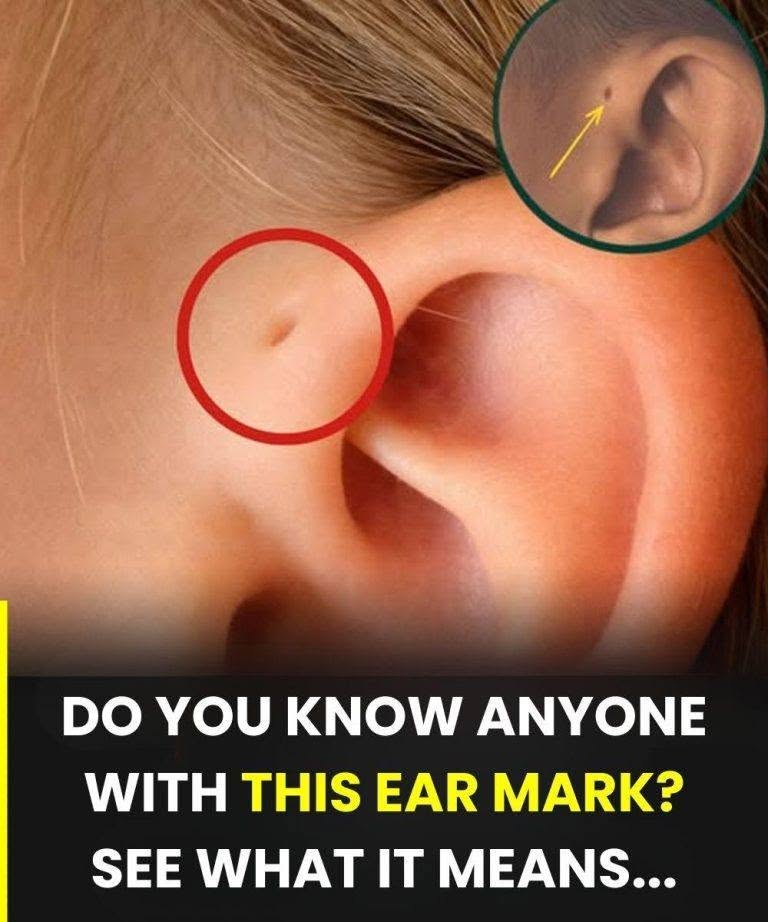
The mark shown in the picture resembles a preauricular pit, also known as a preauricular sinus. It is a small opening in the skin near the point where the upper ear meets the face. Most of the time, it is harmless and does not require treatment.
So why does it develop? Can it affect hearing? Is it connected to kidney problems? And what should you do if it becomes swollen or painful?
Let’s explore what medical research tells us.
What Is the Small Hole in Front of the Ear?
A preauricular pit is a tiny opening or dimple located near the front of the ear, often close to where the ear cartilage meets the face.
Although it may look like a simple indentation, the opening can lead to a narrow tunnel beneath the skin. Doctors call this tunnel a sinus tract. Its length and shape vary from person to person, and some tracts have branches beneath the surface.
The opening may be so small that someone notices it only during a routine examination or when it becomes irritated.
According to the Children’s Hospital of Philadelphia, preauricular pits are congenital, meaning they develop before birth. Most people who have one do not experience any health problems because of it.
Why Does This Ear Mark Develop?
The visible outer ear forms during the early weeks of pregnancy. As the ear develops, several small areas of tissue grow and join together to create its familiar shape.
A preauricular pit is thought to form when this developmental process does not proceed in the usual way, leaving a tiny opening and an underlying tract.
The exact reason it develops is not always known. In some families, the feature appears to be inherited, while in other people it occurs without any known family history.
Having this mark is generally not something a person caused through their behavior, hygiene, diet, or lifestyle.
Is a Preauricular Pit Rare?
Preauricular pits are a recognized congenital feature found in populations around the world. Their frequency varies by population and study, so there is no single percentage that applies equally to everyone.
The pit can occur on either side of the head. Some people have one near a single ear, while others have openings on both sides. When several family members have similar marks, an inherited tendency may be involved.
It is also important to distinguish a pit from a preauricular skin tag. A pit is an opening or indentation that may connect to a tunnel beneath the skin. A skin tag, by contrast, is a small piece of extra skin or tissue near the ear. A healthcare professional can help distinguish between them when the appearance is uncertain.
Does This Mark Have a Special Meaning?
Online posts sometimes suggest that a particular ear shape or mark reveals someone’s personality, intelligence, luck, spiritual qualities, or future.
There is no reliable scientific evidence that a preauricular pit predicts any of these things.
Its established medical explanation is related to the development of the outer ear before birth. It should not be interpreted as a sign of a person’s character, destiny, or lifespan.
The feature can certainly be unusual to notice, but its appearance alone does not reveal anything about someone’s personality or abilities.
Is the Mark Usually Harmless?
Yes. In most cases, a preauricular pit causes no symptoms and needs no medical treatment.
A person may have the same tiny opening throughout life without ever experiencing a problem. If it is not painful, swollen, or producing discharge, a doctor may simply recommend leaving it alone.
However, the tract beneath the skin can sometimes become blocked or infected. This is why it is useful to recognize the warning signs rather than attempting to clean or treat the opening aggressively.
What Happens If the Ear Pit Becomes Infected?
An infection can develop when bacteria enter the opening and affect the tissue beneath the skin. Some people experience only mild irritation, while others may develop a more noticeable infection or a pocket of pus called an abscess.
Possible warning signs include:
- Redness around the opening.
- Swelling or a tender lump.
- Pain or warmth in the surrounding skin.
- Fluid or pus draining from the pit.
- An unpleasant smell associated with discharge.
- Fever or worsening discomfort in more significant infections.
These symptoms do not automatically mean that a serious complication is present, but they deserve medical attention.
If the area becomes increasingly painful, swollen, red, or starts draining pus, contact a healthcare professional promptly. Seek urgent care if redness spreads quickly, swelling becomes severe, fever develops, or you feel very unwell.
Avoid squeezing the opening, inserting objects into it, or attempting to drain it yourself. These actions may irritate the tissue or worsen an infection.
Can a Preauricular Pit Affect Hearing?
A preauricular pit by itself generally does not cause hearing loss. Most people with an isolated pit have no associated hearing problem.
In uncommon cases, however, the pit may occur as part of a broader congenital condition involving the ears or other parts of the body. In these circumstances, hearing difficulties or other developmental differences may also be present.
If a baby has an ear pit, routine newborn hearing screening remains important. Further assessment may be appropriate if the child has hearing difficulties, other congenital differences, or a family history of significant hearing problems.
The key point is that the small opening alone does not mean that someone is deaf or will develop hearing loss.
Is It Connected to Kidney Problems?
This is one of the most common concerns associated with preauricular pits.
Certain rare genetic conditions can involve a combination of ear differences, hearing problems, and kidney abnormalities. One example is branchio-oto-renal syndrome.
However, having an isolated preauricular pit does not mean that a person has kidney disease.
Medical assessment depends on the wider picture. A clinician may consider additional testing when the pit occurs alongside other congenital abnormalities, hearing impairment, relevant family history, or other findings that raise concern.
For an otherwise healthy person with an isolated pit, routine kidney imaging is generally not recommended solely because the opening is present. The decision should be based on the person’s medical history and examination.
Does the Mark Need Treatment or Removal?
If the pit is not causing problems, treatment is usually unnecessary.
A doctor may recommend observation and explain what symptoms to look out for. The opening does not generally need to be removed simply because it is visible.
If an infection develops, treatment may include antibiotics when appropriate. If a collection of pus forms, a clinician may need to drain it using a suitable medical procedure.
People who experience repeated infections or persistent drainage may be referred to an ear, nose, and throat specialist. In such cases, surgery may be recommended to remove the entire underlying tract.
Removing the tract is more involved than treating the visible opening alone because the passage beneath the skin can be narrow or branched. Surgery is usually considered after an active infection has been controlled.
As with any procedure, the benefits and risks should be discussed with the treating specialist.
How Should You Care for the Area?
If you have a preauricular pit that is not causing symptoms, simple, gentle care is generally sufficient.
Keep the surrounding skin clean. Wash the area gently as part of your usual hygiene routine.
Do not squeeze or pick at it. Trying to force material out of the opening can cause irritation and may introduce bacteria.
Avoid inserting cotton buds or other objects. The tract can extend beneath the skin, and attempting to clean inside it may cause injury.
Watch for changes. New redness, pain, swelling, a lump, or discharge should not be ignored.
Get medical advice if symptoms appear. Do not rely on home remedies to treat a suspected infection, and do not use leftover antibiotics without professional guidance.
When Should You See a Doctor?
Consider arranging a medical examination if you are unsure what the mark is, particularly if it has appeared recently rather than being present for as long as you can remember.
Seek prompt medical advice if you notice:
- Repeated swelling or infections in the same spot.
- Persistent fluid or pus draining from the opening.
- A growing lump near the ear.
- Pain or redness that is getting worse.
- Hearing concerns or other unusual symptoms alongside the pit.
A clinician can usually identify a typical preauricular pit by examining the area. Additional tests are considered only when the history or examination suggests they are needed.
Can a Preauricular Pit Disappear Naturally?
Because a preauricular pit forms during development before birth, it generally remains present throughout life. Its visibility may be subtle, and some people may not notice it for years.
Even if the opening appears tiny or seems less noticeable over time, the underlying tract may still be present.
If the pit is harmless, there is usually no need to remove it. If it causes repeated infections, a specialist can explain the available treatment options.
Frequently Asked Questions
1. Is a small hole in front of the ear normal?
It is a recognized congenital variation called a preauricular pit. It is not part of the usual ear anatomy, but it is often harmless and usually does not require treatment.
2. Is it hereditary?
It can run in families, although it also occurs in people without a family history. Not every person with a pit has an inherited condition.
3. Does it mean that a person has a hidden health problem?
Not usually. Most isolated preauricular pits do not cause other health problems. Additional assessment may be appropriate if there are other congenital findings, hearing concerns, or a relevant family history.
4. Can the pit become infected years later?
Yes. Although it may remain symptom-free for many years, infection can occasionally develop later in life. Pain, redness, swelling, or discharge should be assessed by a healthcare professional.
5. Can it be removed for cosmetic reasons?
Treatment is generally unnecessary when the pit causes no problems. Surgery may be considered in selected cases, particularly when there are repeated infections. A specialist can discuss whether removal is appropriate for an individual situation.
6. Does everyone with this mark need a hearing test or kidney scan?
No. An isolated pit in an otherwise healthy person does not automatically require additional hearing investigations or kidney imaging beyond routine care. Testing may be appropriate when other symptoms, examination findings, or family history raise concerns.
Final Thoughts: What This Little Ear Mark Really Means
The tiny indentation shown in the image most closely resembles a preauricular pit, a small congenital opening near the front of the ear.
For most people, it is simply an anatomical variation that causes no trouble. It does not reveal a person’s personality, intelligence, luck, or future, and it is not by itself evidence of hearing loss or kidney disease.
The most important thing is to recognize the difference between a harmless, symptom-free pit and one that becomes infected. If the area remains comfortable and unchanged, it usually needs no special treatment. If it becomes painful, swollen, red, or starts draining fluid, a healthcare professional can assess it and recommend appropriate care.
Understanding the medical facts is far more helpful than believing dramatic claims shared online.