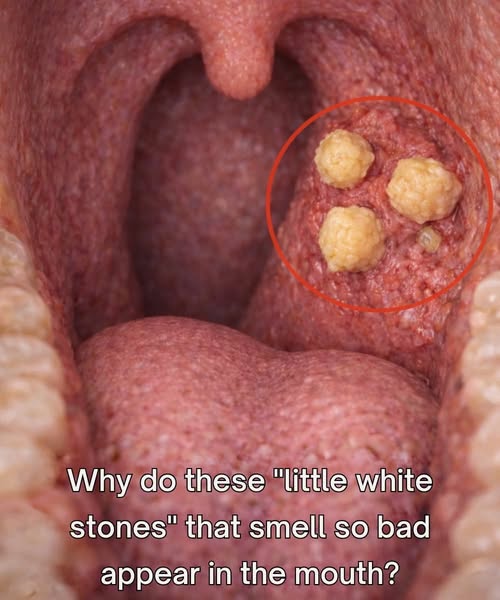
Have you ever looked in the mirror, opened your mouth, and noticed tiny white or yellowish lumps hiding in the back of your throat or inside your tonsils?
Or perhaps you’ve noticed that your breath smells unpleasant even though you brush your teeth and use mouthwash regularly.
Those small, hard-looking pieces may be tonsil stones, medically known as tonsilloliths.
They are usually harmless, but they can be surprisingly unpleasant and may cause persistent bad breath, a strange taste in the mouth, or the feeling that something is stuck in your throat.
What Exactly Are Tonsil Stones?
Tonsil stones are small, hardened deposits that form inside the tiny folds, pockets, and crevices of the tonsils.
Your tonsils naturally have small openings called crypts. Food particles, mucus, dead cells, bacteria, and other debris can become trapped inside these spaces.
Over time, the material can accumulate and harden.
The result is a small white, yellow, or sometimes grayish lump known as a tonsil stone.
Some stones are barely visible and may be as small as grains of sand. Others can become larger and easier to notice.
Why Do Tonsil Stones Cause Bad Breath?
One of the most frustrating symptoms of tonsil stones is bad breath, also called halitosis.
The reason is that tonsil stones can contain bacteria and trapped organic material.
As bacteria break down this material, they can produce unpleasant-smelling compounds. This can create a persistent odor even when you maintain a good brushing and flossing routine.
This is why someone may have good dental hygiene and still experience bad breath related to tonsil stones.
What Do Tonsil Stones Look Like?
Tonsil stones commonly appear as:
- Small white spots
- White or yellow lumps
- Tiny hard particles in the tonsils
- Irregular deposits inside tonsil crypts
- Occasionally larger, visible masses
However, not every white spot in the throat is a tonsil stone.
White patches can also occur with infections and other conditions, so appearance alone isn’t always enough to determine the cause.
Common Symptoms of Tonsil Stones
Some people have tonsil stones without noticing any symptoms at all.
When symptoms do occur, they may include:
1. Persistent Bad Breath
This is one of the most common complaints.
The odor may return even after brushing your teeth, cleaning your tongue, or using mouthwash.
2. Something Stuck in Your Throat
You may feel as though there is a tiny object or lump sitting at the back of your throat.
3. Bad Taste
Some people notice an unpleasant or metallic taste in their mouth.
4. Coughing or Throat Irritation
A stone can irritate the surrounding tissue and create the urge to cough or clear your throat.
5. Visible White Spots
You may notice small white or yellowish deposits when looking at your tonsils.
6. Ear Discomfort
Because of shared nerve pathways in the throat and ear, tonsil problems can sometimes be perceived as discomfort in the ear.
Not everyone with tonsil stones experiences all of these symptoms.
Why Do Some People Get Tonsil Stones?
Some people are simply more prone to developing them.
Factors that may contribute include:
- Deep tonsil crypts
- Frequent tonsil inflammation
- Recurrent throat infections
- Poor oral hygiene
- Chronic postnasal drainage
- Dry mouth
- Accumulation of food particles and mucus
People with larger or more irregular tonsils may have more spaces where debris can become trapped.
Are Tonsil Stones Dangerous?
In most cases, tonsil stones are not dangerous.
Small tonsil stones often cause little more than bad breath, irritation, or discomfort.
However, persistent or severe throat symptoms should not automatically be blamed on tonsil stones.
If you have significant pain, fever, difficulty swallowing, difficulty breathing, swelling, bleeding, or symptoms that are getting worse, you should seek medical attention.
Can Tonsil Stones Go Away on Their Own?
Yes.
Small tonsil stones may loosen and fall out naturally. You might even cough one up without realizing exactly where it came from.
Others remain trapped in the tonsil crypts and may continue causing symptoms.
The frequency with which tonsil stones return varies from person to person.
How Can You Prevent Tonsil Stones?
Good oral and throat hygiene may help reduce the amount of debris available to form stones.
Brush Your Teeth Regularly
Brush twice a day using fluoride toothpaste.
Don’t forget to gently clean your tongue because bacteria and debris can accumulate there as well.
Floss Daily
Flossing helps remove food particles between your teeth that could otherwise contribute to bacterial buildup.
Stay Hydrated
Drinking enough water helps prevent dry mouth and keeps the mouth cleaner.
Gargle With Salt Water
Gargling with warm salt water may help soothe the throat and loosen some debris.
It isn’t a guaranteed way to prevent tonsil stones, but it can be a simple hygiene measure.
Maintain Regular Dental Care
Regular dental checkups can help identify gum disease, tooth decay, or other causes of bad breath that may be unrelated to tonsil stones.
Should You Remove a Tonsil Stone Yourself?
Small, visible tonsil stones sometimes come out naturally or can be gently dislodged.
However, aggressive digging or scraping is not recommended.
The tonsils contain delicate tissue and blood vessels, and trying to force out a deeply embedded stone can cause irritation, bleeding, or injury.
Avoid using sharp objects or anything that could damage the tonsil.
If the stones are large, deeply embedded, painful, or repeatedly returning, a healthcare professional can advise you about safer treatment options.
When Should You See a Doctor?
Consider speaking with a doctor or an ear, nose, and throat specialist if:
- Tonsil stones keep coming back
- They are large or difficult to remove
- You have persistent throat pain
- You have frequent tonsil infections
- You have difficulty swallowing
- You experience unexplained bleeding
- One tonsil appears significantly larger than the other
- You have persistent bad breath despite good oral hygiene
A healthcare professional can determine whether tonsil stones are actually responsible for your symptoms.
Tonsil Stones vs. Tonsillitis
These two conditions are sometimes confused.
Tonsil stones are hardened collections of debris that develop within tonsil crypts.
Tonsillitis is inflammation of the tonsils, often caused by an infection.
Tonsillitis may cause symptoms such as:
- Sore throat
- Fever
- Swollen tonsils
- Difficulty swallowing
- Redness
- White patches or spots
A white area in the throat doesn’t automatically mean you have a tonsil stone.
Can Tonsil Stones Cause Long-Term Problems?
For most people, tonsil stones are more of a nuisance than a serious health problem.
The biggest concerns are usually recurring bad breath, throat irritation, discomfort, and repeated formation of stones.
If they are persistent or significantly affecting your quality of life, an ENT specialist can discuss treatment options.
In rare cases involving severe, recurrent problems, surgical removal of the tonsils may be considered, but this is generally not necessary for ordinary small tonsil stones.
The Bottom Line
Those tiny white or yellowish “stones” hiding in your tonsils may be tonsil stones, which form when food particles, mucus, bacteria, and dead cells become trapped in the tonsil crypts and harden.
They are usually harmless, but they can produce unpleasant odors and cause throat irritation or the sensation of something being stuck.
Good oral hygiene, regular hydration, and gentle gargling may help reduce buildup. However, repeatedly digging at the tonsils can cause injury.
If your tonsil stones are persistent, painful, unusually large, or accompanied by significant throat symptoms, it’s best to have them evaluated by a healthcare professional.
And if you’re experiencing ongoing bad breath, remember that tonsil stones are only one possible cause. Dental problems, gum disease, dry mouth, sinus or nasal issues, and other conditions can also contribute to halitosis.