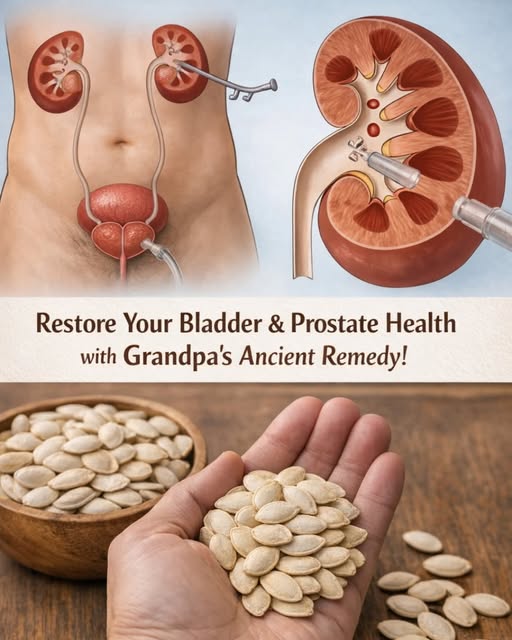
As men get older, changes in urinary health can become increasingly common. Frequent urination, a weak urine stream, difficulty starting, dribbling, or waking several times during the night can sometimes be linked to an enlarged prostate or another urinary-tract condition.
This is why foods, drinks, supplements, and lifestyle habits promoted for “bladder cleansing” or “prostate rejuvenation” attract so much attention online.
But there is an important distinction between supporting urinary health and actually reversing an existing medical condition.
There is no single food or home remedy proven to make the bladder or prostate literally “look like new.” Prostate problems can have several causes, including benign prostatic hyperplasia (BPH), prostatitis, and prostate cancer, and the appropriate treatment depends on the underlying problem.
Why Bladder and Prostate Health Are Connected
The prostate sits just below the bladder and surrounds part of the urethra, the tube through which urine leaves the body.
When the prostate becomes enlarged, it can put pressure on the urethra and interfere with normal urine flow. This may lead to symptoms such as:
- A weak or interrupted urine stream
- Difficulty starting urination
- Frequent trips to the bathroom
- A sudden or urgent need to urinate
- Dribbling after urination
- Feeling that the bladder has not completely emptied
- Getting up repeatedly during the night to urinate
These symptoms should not automatically be blamed on aging. Different urinary conditions can produce similar symptoms, which is why proper evaluation matters.
Can Lifestyle Habits Help?
Although lifestyle changes cannot guarantee a “new” prostate or bladder, some habits may help manage urinary symptoms and support overall health.
For example, people with urinary symptoms may benefit from discussing fluid timing with their healthcare professional, particularly reducing large amounts of fluid before bedtime. Limiting caffeine or alcohol may also help some people because these can worsen urinary symptoms in certain individuals.
Maintaining a healthy weight and staying physically active are also generally beneficial for overall health. Some evidence links obesity with a higher risk of BPH, while exercise may help lower that risk.
What About Supplements and “Natural Prostate Cleaners”?
This is where viral health claims can become misleading.
A product advertised as a “prostate cleanser,” “bladder detox,” or natural way to restore the prostate should not automatically be assumed to treat an enlarged prostate or other urinary disease.
If someone already has urinary symptoms, it is important to identify the cause rather than simply masking the symptoms with a supplement.
Doctors may use a medical history, physical examination, urine or blood tests, ultrasound, and other tests when necessary to determine what is affecting the urinary system.
An Enlarged Prostate Doesn’t Always Require Surgery
Benign prostatic hyperplasia, commonly called BPH, is a non-cancerous enlargement of the prostate and becomes increasingly common with age.
Treatment depends on the size of the prostate, the severity of symptoms, overall health, and how much the condition affects daily life. Options can include monitoring, lifestyle changes, medications, minimally invasive procedures, or surgery.
Some medications can relax muscles around the prostate and bladder neck to make urination easier. Other medications can slow prostate growth and, in some men, reduce prostate size.
Don’t Ignore These Warning Signs
Urinary symptoms deserve medical attention when they persist or become troublesome.
A man should speak with a healthcare professional if he experiences:
- Blood in the urine
- Persistent difficulty urinating
- A consistently weak urine stream
- Pain or burning during urination
- Repeated nighttime urination
- Inability to completely empty the bladder
- Fever or chills together with urinary symptoms
- Significant pelvic, abdominal, penile, or scrotal pain
If you suddenly cannot urinate at all, seek medical care immediately. Acute urinary retention can be a serious problem.
The Bottom Line
There is no magic ingredient that can literally make an aging bladder or prostate “like new.” However, healthy habits, appropriate medical evaluation, and evidence-based treatment can help protect urinary function and manage prostate-related symptoms.
The most important step is not looking for a miracle “cleanse.” It is understanding why the urinary symptoms are happening in the first place.
If symptoms are persistent, worsening, painful, or accompanied by blood in the urine or an inability to urinate, professional medical evaluation is especially important.
SEO Meta
Meta Description:
Discover evidence-based ways to support bladder and prostate health, understand common urinary symptoms, and learn when prostate or bladder problems require medical attention.
SEO Title:
How to Support Better Bladder and Prostate Health Naturally
Suggested URL Slug:bladder-prostate-health-tips
Focus Keywords:
bladder health, prostate health, healthy prostate, bladder and prostate health, enlarged prostate symptoms, BPH symptoms, prostate health tips, urinary health, natural prostate health, bladder health tips, prostate problems, urinary symptoms