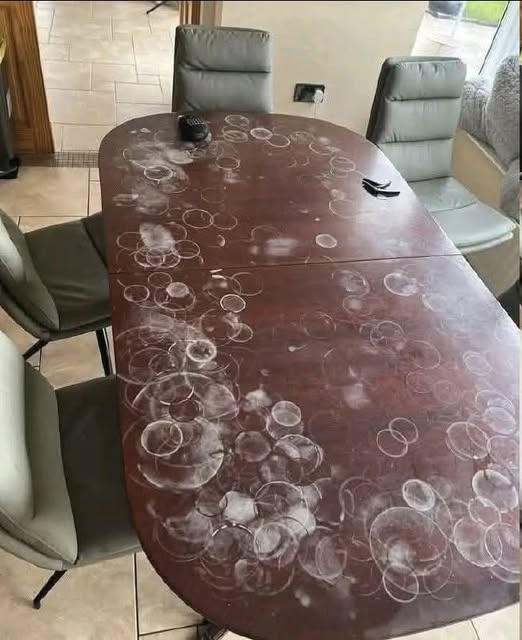
Learn how to remove stubborn cup stains from a wooden table using simple household methods, including white rings caused by moisture and heat, without damaging the finish.
Cup stains are one of the most common problems with wooden furniture. Those cloudy white rings left behind by cold drinks, hot mugs, or damp glasses can make a beautiful table look old and neglected.
The good news is that many cup stains are only in the finish rather than deep inside the wood, which means they can often be removed without refinishing the entire table.
If you can upload a photo of the table and stain, I can suggest the safest method based on what the surface actually looks like:
First, Identify the Type of Stain
White or cloudy rings
These are usually caused by moisture or heat becoming trapped beneath the table’s finish. They’re often the easiest type to treat.
Dark brown or black stains
Dark stains are more concerning because they may indicate that moisture has penetrated into the wood itself. These can require more involved treatment.
Sticky or greasy marks
These may simply be residue from cups, condensation, or cleaning products and can often be removed with gentle cleaning.
Try This First: A Gentle Method
Start with the least aggressive approach.
- Mix a small amount of mild dish soap with warm water.
- Dampen a soft microfiber cloth and wring it out well.
- Gently wipe the affected area.
- Immediately dry the surface with another clean cloth.
Don’t soak the table. Excess water can make the problem worse.
For White Water Rings
If the stain is a white, cloudy ring, one commonly used household method is gentle warmth.
Place a clean, dry cotton cloth over the stain and briefly apply low heat from a hair dryer, keeping it moving and several inches away from the surface.
Check the area frequently. The goal is to gently warm the finish—not cook it.
Stop immediately if the finish becomes sticky, changes color, or looks damaged.
Another Option: Petroleum Jelly
For some white moisture rings, applying a very small amount of petroleum jelly over the mark and leaving it for several hours or overnight may help draw out the appearance of the moisture.
The next day, wipe it away completely with a soft cloth and check the result.
Always test any treatment on a hidden area first, especially if the table is antique, painted, veneered, or has a delicate finish.
Avoid These Common Mistakes
Don’t immediately reach for:
- Sandpaper
- Bleach
- Strong bathroom cleaners
- Abrasive scrubbing pads
- Large amounts of vinegar
- Acetone or nail-polish remover
These can remove or damage the table’s protective finish and potentially turn a small stain into a much bigger repair.
If the Stain Is Dark
A dark brown or black mark may have penetrated beneath the finish. In that situation, simple surface cleaning may not be enough.
The table might need the affected area to be carefully stripped, treated, lightly sanded, and refinished.
For an expensive or antique table, it’s better to get professional advice before attempting aggressive DIY treatments.
The Best Approach
Start gentle and work your way up. Most importantly, don’t scrub aggressively just because the stain isn’t disappearing immediately.
If you share a clear photo of the table and the cup stain, I ca