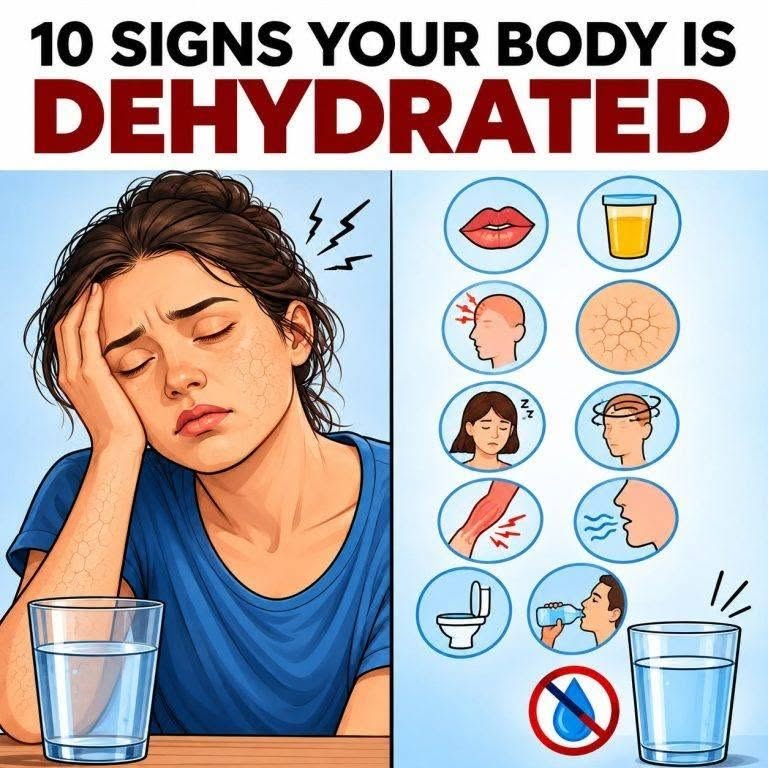
10 Signs Your Body Is Dehydrated
Dehydration happens when your body loses more fluids than it takes in. It can occur after sweating heavily, exercising, vomiting, diarrhea, spending time in hot weather, or simply not drinking enough throughout the day.
Here are 10 common signs that may indicate your body needs more fluids:
1. 💧 Dark Yellow Urine
One of the easiest things to monitor is your urine. Dark yellow or amber-colored urine can be a sign that you need more fluids. Pale yellow urine generally suggests better hydration.
2. 👄 Dry Mouth and Lips
A sticky or dry mouth, dry tongue, or cracked lips can occur when your body doesn’t have enough fluid available.
3. 🚽 Urinating Less Often
If you’re going much longer than usual without urinating, or your urine output has noticeably decreased, dehydration may be contributing.
4. 🤕 Headache
Not drinking enough fluids can be associated with headaches in some people. If a headache develops after heat exposure or prolonged activity, rehydrating may help.
5. 😴 Unusual Tiredness
Feeling unusually weak, tired, or lacking energy can occur with dehydration, particularly when fluid losses are significant.
6. 😵 Dizziness or Lightheadedness
Dehydration can contribute to dizziness or feeling faint, especially when standing up quickly.
7. 🧠 Difficulty Concentrating
When you’re not adequately hydrated, you may notice difficulty focusing, reduced alertness, or feeling mentally sluggish.
8. 🏃 Muscle Cramps
Heavy sweating causes the loss of both fluids and electrolytes. This can contribute to muscle cramps, particularly during or after strenuous exercise.
9. ❤️ Rapid Heartbeat
More significant dehydration can reduce circulating blood volume, causing the heart to beat faster to help maintain circulation.
10. 🥵 Very Dry Skin or Reduced Sweating
When dehydration becomes more severe, the body may conserve fluid and sweating can decrease. Very dry skin combined with other symptoms deserves attention.
How to Rehydrate
For mild dehydration, start drinking fluids regularly rather than consuming a huge amount all at once. Water is usually sufficient for everyday fluid replacement. After prolonged exercise, heavy sweating, vomiting, or diarrhea, an oral rehydration solution (ORS) may be more appropriate because it replaces both fluids and electrolytes.
⚠️ When Dehydration Can Be an Emergency
Severe dehydration can be dangerous. Confusion, fainting, inability to keep fluids down, very little or no urination, extreme weakness, or a very rapid heartbeat can require urgent medical attention.
Remember: thirst is one useful signal, but you don’t have to wait until you’re extremely thirsty to drink. Your fluid needs vary depending on your activity, climate, diet, and health.