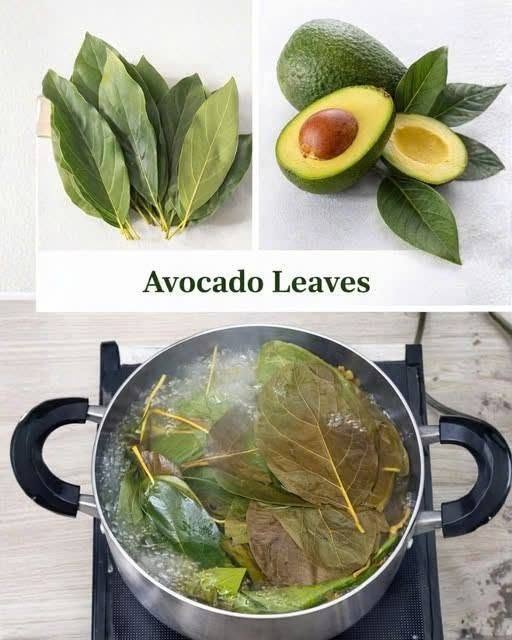
When most people think about avocados, they immediately picture the creamy green fruit. But there’s another part of the avocado tree that often gets overlooked: the leaves.
Fresh avocado leaves have been used traditionally in some cultures for cooking, herbal preparations, and household purposes. Their pleasant aroma and naturally occurring plant compounds have made them an interesting subject for people who enjoy traditional plant-based remedies.
But before reaching for a handful of leaves, it’s important to understand that traditional use does not automatically mean a remedy is proven or safe for everyone.
🌿 What Makes Avocado Leaves Interesting?
Avocado leaves contain naturally occurring plant compounds, including various antioxidants and aromatic substances. Their composition can differ depending on the avocado variety, growing conditions, and maturity of the leaves.
Unlike the fruit, avocado leaves are not commonly eaten as a staple food. In some culinary traditions, however, certain varieties of avocado leaves are used as an aromatic herb.
Their distinctive fragrance can add an earthy, slightly anise-like character to certain dishes.
🍃 Traditional Uses of Avocado Leaves
In traditional practices, avocado leaves have been prepared in several ways, including as an herbal infusion or seasoning.
People have traditionally associated avocado-leaf preparations with:
- Supporting general wellness
- Providing plant-based antioxidants
- Adding flavor to traditional dishes
- Supporting digestive comfort
- Enjoying a soothing herbal beverage
However, many of these uses are based on traditional practice or preliminary research rather than strong clinical evidence in humans. Avocado leaves should not be presented as a treatment for diseases or as a replacement for medical care.
🫖 Avocado Leaf Tea: What Should You Know?
Avocado-leaf tea is sometimes prepared by steeping leaves in hot water. If someone chooses to try it, the biggest consideration is which avocado species and variety the leaves come from.
Not all avocado leaves should be assumed to be equally suitable for consumption.
There are also safety concerns surrounding avocado plants and certain animals. Some compounds found in avocado plants can be toxic to particular animal species, so avocado leaves should never be casually given to pets or livestock.
For humans, especially children, pregnant or breastfeeding people, or anyone taking medication, it is sensible to speak with a healthcare professional before consuming avocado-leaf preparations.
🥑 Avocado Leaves in Cooking
In regions where edible avocado-leaf varieties are traditionally used, the leaves can sometimes be used similarly to a seasoning herb.
They may be:
- Toasted lightly to release their aroma
- Added to sauces or stews
- Used to flavor beans or vegetables
- Incorporated into traditional recipes
The leaves are generally used for their aroma and flavor rather than as a major food ingredient.
🌱 Don’t Confuse the Leaf With the Fruit
Avocado fruit is widely consumed and is well known for its nutritional value, including healthy fats, fiber, and several vitamins and minerals.
The leaves are different.
Just because the fruit is nutritious doesn’t mean every part of the plant has the same nutritional or safety profile. This is an important point when reading viral claims about “miracle” plant remedies online.
⚠️ A Few Important Precautions
Before experimenting with avocado leaves, keep these points in mind:
1. Know the plant.
Do not collect unidentified leaves from an avocado-like plant and assume they are safe.
2. Variety matters.
Traditional culinary use generally refers to particular avocado varieties. Safety cannot necessarily be generalized to every avocado tree.
3. Avoid excessive consumption.
More is not necessarily better with herbal preparations.
4. Be careful with homemade remedies.
Concentration and preparation methods can vary considerably.
5. Consider your health circumstances.
If you are pregnant, breastfeeding, taking medication, have a chronic condition, or want to give an avocado-leaf preparation to a child, consult a qualified healthcare professional first.
🌿 The Bigger Lesson
Avocado leaves may indeed be an interesting and culturally valuable part of the avocado tree, but they shouldn’t be portrayed as a miracle cure.
The real “treasure” is their combination of traditional culinary history, distinctive aroma, and interesting plant chemistry.
So the next time you see an avocado tree, don’t look only at the fruit. Those green leaves have a story of their own—but when it comes to consuming them, knowledge and caution are just as important as tradition.
Final Thought
Nature gives us many fascinating plants, but natural doesn’t always mean harmless. Enjoy avocado fruit as part of a balanced diet, and treat avocado leaves as a traditional botanical ingredient that deserves careful research rather than exaggerated health promises.
Meta Description: Discover why avocado leaves are considered a traditional botanical treasure, their culinary uses, potential plant compounds, and important safety precautions before consuming them.