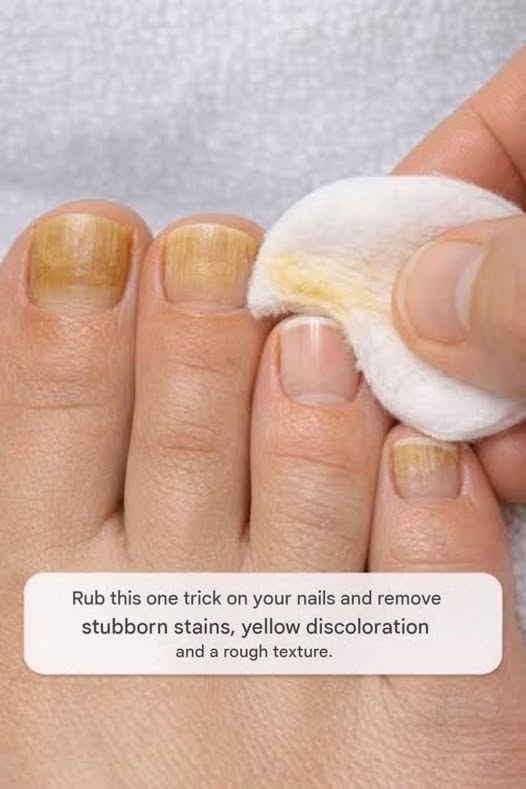
Your nails can sometimes become dull, yellowish, stained, or rough-looking even when you take good care of them. Dark nail polish, frequent use of polish remover, everyday dirt, and natural changes in the nail surface can all contribute to an uneven appearance.
One simple home-care trick that many people use is gently rubbing a small amount of baking soda paste over the nail surface.
But there is an important detail: the goal should be gentle cleaning and smoothing, not aggressive scrubbing.
Why Baking Soda Is Used on Nails
Baking soda is a mild alkaline powder that can be mixed with water to create a simple paste.
Its slightly abrasive texture may help loosen surface residue and remove some superficial discoloration. This can make nails appear cleaner and brighter.
However, baking soda isn’t a medical treatment for yellow or discolored nails. If the discoloration is caused by an underlying nail condition, simply scrubbing the surface won’t address the cause.
How to Try the Nail-Care Trick
You only need:
- 1 teaspoon baking soda
- A few drops of water
- A soft nail brush or clean fingertip
Step 1: Make a Paste
Place the baking soda in a small dish and add a few drops of water.
Mix until you have a soft, spreadable paste.
Step 2: Apply Gently
Apply a small amount to the surface of your nails.
Using a soft brush or fingertip, massage the paste very gently for about 20–30 seconds.
There’s no need to scrub hard. Excessive friction can make nails dry, thin, or more fragile.
Step 3: Rinse Thoroughly
Wash your hands with lukewarm water and remove all of the baking soda.
Pat your hands dry rather than rubbing them aggressively.
Step 4: Moisturize
Finish with a hand cream or cuticle moisturizer.
This step is important because frequent exposure to water, soaps, and cleaning products can leave the skin and nails feeling dry.
What About Lemon Juice?
You may have seen recipes recommending baking soda mixed with lemon juice for yellow nails.
Although lemon is commonly used in DIY beauty routines, more isn’t necessarily better. Lemon juice is acidic and can irritate the surrounding skin, especially if you have cuts, hangnails, eczema, or sensitive skin.
There is no need to create a harsh mixture simply to make the nail appear brighter.
A gentle cleaning routine is a safer starting point.
Why Do Nails Turn Yellow?
Yellow nails can have many possible explanations.
One of the most common cosmetic causes is staining from dark nail polish. Pigments can leave the nails temporarily discolored, particularly when polish is worn repeatedly without breaks.
Other possibilities include:
- Nail trauma
- Frequent exposure to chemicals
- Fungal nail infections
- Certain skin conditions
- Normal changes associated with aging
- Other medical conditions
This is why persistent yellowing shouldn’t automatically be treated as a cosmetic problem.
When You Shouldn’t Use a Scrub
Avoid putting abrasive mixtures on nails that are cracked, painful, bleeding, or irritated.
You should also avoid aggressive buffing or repeated scrubbing. The nail plate is not indestructible, and excessive mechanical treatment can weaken it.
If the skin around the nail is inflamed or damaged, allow it to heal rather than trying to polish away the problem.
The Rough Texture May Have a Different Cause
If your nails feel unusually rough or develop ridges, pits, peeling, thickening, or crumbling, a simple home remedy may not be enough.
For example, fungal infections can cause nails to become thickened, discolored, brittle, or crumbly. In such cases, repeatedly scrubbing the nail may do little to solve the underlying issue.
A healthcare professional or dermatologist can help determine what is causing persistent changes.
Keep Your Nails Looking Naturally Healthy
You don’t need an elaborate nail routine.
A few basic habits can make a big difference:
Keep Nails Clean
Wash your hands regularly and clean underneath the nails gently.
Moisturize Regularly
Apply hand cream or cuticle oil when your hands feel dry.
Don’t Pick or Bite
Picking at the nail or cuticle can cause small injuries and increase the risk of irritation or infection.
Limit Harsh Chemicals
Frequent exposure to strong cleaning products and solvents can dry the nails and surrounding skin.
Take Care With Nail Polish
If dark polish repeatedly leaves stains, using a suitable base coat may help reduce direct contact between the pigment and nail surface.
The Bottom Line
A simple baking soda paste may help clean superficial residue and temporarily improve the appearance of stained nails, but it isn’t a cure for every cause of yellowing or rough texture.
Use it gently, don’t over-scrub, and moisturize afterward. Most importantly, if nail discoloration persists or comes with thickening, pain, crumbling, separation, or other unusual changes, it’s better to find out what is causing it rather than continually trying cosmetic remedies.
Sometimes the best nail-care trick isn’t the strongest scrub—it’s knowing when your nails need gentle care and when they need professional attention.