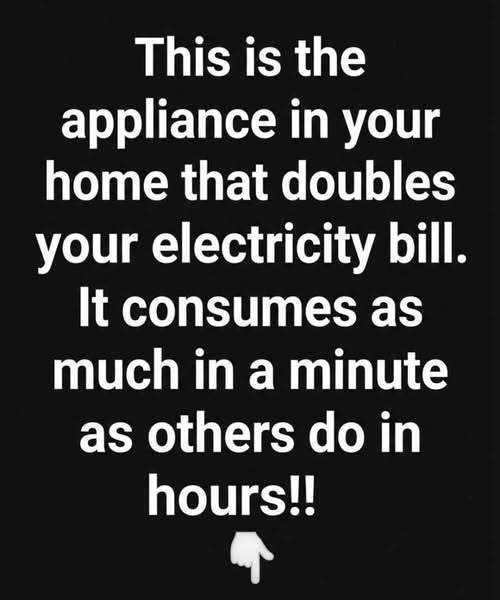
That dramatic warning is designed to grab attention, but there is an important detail many people miss: an appliance’s electricity cost depends on both its power rating and how long it runs. Simply saying an appliance can “double your electricity bill” is not accurate for every home.
Some household appliances do, however, use far more electricity than others. High-power devices such as electric heaters, portable air conditioners, electric ovens, clothes dryers, and water heaters can significantly increase electricity consumption when used frequently.
Why High-Wattage Appliances Matter
Electricity use is measured in kilowatt-hours (kWh). An appliance rated at 2,000 watts uses about 2 kWh if it operates continuously for one hour.
For example:
- A 2,000-watt heater running for 1 hour uses about 2 kWh.
- The same heater running for 5 hours uses about 10 kWh.
- A 100-watt appliance running for 5 hours uses only about 0.5 kWh.
So an appliance doesn’t necessarily consume “as much in a minute as another does in hours.” The actual cost depends on its wattage, operating time, electricity tariff, and how often it is used.
Which Appliances Usually Use the Most?
Electric heaters
Portable electric heaters can be among the biggest contributors to household electricity consumption because they often draw around 1,500–2,000 watts while operating.
Using one for several hours every day can add up quickly.
Clothes dryers
Tumble dryers can also consume substantial electricity because they use heat to remove moisture from clothing. Frequent drying cycles can noticeably increase household energy use.
Electric ovens
Ovens require significant power to heat and maintain a high temperature. Long cooking times can therefore contribute considerably to electricity consumption.
Air conditioners
Air conditioners can become major electricity users, particularly when operating for many hours a day. Actual consumption varies considerably depending on the unit, temperature setting, room size, insulation, outdoor temperature, and whether the system is inverter-based.
Water heaters
Electric water heaters can also have a significant impact, especially in households where hot water is used frequently.
The Simple Way to Find Your Biggest Electricity User
Instead of relying on viral social-media claims, check the wattage label on your appliances.
You can estimate energy consumption with:
Watts ÷ 1,000 × hours used = kWh consumed
Then multiply the kWh by your electricity rate to estimate the running cost.
The Bottom Line
The image’s claim that one appliance automatically “doubles your electricity bill” is misleading without knowing the appliance, its wattage, how long it operates, and your electricity rate.
The real lesson is more useful: high-wattage appliances that run for several hours can become surprisingly expensive. Reducing unnecessary operating time and choosing efficient appliances can make a meaningful difference to your monthly electricity consumption.
Meta description: Learn which household appliances can use the most electricity, how wattage affects your bill, and a simple formula for estimating appliance energy costs.