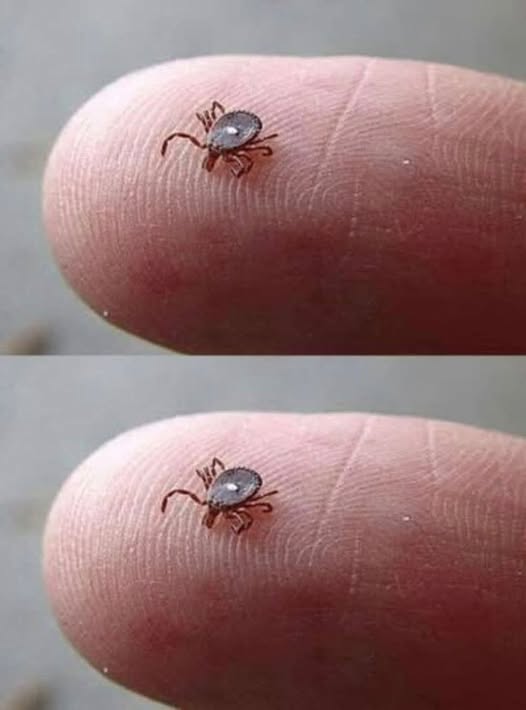
Finding a tiny tick attached to your skin can be alarming, especially because some ticks can transmit infections. The good news is that removing a tick promptly and correctly can reduce the risk of disease transmission.
The insect shown in the image appears consistent with a tick, although an image alone cannot reliably determine the exact species or whether it is carrying an infection.
1. Remove the Tick as Soon as Possible
Don’t wait for the tick to fall off on its own.
Use a pair of fine-tipped tweezers and grasp the tick as close to the skin’s surface as possible. Pull it straight upward with slow, steady pressure.
Avoid twisting, jerking, squeezing, or crushing the tick while it is attached.
If a small portion of the tick’s mouthparts remains in the skin, don’t aggressively dig into the skin. The area can usually heal on its own, but seek medical advice if you develop signs of infection.
2. Don’t Put Chemicals or Heat on the Tick
Several traditional methods are sometimes recommended online, including:
- Petroleum jelly
- Nail polish
- Alcohol poured directly onto the attached tick
- Kerosene or other chemicals
- A hot match
- Trying to burn the tick
These methods aren’t recommended. They can irritate or burn the skin and may make tick removal more difficult.
Tweezers and a steady upward pull are the safest basic approach.
3. Clean the Bite Area
Once the tick has been removed, wash the bite and your hands thoroughly with soap and water.
You can also use an appropriate skin antiseptic if available.
Then inspect the area carefully to make sure the tick has actually been removed.
4. Dispose of the Tick Carefully
Don’t crush it with your bare fingers.
You can place the tick in a sealed container, wrap it securely in tape, or dispose of it according to local health guidance. Some people choose to keep the tick temporarily in a sealed container in case a healthcare professional later wants to identify it.
However, don’t rely on home tick-identification tests to determine whether you need medical care.
5. Watch Yourself for Symptoms
A tick bite doesn’t automatically mean that you will become sick. However, monitor yourself for symptoms during the following days and weeks.
Pay attention to:
- Fever or chills
- Headache
- Unusual tiredness
- Muscle or joint aches
- Swollen lymph nodes
- Increasing redness or swelling around the bite
- A spreading rash
Some tick-borne illnesses can cause characteristic rashes, but not everyone develops a rash, so other symptoms are important too.
When Should You Contact a Doctor?
Contact a healthcare professional if you develop fever, rash, flu-like symptoms, significant swelling, worsening redness, or other unusual symptoms after a tick bite.
Also tell the clinician when and where you were bitten and, if possible, how long the tick may have been attached. The risk of infection depends on factors such as the tick species, geographic location, and length of attachment.
A Common Mistake to Avoid
One of the biggest mistakes is squeezing the swollen body of the tick while trying to remove it. Instead, position the tweezers near the skin and pull steadily upward.
And remember: don’t panic if you discover a tick. Prompt, proper removal is the most important first step.
Important Note About the Image
The insect pictured is extremely small compared with the fingertip, which is typical of some tick species and life stages. Its appearance alone isn’t enough to determine the species or whether it carries Lyme disease or another tick-borne infection. If you have actually found this type of insect attached to your skin, follow the removal steps above and monitor for symptoms.