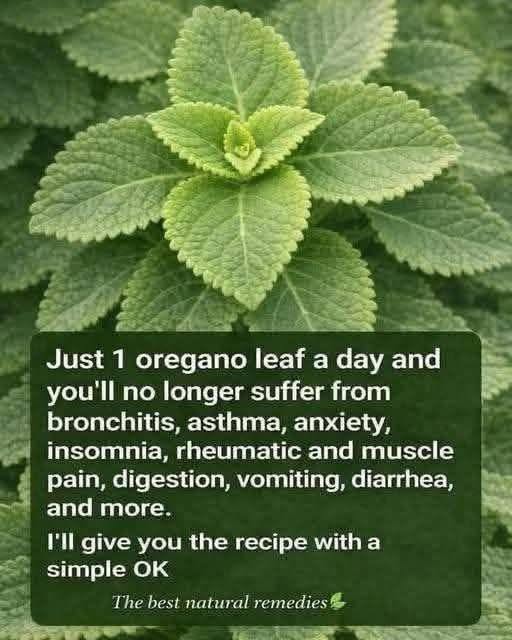
Discover how oregano may support respiratory and digestive health, how to prepare it safely, and what to know before adding this aromatic herb to your daily routine.
If you’re reading this, give this post a like—and keep reading to discover a simple way to use oregano as part of a healthy routine.
Oregano is much more than a seasoning for pizza, pasta, soups, and roasted vegetables. This fragrant herb contains naturally occurring plant compounds, including carvacrol and thymol, which have been studied for their antioxidant and antimicrobial properties.
But does eating one oregano leaf really transform your health?
Not exactly. There is no good evidence that a single leaf can cure bronchitis, infections, indigestion, or other medical conditions. However, oregano can be a flavorful addition to a balanced diet and may offer some useful nutritional and plant-compound benefits.
How Oregano May Support Respiratory Health
Oregano has traditionally been used in herbal preparations for coughs and respiratory discomfort.
Its aromatic compounds may have antioxidant and antimicrobial activity in laboratory studies. This is one reason oregano has attracted interest among researchers.
However, it’s important to understand the difference between traditional use and proven medical treatment.
Oregano should not replace prescribed treatment for asthma, pneumonia, bronchitis, or another respiratory infection.
If you have persistent coughing, wheezing, chest pain, difficulty breathing, high fever, or symptoms that are getting worse, seek medical advice rather than relying on herbs alone.
Oregano and Digestion
Oregano is also traditionally associated with digestive health.
Adding a small amount of fresh or dried oregano to meals may make food more flavorful while contributing plant compounds to your diet.
Some people enjoy oregano in warm herbal preparations after meals. However, strong oregano preparations can cause stomach irritation in some individuals, particularly when consumed in large amounts.
If you have a sensitive stomach, start with a small culinary amount rather than taking concentrated preparations.
A Simple Way to Use Fresh Oregano
One of the easiest options is simply to add fresh oregano leaves to food.
Try this:
- Wash a fresh oregano leaf thoroughly.
- Chop it finely.
- Add it to eggs, soup, vegetables, beans, chicken, or salad.
- Alternatively, use several leaves to make a mild herbal infusion.
You don’t need a large amount to enjoy oregano’s flavor.
Simple Oregano Herbal Tea
If you enjoy herbal drinks, you can prepare a mild oregano infusion.
Ingredients:
- 1–2 teaspoons fresh oregano leaves, chopped
- 1 cup hot water
- Lemon, optional
Directions:
- Wash the oregano thoroughly.
- Place the leaves in a cup.
- Pour hot water over them.
- Cover and let steep for about 5–10 minutes.
- Strain before drinking.
- Add a little lemon if desired.
Keep the preparation mild rather than making an extremely concentrated drink.
What About Oregano Oil?
This is where extra caution is important.
Oregano oil is highly concentrated and is not the same thing as eating fresh oregano leaves.
Taking essential oils by mouth can be unsafe if used incorrectly. Products vary considerably in concentration and formulation, so don’t assume that a few drops of oregano essential oil are equivalent to a few oregano leaves.
If you’re considering oregano oil as a supplement, speak with a doctor or pharmacist first—especially if you’re pregnant, breastfeeding, taking medication, or have an underlying medical condition.
Can Oregano Cure a Chest Infection?
No.
Oregano contains interesting plant compounds, but laboratory findings don’t mean that eating oregano can cure a respiratory infection in humans.
If you have symptoms suggesting a serious infection, don’t delay appropriate medical care.
Think of oregano as a culinary herb that may complement a healthy lifestyle, not as a replacement for medical treatment.
Who Should Be Careful With Oregano?
Normal culinary amounts are generally very different from concentrated supplements.
Extra caution is appropriate with high-dose oregano supplements or oils, particularly for people who:
- Take regular medications
- Have allergies to herbs in the mint family
- Have a sensitive digestive system
- Are pregnant or breastfeeding
- Are preparing oregano oil for internal use
When in doubt, ask a healthcare professional before using concentrated herbal products.
The Best Way to Think About Oregano
You don’t need to treat oregano like a miracle medicine.
Instead, think of it as a flavorful herb that can help make healthy foods more enjoyable while providing naturally occurring plant compounds.
Sprinkle it over vegetables. Add it to soups. Mix it into homemade sauces. Combine fresh leaves with salads or eggs.
Small, consistent dietary choices are generally more meaningful than relying on a single ingredient to solve a health problem.
Final Thoughts
That tiny oregano leaf may look simple, but oregano contains a variety of naturally occurring compounds that make it an interesting addition to the diet.
It may support overall dietary quality and provide antioxidant and other plant compounds, while its traditional use includes digestive and respiratory preparations.
Just remember: one leaf isn’t a cure or a medical treatment.
Use oregano as food first, keep concentrated supplements separate from ordinary culinary use, and seek professional medical care when respiratory or digestive symptoms are persistent or severe.
If you love natural kitchen remedies and traditional herbs, save this post and share it with someone who keeps oregano in their kitchen!