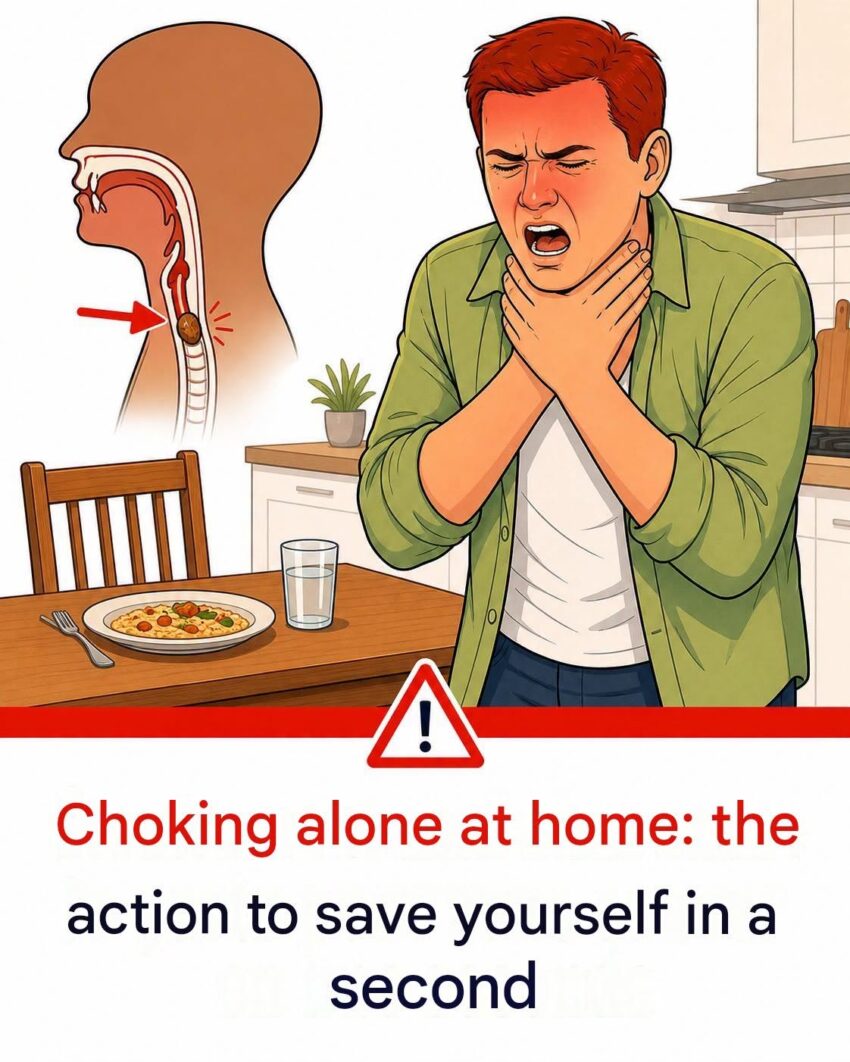
If you suddenly start choking while alone, knowing the correct first-aid steps can be lifesaving. Learn what to do, what to avoid, and when to seek emergency medical help.
Imagine eating alone when suddenly a piece of food becomes stuck in your throat. You try to cough, but breathing becomes difficult. You cannot speak properly, and there is nobody nearby to help.
Choking is a medical emergency because a completely blocked airway can prevent oxygen from reaching the brain and other vital organs. The good news is that knowing a few basic first-aid steps can help you respond quickly.
First, Recognize Severe Choking
Not every cough means the airway is completely blocked.
If you can cough forcefully, speak, or breathe, keep coughing. A strong cough may be enough to clear the obstruction.
Severe choking is more concerning when you:
- Cannot breathe normally
- Cannot speak or make sounds
- Have a weak or silent cough
- Grab your throat instinctively
- Develop a bluish or grayish color around the lips or face
- Become increasingly weak or confused
If you are unable to breathe or speak, treat it as an emergency.
If You Are Alone and Choking
1. Call Emergency Services Immediately
If you have access to a phone, call your local emergency service as quickly as possible. Put the phone on speaker if you can.
Do not spend precious time trying multiple home remedies or drinking water.
If you can communicate, clearly state that you are choking and give your location.
2. Try to Cough If You Still Can
If you can still cough effectively, continue coughing forcefully.
Do not suppress the cough.
A strong cough can create enough pressure to help remove an object from the airway.
3. Perform Abdominal Thrusts on Yourself
If you cannot breathe properly because of a blockage, you can attempt abdominal thrusts on yourself.
Make a fist and place it just above your belly button and below the breastbone. Grasp the fist with your other hand and give quick, forceful inward-and-upward thrusts.
Repeat the thrusts until the object comes out or you can breathe again.
4. Use a Firm Surface if Necessary
If you cannot generate enough force with your hands, you can use the edge of a sturdy, non-sharp surface, such as the back of a heavy chair or countertop.
Position your upper abdomen against the edge and apply a quick inward-and-upward movement.
Do not use a sharp corner or anything that could cause serious injury.
The purpose is to create pressure that may help force the obstructing object out of the airway.
What You Should NOT Do
When someone is choking, panic can lead to dangerous mistakes.
Avoid:
- Trying to swallow large amounts of water
- Putting your fingers blindly into your throat
- Trying to force food down with more food
- Lying flat and waiting for the blockage to disappear
- Delaying emergency assistance while trying unproven remedies
Blindly sweeping your fingers inside the mouth can potentially push the object deeper. Only remove an object if you can clearly see and safely grasp it.
What If You Become Unconscious?
If the airway remains blocked, a person may eventually lose consciousness.
If you are alone and become unconscious, there is no reliable technique you can perform after losing consciousness. This is why calling emergency services early and attempting appropriate self-rescue while you are still conscious is extremely important.
If another person arrives, they should follow standard choking first-aid procedures and contact emergency medical services.
After the Object Comes Out
Feeling better does not always mean everything is fine.
After a serious choking episode, seek medical attention if:
- You continue coughing
- You have difficulty breathing
- You have chest or throat pain
- You have trouble swallowing
- You feel that something is still stuck
- You lost consciousness
- The object may have entered the lungs
- You have persistent wheezing or unusual breathing sounds
Even when the object is removed, the airway can sometimes be injured, and fragments may remain.
Prevention Is Better Than an Emergency
Many choking incidents can be prevented by simple habits.
Eat slowly and chew food thoroughly. Avoid talking, laughing, or rushing while chewing. Be particularly careful with foods that are commonly associated with choking, especially when eating quickly.
Cut food into appropriately sized pieces, and avoid eating while lying down or while extremely distracted.
Remember This Simple Sequence
If you suddenly begin choking while alone:
Recognize severe choking → call emergency services → cough if you can → attempt self-abdominal thrusts → use a firm surface if necessary → continue until the airway clears or help arrives.
There is no guaranteed “one-second” trick that can instantly save every choking victim. The most important thing is to recognize severe choking quickly and take appropriate action rather than relying on viral hacks or home remedies.
If you live alone, learning basic choking first aid and keeping your phone accessible can make a significant difference during an emergency.