I’ve learned a lot of my best shortcuts from my sister—usually about five minutes before we have to leave the house.
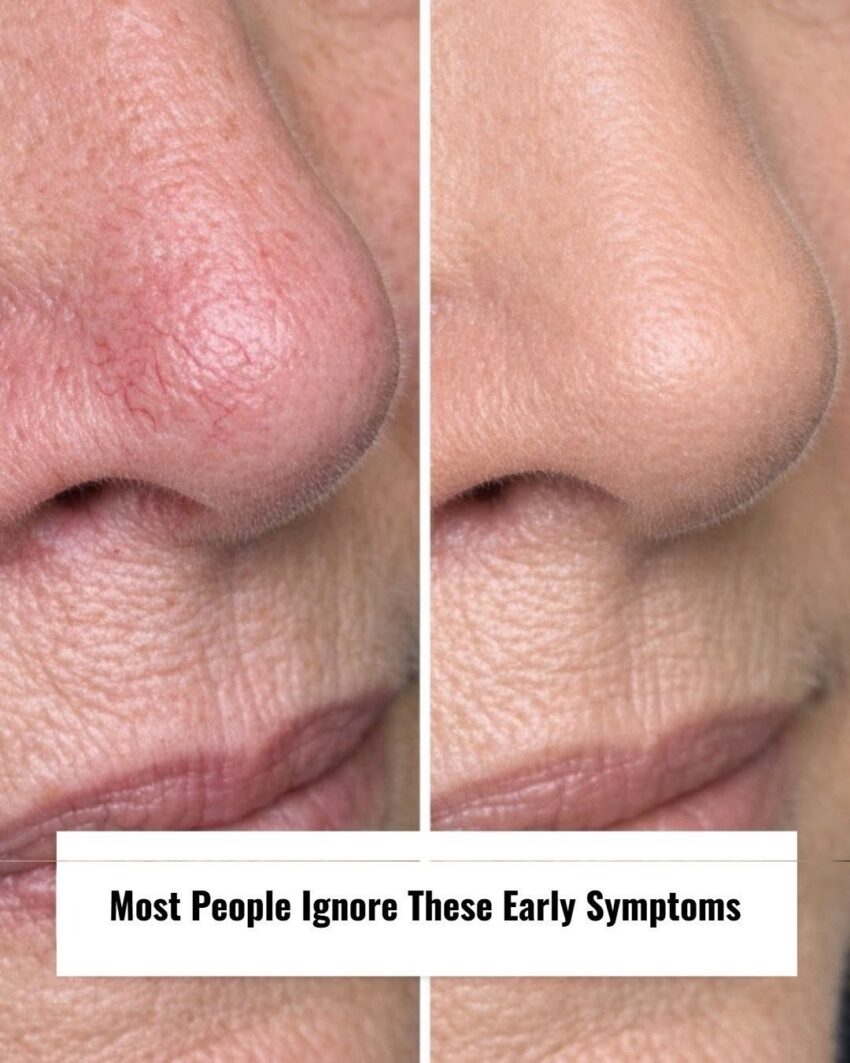
We were getting ready for a National Sisters Day brunch, and I was staring at the redness around my nose that always seems to show up even more in natural daylight. I was already wondering whether I needed another layer of foundation when my sister casually handed me one product and said, “Do this first.”
It took about a minute, didn’t require any real makeup skills, and made the redness look noticeably less obvious.
The trick? A tiny amount of green color-correcting concealer.
Green and red sit opposite each other on the color wheel, so a small amount of green corrector can help visually neutralize redness before you apply foundation or concealer. The key is to use very little—you’re not trying to make your skin green.
I dabbed a small amount around the sides of my nose, gently blended the edges, and then applied my usual foundation over it. Instead of adding more and more coverage to hide the redness, I needed less makeup overall.
How to Try It
- Start with moisturized skin. Let your moisturizer or primer settle for a minute.
- Apply a tiny dot of green corrector directly to the red area.
- Tap, don’t rub. Use your fingertip, a small brush, or a damp makeup sponge to blend it.
- Keep the correction sheer. If you can clearly see green, you’ve probably used too much.
- Apply foundation or concealer over it using a light layer.
- Set lightly with powder if you tend to get oily around your nose.
The difference can be especially noticeable in daylight because heavy layers of foundation can sometimes make redness look cakey rather than concealed.
One Small Mistake to Avoid
The biggest mistake is applying too much color corrector. More product doesn’t necessarily mean better coverage. A thin, well-blended layer usually works much better than covering the entire area with a thick coat.
And if your redness is new, persistent, painful, itchy, swollen, or changing over time, makeup can hide the appearance but won’t address the underlying cause. In that situation, it’s worth speaking with a dermatologist or healthcare professional.
Sometimes the best beauty shortcuts aren’t complicated at all. They’re just little tricks someone else learned first—and thankfully, my sister happened to share hers with me five minutes before brunch.