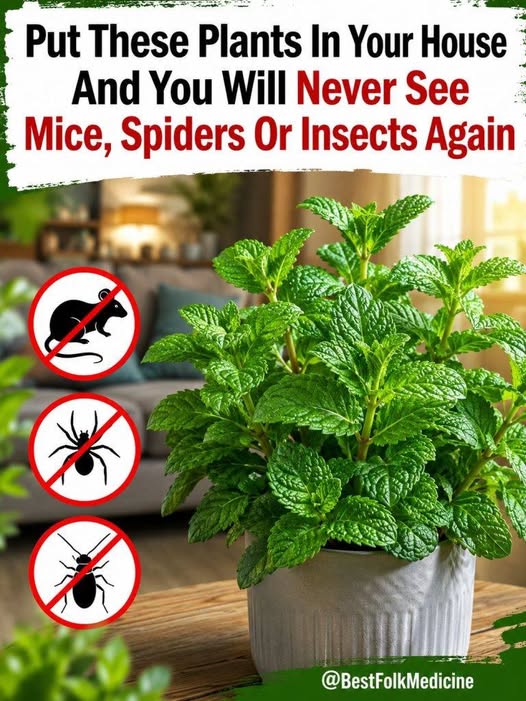
If you’re looking for a more natural way to make your home and garden less attractive to unwanted pests, certain aromatic plants may be worth considering.
Many herbs and ornamental plants contain strong-smelling essential oils and natural compounds that can affect insects and may make certain areas less appealing to them. Some gardeners also use strongly scented plants around areas where they have noticed mice or other pests.
However, there is an important distinction: plants are not a guaranteed pest-control solution. A few pots of herbs will not eliminate an established mouse infestation or a large population of insects. Think of them as one part of a broader prevention strategy.
Here are eight plants commonly used for their pest-repelling properties.
1. Peppermint
Peppermint is one of the most popular plants associated with natural pest deterrence.
Its strong aroma comes largely from compounds such as menthol. Many people grow peppermint near doors, windows, patios, and other areas where insects are unwanted.
Some homeowners also use peppermint products around areas where they suspect mice are entering. However, evidence for peppermint as a reliable mouse repellent is limited, so it shouldn’t replace sealing holes or using appropriate traps.
Growing tip
Peppermint grows vigorously and can spread quickly. Keeping it in a container can make it easier to control.
2. Lavender
Lavender is valued for its pleasant fragrance to people, but its strong aromatic oils may be unpleasant to certain insects.
It can be grown around:
- Patios
- Walkways
- Windows
- Garden borders
- Outdoor seating areas
Lavender also attracts pollinators such as bees and butterflies, making it a useful addition to many gardens.
Growing tip
Lavender generally prefers plenty of sunlight and well-drained soil.
3. Rosemary
Rosemary is another strongly scented herb that can be useful in a garden.
Its aromatic foliage contains essential oils that contribute to its distinctive smell. Besides being useful in cooking, rosemary can be planted near outdoor living areas where its fragrance is enjoyable to people.
It may help make an area less attractive to some insects, but it should not be considered a complete pest-control method.
Growing tip
Rosemary prefers sunlight and soil that drains well. Avoid keeping its roots constantly wet.
4. Basil
Basil is a popular kitchen herb with a strong fragrance.
Growing basil near windows, balconies, or outdoor eating areas can provide an aromatic barrier that some people find useful when trying to discourage flying insects.
It is especially convenient because you can grow it in pots and move the plants wherever they’re needed.
Growing tip
Basil likes warmth, sunlight, and regular harvesting. Pinching off the flowering tips can encourage fuller growth.
5. Mint
Peppermint isn’t the only strongly scented member of the mint family.
Spearmint and other varieties produce aromatic oils that give the plants their distinctive fragrance. Growing mint around outdoor areas may help make the environment less attractive to certain insects.
Like peppermint, however, mint can become invasive when planted directly in the ground.
Growing tip
Containers are often the easiest way to keep mint from spreading throughout the garden.
6. Catnip
Catnip may look like an ordinary garden plant, but it contains nepetalactone, a compound that has been studied for its insect-repelling properties.
Research has found that nepetalactone can have repellent activity against certain insects, although the effectiveness of a living catnip plant in a home setting can vary considerably.
One unusual drawback is that cats may be strongly attracted to catnip.
Growing tip
Plant catnip somewhere sunny and be prepared for neighborhood cats to take an interest in it.
7. Marigolds
Marigolds are frequently recommended as companion plants because of their strong scent and their potential effects on certain garden pests.
They’re easy to grow and produce bright flowers, making them useful for borders, containers, and vegetable gardens.
However, the idea that simply planting marigolds creates a universal insect barrier is overstated. Their effectiveness depends on the particular pest, plant species, and growing conditions.
Growing tip
Give marigolds plenty of sunlight and remove faded flowers to encourage continued blooming.
8. Lemongrass
Lemongrass has a strong citrus-like aroma and is widely grown in warm climates.
Its aromatic oils are associated with insect-repellent properties, and compounds related to lemongrass are used in some commercial insect-repellent products.
Growing lemongrass near patios and outdoor seating areas can therefore be a pleasant addition to a garden.
Growing tip
Lemongrass prefers warm conditions, sunlight, and consistently moist—but not waterlogged—soil.
What About Mice?
This is where expectations need to be realistic.
You may see claims that peppermint, lavender, or other plants will drive mice out of a house. There isn’t strong evidence that simply growing these plants will reliably eliminate an indoor mouse infestation.
If you have mice inside your home, focus on the fundamentals:
Seal Entry Points
Mice can enter through surprisingly small openings. Inspect areas around pipes, doors, vents, foundations, and other possible entry points.
Seal suitable gaps with appropriate materials and repair damaged screens or door sweeps.
Remove Food Sources
Keep food in sealed containers and clean up crumbs and spills promptly.
Don’t leave pet food exposed overnight if rodents are a problem.
Reduce Clutter
Cardboard, piles of fabric, stored papers, and other clutter can provide hiding or nesting opportunities.
Keeping storage areas organized makes it easier to spot signs of rodents.
Address the Infestation
If you are seeing repeated signs of mice—such as droppings, gnaw marks, nesting material, or noises in walls—consider appropriate traps or professional pest-control assistance.
Plants alone are unlikely to solve an established infestation.
Can These Plants Keep Spiders Away?
Spiders are predators rather than insects, and their behavior is different from that of flies, mosquitoes, or ants.
Strong-smelling plants may make some areas less attractive to certain insects, which could indirectly affect the number of prey available to spiders. But planting peppermint or lavender does not guarantee that spiders will stay away.
Reducing clutter, sealing cracks, installing intact screens, and reducing insect activity around lights can be more practical ways to reduce spiders around a home.
A Better Natural Pest-Prevention Strategy
Instead of relying on one plant, combine several approaches.
Plant aromatic herbs: Use peppermint, rosemary, lavender, basil, or lemongrass around appropriate outdoor areas.
Keep the garden tidy: Remove standing water, excess plant debris, and conditions that encourage pests.
Seal your home: Close gaps around doors, windows, pipes, vents, and foundations.
Store food properly: Keep dry goods in sealed containers and clean food residue quickly.
Use screens: Make sure window and door screens don’t have holes.
Don’t overwater: Excess moisture can encourage some insects and create favorable conditions for pests.
Important Safety Note
Natural does not automatically mean harmless.
Essential oils and concentrated plant extracts can be much stronger than the living plants themselves. Some oils can irritate the skin, eyes, or respiratory system and can be dangerous to pets if used improperly.
Before bringing a plant indoors, consider whether it is safe for children and pets in your household.
Final Thoughts
Plants can make your garden more attractive while adding scents that may discourage certain pests. Peppermint, lavender, rosemary, basil, mint, catnip, marigolds, and lemongrass are among the plants commonly used for this purpose.
But don’t expect a plant to solve a serious pest problem by itself.
The most effective approach is usually a combination of pest prevention, sanitation, sealing entry points, reducing hiding places, and—when necessary—professional pest control.
Use these plants as a helpful addition to your home and garden, rather than as a guaranteed replacement for proven pest-management methods.