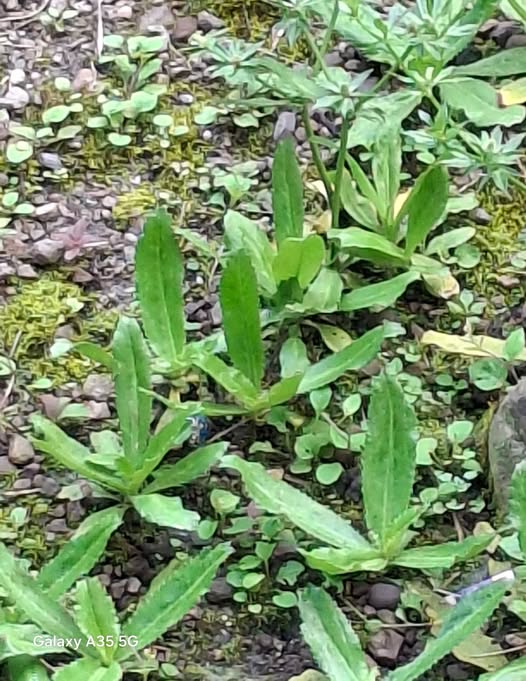
Yes — the herb in your photo looks quite similar to ribwort plantain (Plantago lanceolata), commonly called narrowleaf plantain. However, I would not treat the identification as 100% certain from this photo alone, because several wild plants have similar rosette-shaped leaves.
If “Diyina” is what your community calls this plant, you could write your post like this:
🌿 We Call It “Diyina” — What Do You Call It?
Have you ever seen this herb growing along paths, in gardens, or between stones and wondered what it was?
Where we come from, we call this herb “Diyina.” 🌿 But traditional plant names can change dramatically from one region to another. The same plant may have several local names, while completely different plants can sometimes share a similar name.
The plant shown here appears to resemble ribwort plantain (Plantago lanceolata), a common wild plant recognized by its long, narrow leaves growing from a low rosette. Its leaves typically have several noticeable veins running lengthwise from the base toward the tip.
🌱 Why Is This Plant Interesting?
Plantain species have a long history of traditional use in different cultures. The leaves have traditionally been used in various household herbal preparations, although traditional use should not be confused with proven medical treatment.
One reason people often recognize plantain is its distinctive growth pattern. Instead of growing as a tall leafy herb, it commonly forms a rosette close to the ground, with leaves spreading outward from the center.
👀 How to Recognize It
If this really is Plantago lanceolata, look for:
- Long, narrow, lance-shaped leaves
- Leaves growing from a basal rosette
- Several prominent veins running lengthwise
- A relatively low-growing habit
- Tall, slender flower stalks when mature
- A small, compact flower head at the top of the stalk
⚠️ One Important Point
Don’t eat or prepare a wild plant solely because someone identifies it from a photograph. Local names such as “Diyina” aren’t reliable enough for determining a plant’s identity, and look-alike species can exist.
If you want to establish the exact identity, a photo showing the whole plant, a close-up of the leaves, and especially the flower/seed head would make identification much more reliable.
🌿 So, What Do You Call It?
We call it “Diyina.” ❤️
What is this herb called where you live?
Tell us your country or region and the name you use for it. You may be surprised by how many different names one plant can have! 👇🌿